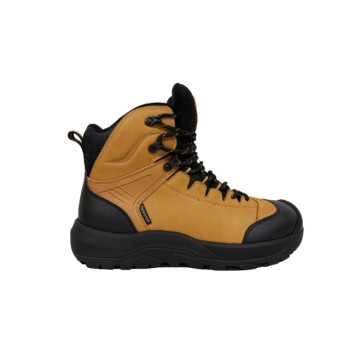
In winter boots, waterproofing is the non-negotiable barrier that protects your feet from the cold. Its primary function is to prevent external moisture from snow, slush, and rain from penetrating the boot, which is the single most important factor in keeping your feet warm, dry, and healthy in harsh conditions.
The core issue is not simply getting wet; it's that water is a highly efficient conductor of heat. Waterproofing isn't a mere comfort feature—it's the fundamental technology for preventing rapid heat loss, preserving the effectiveness of insulation, and avoiding serious foot health issues.
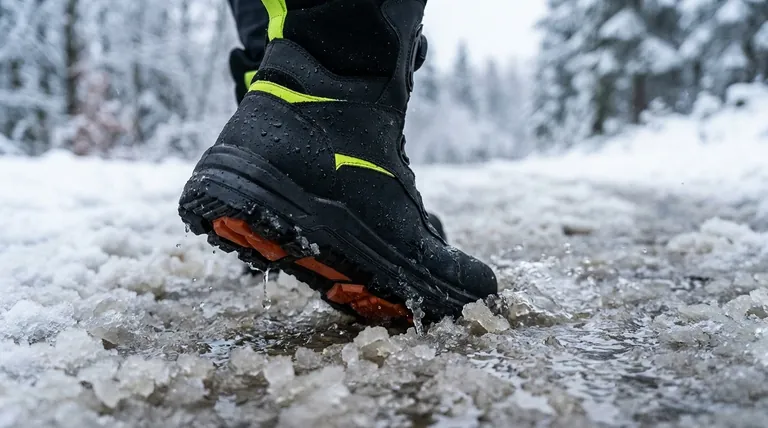
The Core Problem: Why Wet Feet Become Cold Feet
The link between being wet and being cold is a matter of physics. Understanding this principle is key to appreciating why waterproofing is so critical for winter survival and comfort.
The Science of Heat Loss
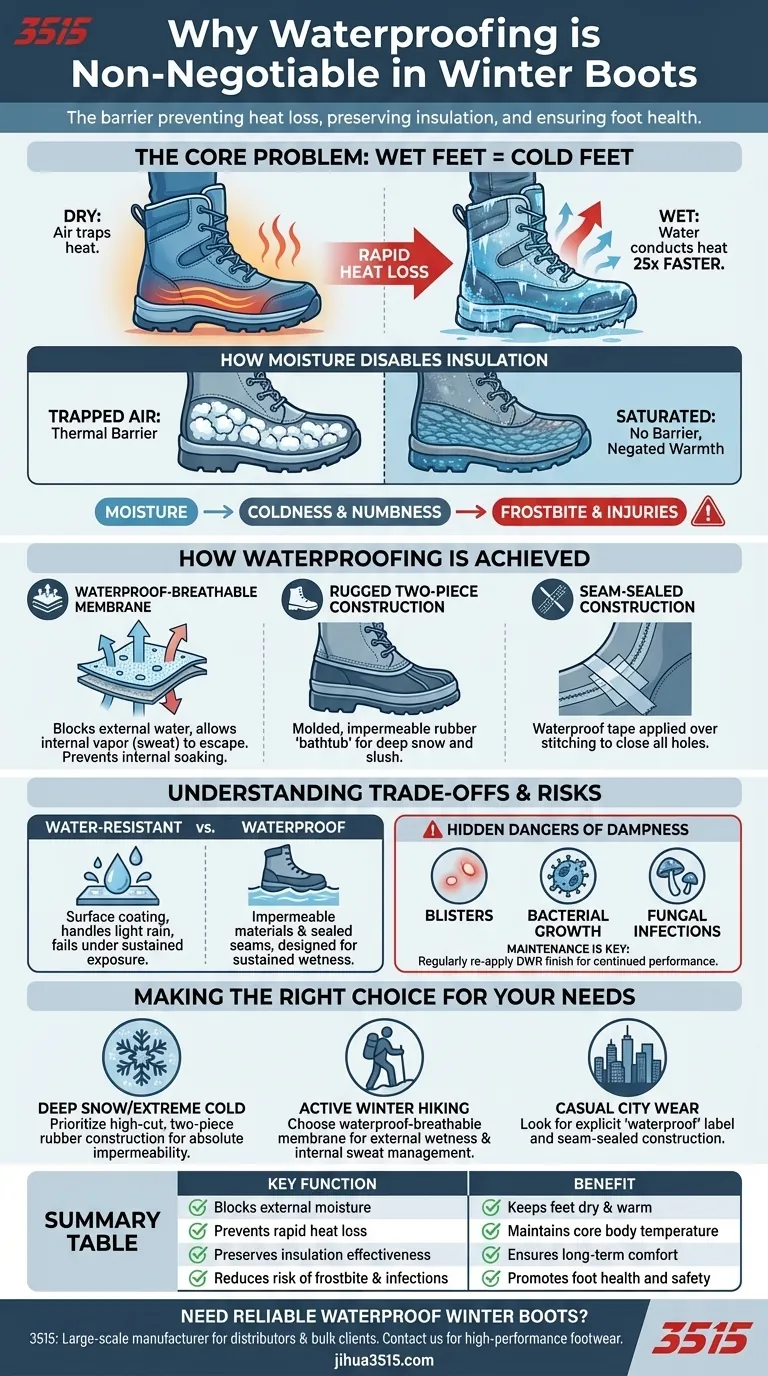
Water conducts heat away from the body roughly 25 times faster than dry air. When your socks and skin become damp, they create a direct channel for your body heat to escape, rapidly chilling your feet regardless of the air temperature.
How Moisture Disables Insulation
Insulation in winter boots works by trapping thousands of tiny pockets of air. This trapped air is a poor conductor of heat, creating a thermal barrier. When water saturates this insulation, it displaces the air, compresses the material, and completely negates its ability to keep you warm.
From Discomfort to Danger
The progression is swift and predictable. Moisture leads to coldness, which can quickly result in numbness and loss of dexterity. In prolonged exposure, this creates a dangerous environment for conditions like frostbite and other cold-related injuries.
How Waterproofing is Achieved in Modern Boots
Manufacturers use several proven methods to ensure a boot is truly waterproof. The right technology often depends on the boot's intended use, from casual wear to extreme expeditions.
The Waterproof-Breathable Membrane
Many modern boots feature a built-in membrane, like Gore-Tex, sandwiched between the outer material and the inner lining. This membrane contains billions of microscopic pores that are too small for liquid water droplets to pass through but large enough for water vapor (sweat) to escape.
This dual function is critical. It blocks external moisture while allowing the boot to breathe, preventing your feet from getting soaked by their own perspiration during activity.
The Rugged Two-Piece Construction
A classic and highly effective design involves a lower section made of molded, impermeable rubber fused to an upper made of treated leather or durable nylon. This creates an absolutely waterproof "bathtub" for your foot, ideal for deep snow and slush.
Seam-Sealed Construction
For a boot to be truly waterproof, it's not enough for the material to be waterproof; the seams must be as well. Seam-sealing is a process where a special waterproof tape is applied over the stitching on the inside of the boot, closing off the thousands of tiny holes made during construction.
Understanding the Trade-offs and Risks
Choosing the right boot involves understanding the nuances between different levels of protection and the consequences of an inadequate barrier.
Water-Resistant vs. Waterproof
These terms are not interchangeable. A water-resistant boot has been treated with a surface coating that causes water to bead up and roll off. It can handle light rain or minor splashes but will fail under sustained exposure or submersion.
A waterproof boot is constructed with a membrane or impermeable materials and sealed seams, designed to keep your feet dry even when standing in water or trekking through wet snow for hours.
The Hidden Dangers of Dampness
Beyond the immediate risk of getting cold, consistently damp feet create an ideal environment for health problems. This includes painful blisters, bacterial growth, and fungal infections like athlete's foot.
The Necessity of Maintenance
The factory-applied Durable Water Repellent (DWR) finish on the outside of many boots is their first line of defense, but it wears off over time. Regular cleaning and re-application of waterproofing sprays or waxes are essential to maintain the boot's performance and protect the underlying materials from saturation.
Making the Right Choice for Your Needs
Selecting the appropriate level of waterproofing depends entirely on how and where you'll be using your boots.
- If your primary focus is deep snow and extreme cold: Prioritize boots with a high-cut, two-piece construction featuring a rubber lower for absolute impermeability.
- If your primary focus is active winter hiking or snowshoeing: Choose a boot with a proven waterproof-breathable membrane to manage both external wetness and internal sweat.
- If your primary focus is casual city wear in slushy conditions: Look for leather or synthetic boots that are explicitly labeled "waterproof" and feature seam-sealed construction.
Ultimately, investing in proper waterproofing is an investment in your safety and well-being, ensuring your gear can effectively protect you from the elements.
Summary Table:
| Key Function | Benefit |
|---|---|
| Blocks external moisture | Keeps feet dry and warm |
| Prevents rapid heat loss | Maintains core body temperature |
| Preserves insulation effectiveness | Ensures long-term comfort |
| Reduces risk of frostbite & infections | Promotes foot health and safety |
Need reliable waterproof winter boots for your customers? As a large-scale manufacturer, 3515 produces a comprehensive range of durable, waterproof footwear for distributors, brand owners, and bulk clients. Our production capabilities cover all types of boots designed to withstand harsh winter conditions. Contact us today to discuss your specific needs and benefit from our expertise in high-performance footwear manufacturing.
Visual Guide
Related Products
- Premium Insulated Safety Boots and Shoes for Wholesale & Bulk Orders
- Factory Direct Wholesale Rain Boots Durable Waterproof & Fully Customizable
- Durable Waterproof Rain Boots | Custom Manufacturer for Wholesale & Brands
- Wholesale Waterproof Tactical Boots Custom Suede & High-Traction Soles
- Premium Waterproof High-Cut Industrial Safety Boots for Wholesale and Bulk Orders
People Also Ask
- What are the recommended insulation ratings for mild winter conditions? A Guide for Active & Stationary Workers
- How does insulation thickness correlate with temperature ranges? A Guide to Choosing the Right Warmth
- What insulation level is needed for severe cold and stationary work? 1200g or Higher is Essential
- What safety advantages do insulated boots offer beyond warmth? Dielectric Protection & Superior Grip
- How does fleece lining contribute to the warmth of insulated boots? Trapping Air for Superior Cold Protection