In a Goodyear welted shoe, the thread is the critical, often invisible, component holding the entire structure together. Its quality is paramount because it dictates the shoe's fundamental integrity. High-quality thread ensures excellent stitch-ability, a consistent and tight lock between components, and long-term seam durability, directly preventing premature sole separation during the stresses of daily wear.
The core issue is not simply whether the thread will break, but whether its specific physical properties—like stretch and recovery—are engineered to maintain a tight, secure seam for the lifetime of the shoe. Poor thread creates a structural weakness that undermines the entire purpose of the durable Goodyear welt construction.
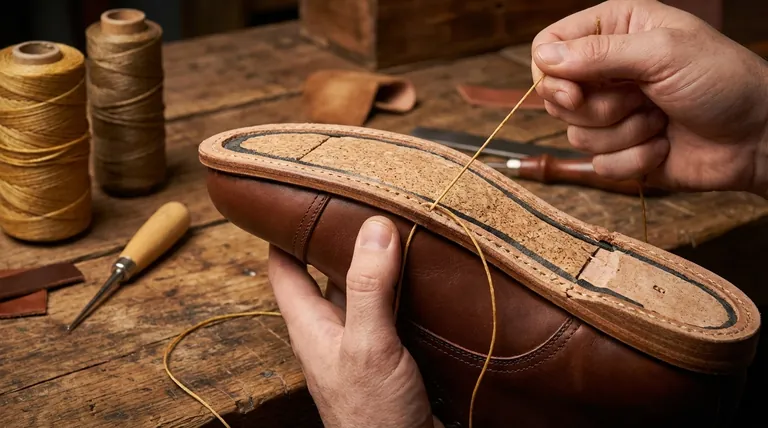
The Anatomy of a Goodyear Welt
To understand the thread's role, you must first understand the system it supports. A Goodyear welt is not a single feature but an integrated construction method prized for its durability and repairability.
The Core Components
The upper part of the shoe is not attached directly to the outsole. Instead, a strip of leather called the welt is stitched to the upper and a canvas rib that is bonded to the insole. This creates a strong, flexible connection and a cavity that is filled with cork for comfort and breathability.
The Two Critical Seams
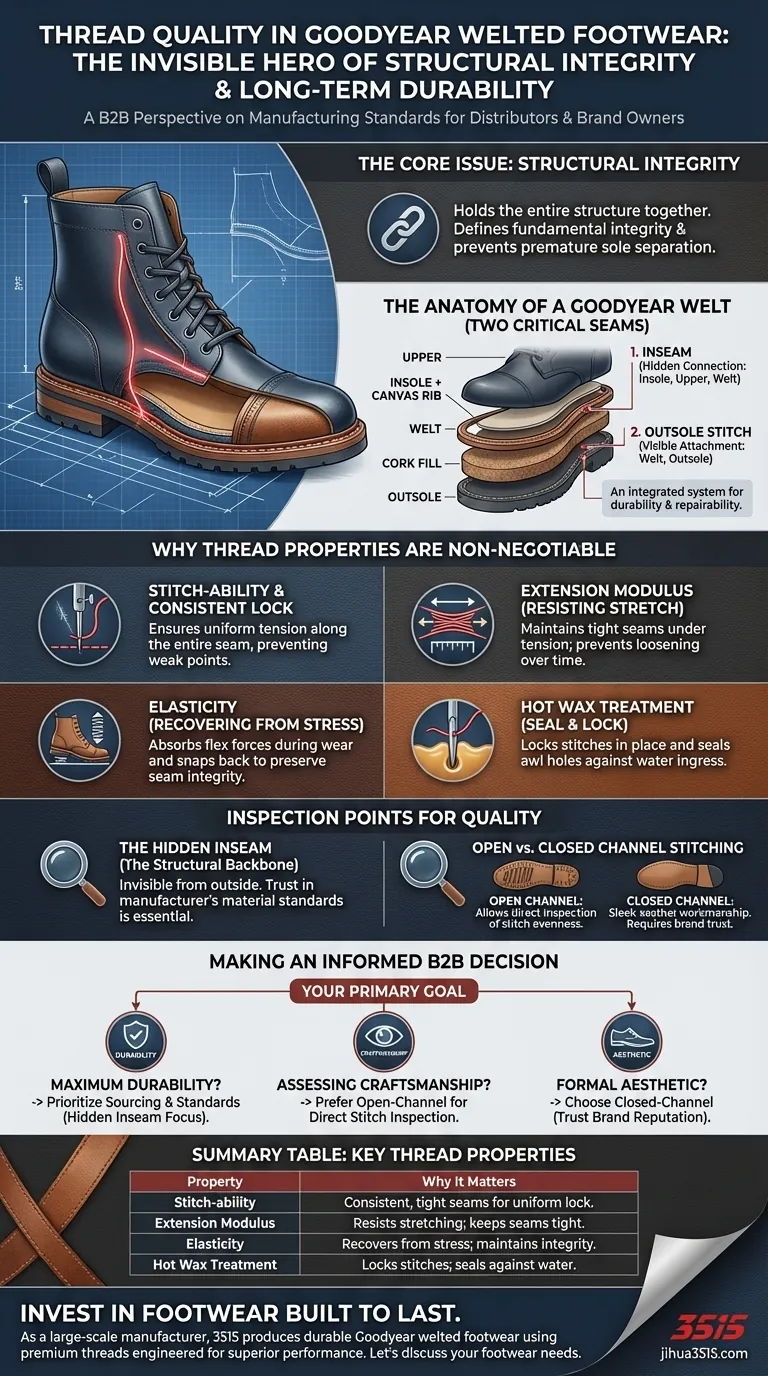
Two independent seams are the foundation of this construction. The first is the inseam, a hidden stitch that connects the insole, the upper, and the welt. The second is the outsole stitch, which visibly attaches the outsole to the welt. This two-level system is what allows the shoe to be resoled multiple times without disturbing the upper.
Why Thread Properties Are Non-Negotiable
The forces exerted on a shoe while walking—flexing, twisting, and impact—place constant stress on these two seams. The thread's material science determines how it responds.
Stitch-ability and The Consistent Lock
High-quality thread has consistent friction and diameter, allowing the stitching machine to form a perfect, tight stitch every time. This creates a "consistent lock," ensuring even tension along the entire seam and preventing any single point of weakness from developing.
Extension Modulus: Resisting Stretch
Extension modulus measures how much a thread elongates under a specific load. A thread with the correct modulus will not stretch excessively under tension, ensuring the stitches remain tight and the sole remains securely attached to the welt. Too much stretch leads to loose seams over time.
Elasticity: Recovering from Stress
Elasticity is the thread's ability to return to its original length after being stretched. During each step, the shoe flexes and the stitches are stressed. High elasticity allows the thread to absorb this force and snap back, maintaining seam integrity. Poor elasticity results in stitches that gradually loosen and fail.
The Role of Hot Wax
During construction, the thread used for the inseam is often passed through hot wax. This serves two purposes: it helps to lock the stitches in place within the leather and canvas, and it seals the awl holes, providing a crucial barrier against water ingress.
Understanding the Pitfalls and Inspection Points
Because the most critical components are often hidden, you must learn to identify proxies for quality.
The Hidden Inseam
The inseam is the true structural backbone of the shoe, yet it is completely invisible from the outside. A poorly executed or low-quality inseam can compromise the entire shoe from the start. This is why trusting the manufacturer's material standards is so essential.
Open vs. Closed Channel Stitching
The outsole stitch can be either exposed (an open channel) or hidden beneath a thin flap of leather (a closed channel). An open channel allows for easy inspection of the stitch evenness and quality, acting as a signal of the overall craftsmanship. A closed channel offers a sleeker look but conceals the workmanship, requiring more trust in the brand.
Beyond the Thread: A Holistic View
While thread is critical, it is part of a system. The highest quality thread cannot compensate for poor leather, an improperly attached canvas rib, or sloppy craftsmanship. You must evaluate the shoe as a whole, checking for uniform leather, neat finishing, and quality sole materials.
Making an Informed Decision
Your goal determines what you should prioritize when evaluating a Goodyear welted shoe.
- If your primary focus is maximum durability and longevity: Prioritize brands renowned for their material sourcing and construction standards, as the most critical stitch (the inseam) is not visible.
- If your primary focus is assessing craftsmanship firsthand: Prefer shoes with an open-channel sole stitch, as this allows you to directly inspect the evenness, density, and tension of the stitching.
- If your primary focus is a sleek, formal aesthetic: Understand that a closed-channel sole is a valid cosmetic choice, but it requires you to place greater trust in the manufacturer's overall reputation for quality.
Ultimately, understanding the role of the thread shifts your focus from merely buying a shoe to investing in a durable, repairable system designed to last.
Summary Table:
| Key Thread Property | Why It Matters for Goodyear Welt |
|---|---|
| Stitch-ability | Ensures consistent, tight seams for a uniform lock between components. |
| Extension Modulus | Resists stretching to keep seams tight and prevent sole separation. |
| Elasticity | Allows thread to recover from stress during wear, maintaining seam integrity. |
| Hot Wax Treatment | Locks stitches and seals awl holes against water ingress for durability. |
Invest in footwear built to last.
As a large-scale manufacturer, 3515 produces a comprehensive range of durable Goodyear welted footwear for distributors, brand owners, and bulk clients. Our production capabilities ensure every pair meets the highest standards of material quality and construction, using premium threads engineered for superior stitch-ability, modulus, and elasticity.
Let's discuss your footwear needs. Contact our team today to explore how our manufacturing expertise can deliver the durable, high-quality footwear your customers demand.
Visual Guide
Related Products
- Durable Goodyear Welt Leather Work Boots for Wholesale & Private Label
- Wholesale Durable Leather Work Boots | 8-Inch Goodyear Welt Manufacturer
- Wholesale Durable & Breathable Training Shoes for Custom Brands
- Wholesale Breathable Training Shoes Custom Athletic Footwear Manufacturer
- Custom OEM Training Shoes Wholesale Manufacturer Durable & Breathable
People Also Ask
- What is the difference between full-grain and top-grain leather? Premium Material Guide for Boot Manufacturers
- What are the advantages of leather as an upper material for work boots? Unmatched Durability & Custom Comfort
- Why is it important to waterproof leather work boots? Protect Your Investment and Performance
- How should new leather work boots be broken in? A Guide to Comfort and Durability
- What are the advantages of leather uppers in work boots? Unmatched Durability & Protection