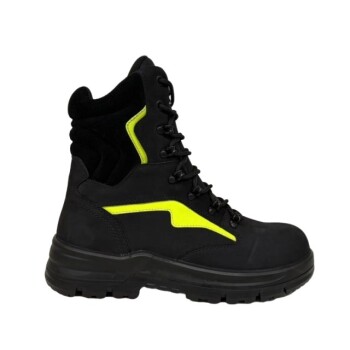
Professional protective footwear functions as a fundamental physical barrier. It acts as the primary defense by eliminating direct contact between the skin and irritant red clay minerals. By isolating the foot from these specific agents, footwear prevents the lymphatic damage that defines non-filarial elephantiasis (Podoconiosis).
By serving as a consistent shield against mineral irritants, protective footwear prevents the non-infectious inflammation that triggers Podoconiosis, effectively halting both disease onset and clinical progression.
The Mechanism of Protection
Creating a Physical Blockade
The primary function of professional footwear in this context is to serve as a core physical barrier.
In regions where the disease is endemic, the soil contains specific irritants. Wearing well-enclosed work boots physically blocks these agents from touching the skin.
Stopping the Pathogen at the Source
The disease is driven by irritant red clay minerals.
Protective footwear prevents these minerals from entering the body's tissues. This intervention stops the problem at the source rather than treating symptoms after exposure.
Impact on Disease Physiology
Preserving the Lymphatic System
Exposure to these minerals causes damage to the lower limb lymphatic system.
By preventing the initial contact, footwear ensures the lymphatic vessels remain intact and functional. This preservation is critical for preventing the swelling associated with the disease.
Preventing Non-Infectious Inflammation
The reaction to red clay minerals is described as non-infectious inflammation.
Unlike bacterial infections treated with antibiotics, this inflammation is induced physically by the minerals. Therefore, preventing mineral absorption via footwear effectively eliminates the trigger for this inflammatory response.
Critical Success Factors
The Necessity of Enclosure
Not all footwear provides adequate protection.
To be effective, the reference highlights the need for well-enclosed work boots or outdoor shoes. Open footwear may allow mineral dust to bypass the barrier, compromising protection.
The Requirement of Consistency
The protective benefit is contingent on behavior.
The reference specifies that one must wear this footwear consistently. Intermittent use in endemic regions leaves the user vulnerable to mineral exposure and subsequent lymphatic damage.
Applying This Intervention
To effectively utilize protective footwear against Podoconiosis, consider the following based on your objectives:
- If your primary focus is Prevention: Ensure that well-enclosed footwear is worn consistently in all areas containing irritant red clay minerals to stop disease onset.
- If your primary focus is Management: Utilize professional boots to block further mineral exposure, which significantly reduces the risk of clinical progression in existing cases.
This simple physical intervention remains the most effective method for disrupting the environmental pathway of the disease.
Summary Table:
| Protection Mechanism | Impact on Health | Footwear Requirements |
|---|---|---|
| Physical Blockade | Stops irritant red clay minerals | Must be well-enclosed |
| Source Prevention | Eliminates non-infectious inflammation | Consistent daily wear |
| Lymphatic Support | Prevents vessel damage & swelling | Durable work or outdoor shoes |
Secure Large-Scale Protection with 3515 Footwear
As a large-scale manufacturer serving distributors and brand owners, 3515 offers comprehensive production capabilities for all footwear types, anchored by our flagship Safety Shoes series. Our professional-grade, well-enclosed work and tactical boots provide the essential barrier needed to protect against environmental irritants and prevent conditions like Podoconiosis.
Our extensive portfolio also covers outdoor shoes, training shoes, and sneakers, as well as Dress & Formal shoes to meet diverse bulk requirements worldwide. Partner with us to deliver high-quality, durable protection to your customers—contact us today to discuss your bulk production needs!
References
- Abraham Abebaw, Asebe Hagos. Health-related quality of life and associated factors among adult podoconiosis patients in Debre Elias district Northwest, Ethiopia. DOI: 10.1371/journal.pntd.0010673
This article is also based on technical information from 3515 Knowledge Base .
Related Products
- Premium Suede Sport Safety Shoes for Wholesale & Bulk Orders
- Wholesale Customizable Safety Boots Durable & Protective Footwear Manufacturing
- Premium Waterproof Nubuck Safety Boots for Wholesale
- Wholesale Anti-Smash & Puncture-Proof Safety Shoes Custom Manufacturing for Brands
- Premium Safety Shoes with Rotating Buckle Safety Sneakers
People Also Ask
- What are the primary functions of professional safety shoes? Maximize Safety in Water Supply Confined Spaces
- What industries have specific OSHA footwear requirements? Ensure Compliance & Protect Your Workforce
- What role do specialized safety shoes play in preventing falls? Engineering Stability in Industrial Environments
- Why is barefoot walking used as a baseline in gait safety research? Unlocking Natural Biomechanics for Shoe Design
- How does professional industrial cleaning equipment maintain the performance stability of safety shoes? Pro Maintenance