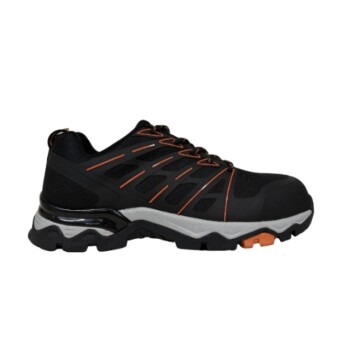
Barefoot walking serves as the essential experimental control in gait safety research, designed to isolate the foot's natural biomechanics from external variables. By stripping away commercial footwear, researchers eliminate inconsistent factors such as sole thickness, material elasticity, and structural rigidities like hard toe caps, ensuring that observed gait patterns reflect physiological reality rather than mechanical aid or hindrance.
The establishment of a barefoot baseline is critical for isolating the foot's authentic reaction to cognitive and physical stress. This "clean" data provides the scientific foundation required to engineer high-end safety footwear that effectively prevents slips and trips.
Eliminating Physical Interference
To understand how humans walk safely, researchers must first remove the "noise" introduced by modern footwear.
Removing Material Variability
Commercial footwear introduces inconsistent variables that distort data. Every shoe possesses a unique sole thickness and material elasticity.
By testing barefoot, researchers remove the cushioning and rebound properties of rubber or foam. This ensures the data reflects the foot's own shock absorption and propulsion mechanisms, not the shoe's.
Excluding Structural Constraints
Safety shoes, in particular, often feature rigid components like hard toe caps. While protective, these structures physically limit the natural flexion and spreading of the toes.
A barefoot baseline reveals how the toes naturally engage with the ground to maintain balance. This allows researchers to see the foot's uninhibited geometric changes during the gait cycle.
Capturing Fundamental Biomechanics
The primary goal of using a barefoot baseline is to observe the "fundamental biomechanical reactions" of the human body.
Reactions Under Cognitive Load
Gait safety research often tests how walking changes when the brain is distracted (cognitive interference).
When a subject is barefoot, researchers can directly observe how the neuro-motor system alters gait strategies—such as shortening steps or widening stance—without the masking effect of a stabilizing shoe sole.
Data-Driven Design
The ultimate goal of this research is not to advocate for barefoot walking, but to improve footwear.
By understanding the foot's raw requirements for stability, engineers can design specialized footwear that mimics natural grip. This leads to the development of high-end shoes specifically optimized for slip resistance and trip prevention.
Understanding the Trade-offs
While barefoot walking is an ideal scientific baseline, it presents specific limitations in applied research contexts.
The "Protection Gap"
Barefoot data reveals how the body prevents slips, but it does not account for the environmental hazards that necessitate shoes.
Data derived solely from barefoot conditions requires careful translation when applied to industrial settings. Engineers must find a way to replicate natural biomechanical advantages while re-introducing the necessary bulk and weight of protective materials.
Making the Right Choice for Your Goal
Understanding the role of the barefoot baseline helps clarify how safety features are developed and tested.
- If your primary focus is Scientific Research: Ensure you utilize a barefoot control group to validate that your results are caused by the intervention (the shoe), not the subject's natural gait variance.
- If your primary focus is Product Development: Analyze barefoot baseline data to identify the specific natural grip mechanisms your shoe design is currently suppressing and aim to restore them.
The most effective safety footwear is not merely a protective shell, but a tool that amplifies the foot's natural ability to navigate complex environments.
Summary Table:
| Feature | Barefoot Baseline (Control) | Footwear Testing (Variable) |
|---|---|---|
| Data Goal | Capture raw physiological mechanics | Measure material & design impact |
| Material Interference | None (Zero noise) | Varies by sole thickness & elasticity |
| Toe Flexion | Natural & uninhibited | Restricted by toe caps & rigid soles |
| Propulsion | Pure muscle/bone reaction | Augmented by foam or rubber rebound |
| Research Use | Foundation for gait safety data | Validation of product performance |
Elevate Your Product Line with Science-Driven Safety Footwear
At 3515, we translate advanced gait research into high-performance protective gear. As a large-scale manufacturer serving distributors and brand owners worldwide, we leverage biomechanical insights to engineer footwear that balances natural foot movement with industrial-grade protection.
Our comprehensive production capabilities cover all footwear types, including our flagship Safety Shoes series, tactical boots, outdoor shoes, training sneakers, and formal dress shoes. Partner with us to provide your customers with products optimized for slip resistance, trip prevention, and long-term comfort.
Ready to scale your footwear brand with a trusted manufacturing partner?
Contact 3515 Today to Discuss Your Bulk Requirements
References
- Kentaro Sasaki, Go Yadai. The effects of cognitive tasks on the frequency of non-MTC gait cycle during walking in healthy older and young adults. DOI: 10.1589/jpts.34.497
This article is also based on technical information from 3515 Knowledge Base .
Related Products
- Premium Suede Sport Safety Shoes for Wholesale & Bulk Orders
- Premium Lightweight Safety Shoes for Wholesale & Bulk Orders
- Premium KPU Injection Athletic Style Safety Shoes
- Advanced KPU Athletic Safety Shoe with Steel Toe Cap Anti-Slip Rotary Lacing System
- Premium KPU Athletic Safety Shoes for Wholesale
People Also Ask
- What industries have specific OSHA footwear requirements? Ensure Compliance & Protect Your Workforce
- What are the primary functions of professional safety shoes? Maximize Safety in Water Supply Confined Spaces
- What role do specialized safety shoes play in preventing falls? Engineering Stability in Industrial Environments
- How do the 3R principles influence green footwear design? Master Sustainable Safety Shoe Manufacturing
- What are the main components of safety shoes? A Guide to Protective Footwear Design