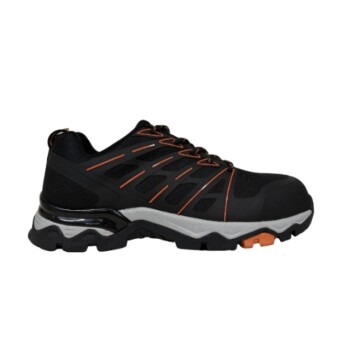
Gait analysis algorithms maintain accuracy across different footwear types by implementing a specific height compensation factor that accounts for varying sole thicknesses. Instead of relying on raw positional data, which can be distorted by the height of tactical boots or safety shoes, the system integrates human model geometric constraints to mathematically normalize the step length calculation.
The varying sole thicknesses of specialized footwear can introduce significant errors in direct spatial measurements. To neutralize this, advanced algorithms apply a height compensation factor and human model geometric constraints, ensuring that metrics like step length and cadence remain accurate regardless of whether the user is wearing heavy-duty boots or standard sneakers.
The Challenge of Footwear Variability
The Impact of Sole Architecture
Direct measurement of gait parameters is frequently compromised by the physical design of the footwear.
Safety shoes and tactical boots possess significantly different sole thicknesses compared to standard sneakers.
If an algorithm treats the bottom of a thick tactical boot as the actual foot position, the resulting spatial data will be skewed.
Biomechanical Alterations
Beyond simple height differences, the structure of the shoe changes how the subject moves.
Distinct materials, varying hardness, and friction coefficients in footwear like safety shoes directly alter gait characteristics.
These structural differences affect walking stability and motor skills, creating a complex dataset that simple linear measurement cannot interpret correctly.
The Algorithmic Solution
Height Compensation Factors
To address vertical discrepancies, the algorithm introduces a height compensation factor.
This mathematical adjustment effectively "subtracts" the artificial height introduced by the footwear.
By neutralizing the variable of sole thickness, the system isolates the movement of the subject from the dimensions of their equipment.
Human Model Geometric Constraints
The algorithm does not analyze the foot in isolation; it utilizes a geometric model of the human body.
These constraints act as a logical filter, ensuring the calculated movements fall within possible anatomical ranges.
This combination of compensation factors and geometric constraints eliminates measurement errors, allowing for precise calculation of step length and cadence.
Leveraging Plantar Pressure
To further enhance accuracy, some systems incorporate plantar pressure features.
This allows the system to quantify how specific functional shoes redistribute ground reaction forces.
Using pressure data improves the robustness of the recognition system, ensuring it can adapt to the specific "signature" of different wearing environments.
Understanding the Trade-offs
Mechanical vs. Behavioral Compensation
While the algorithm successfully corrects for the physical height of the shoe, it must also account for the behavioral change in the user.
A subject wearing heavy tactical boots will naturally walk differently than when barefoot or in sneakers due to the weight and stiffness of the boot.
Complexity of Recognition
Optimizing for "recognition robustness" across these environments adds computational complexity.
The system must differentiate between a gait anomaly caused by a physical issue and a gait alteration caused by the stiffness of a safety shoe.
Relying solely on spatial parameters without pressure data may reduce the system's ability to fully understand the ergonomic impact of the footwear.
Making the Right Choice for Your Goal
When selecting or tuning a gait analysis system for diverse environments, consider your specific data requirements:
- If your primary focus is precise spatial metrics (Step Length/Cadence): Ensure your algorithm explicitly utilizes height compensation factors to negate the noise caused by varying sole thicknesses.
- If your primary focus is ergonomic design or injury prevention: Prioritize systems that incorporate plantar pressure features to understand how the shoe redistributes force and alters stability.
- If your primary focus is robust identification in the field: Verify that the system applies human model geometric constraints to maintain accuracy across different gear configurations (e.g., tactical vs. athletic).
By decoupling the wearer's biomechanics from their equipment, these algorithms provide an objective basis for analyzing human movement in any environment.
Summary Table:
| Algorithmic Solution | Key Functionality | Impact on Data Accuracy |
|---|---|---|
| Height Compensation | Adjusts for varying sole thicknesses | Eliminates vertical measurement noise |
| Geometric Constraints | Applies human body anatomical limits | Normalizes spatial calculations |
| Plantar Pressure | Quantifies ground reaction forces | Enhances robustness in functional footwear |
| Biomechanical Analysis | Accounts for footwear weight & stiffness | Differentiates behavior from physical height |
Optimize Your Performance with 3515 Footwear Solutions
As a large-scale manufacturer serving distributors and brand owners, 3515 offers comprehensive production capabilities for all footwear types. Our flagship Safety Shoes series and extensive portfolio of tactical boots, outdoor shoes, and training sneakers are engineered with biomechanical precision in mind.
Whether you are developing gait-sensitive equipment or need high-volume supply for specialized footwear, our team provides the manufacturing expertise to meet diverse bulk requirements.
Ready to elevate your product line? Contact us today to learn how our advanced manufacturing can bring value to your brand!
References
- Zheng Li, Tao Song. Gait analysis algorithm for lower limb rehabilitation robot applications. DOI: 10.5194/ms-14-315-2023
This article is also based on technical information from 3515 Knowledge Base .
Related Products
- Premium Suede Sport Safety Shoes for Wholesale & Bulk Orders
- Premium Lightweight Safety Shoes for Wholesale & Bulk Orders
- Premium KPU Injection Athletic Style Safety Shoes
- Advanced KPU Athletic Safety Shoe with Steel Toe Cap Anti-Slip Rotary Lacing System
- Premium Safety Shoes with Rotating Buckle Safety Sneakers
People Also Ask
- What industries have specific OSHA footwear requirements? Ensure Compliance & Protect Your Workforce
- What are the primary functions of professional safety shoes? Maximize Safety in Water Supply Confined Spaces
- What role do specialized safety shoes play in preventing falls? Engineering Stability in Industrial Environments
- What are the main safety features of S1-S5 shoes? The 3 Essential Protections Explained
- Why should ergonomics and comfort be prioritized when selecting safety shoes? Boost Compliance & Worker Health