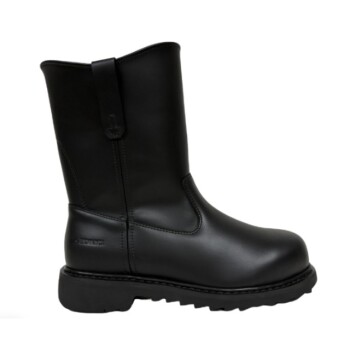
The toe of a Western boot is critically important because it defines both the boot's style and its functional purpose. As the most visible part of the boot, its shape creates the immediate aesthetic impression, while its internal volume dictates comfort and suitability for different activities, from riding to walking.
The ideal boot toe is a deliberate choice that balances a rich heritage of functional design with the modern demands of personal style and all-day comfort. Understanding the purpose behind each shape is key to selecting the right boot.
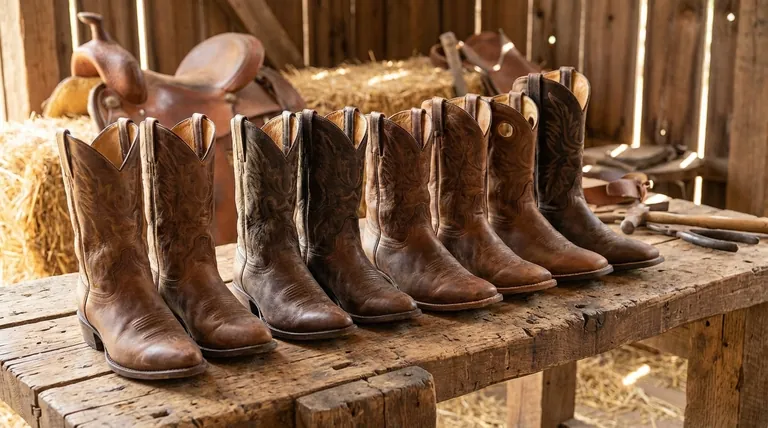
The Dual Role of the Boot Toe: Style and Function
The toe box is where the boot makes its first impression and where your foot feels the most direct impact of the design. Its importance is split between what people see and how you feel.
Aesthetic and First Impressions
The profile of the toe is the leading edge of your boot's silhouette. It can make a boot look sleek and traditional or modern and bold.
Many boots also feature a toe bug, an ornate, hand-corded stitch pattern on top of the toe box. This decorative element is a hallmark of quality craftsmanship and adds unique character.
Functional Design and Fit
Historically, narrower, pointed boot toes were designed to make it easier for a rider to slide their foot into a saddle's stirrup quickly and securely.
Today, many wearers prioritize comfort for walking and standing. This has led to the popularity of wider toe shapes that give the toes more room to spread out naturally, reducing pressure and fatigue.
A Guide to Common Western Boot Toe Shapes
While variations exist, most Western boot toes fall into a few key categories, each with a distinct look and feel.
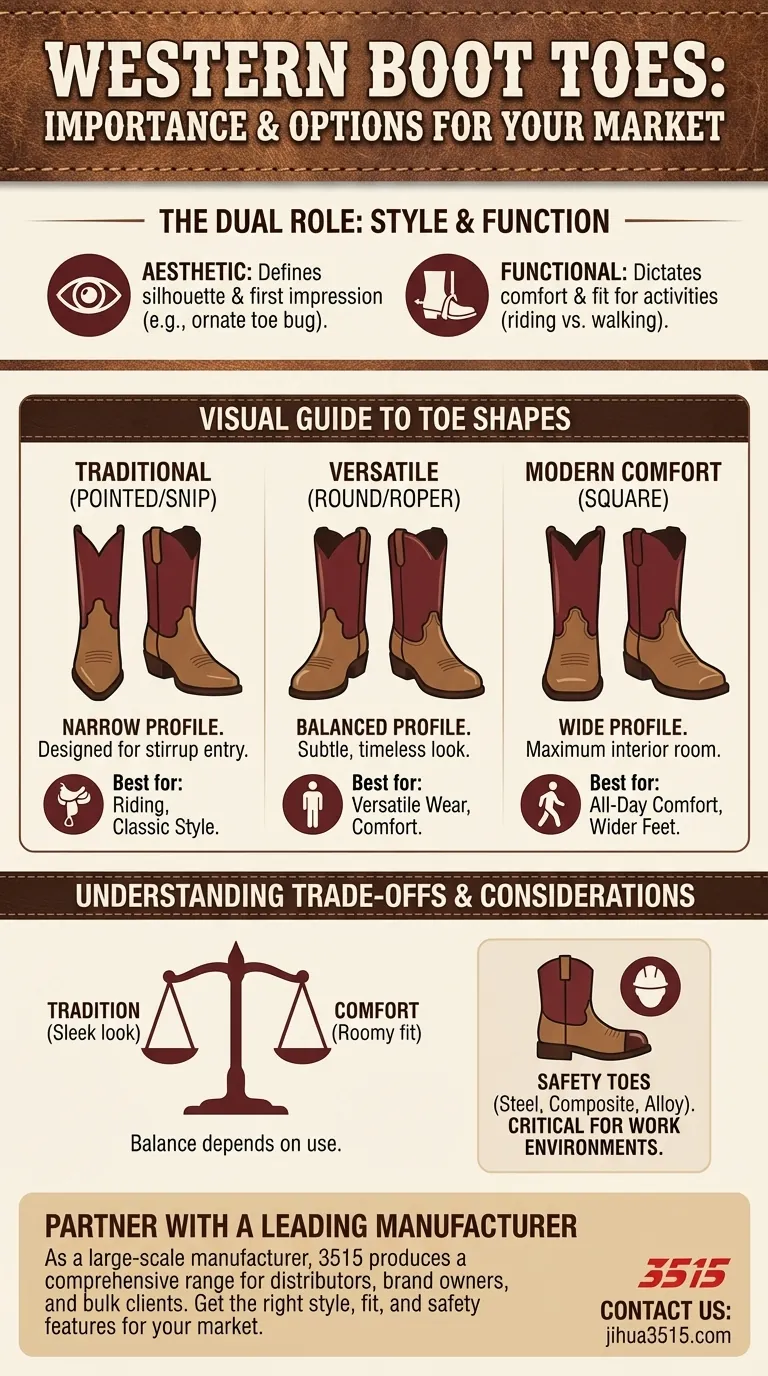
Pointed and Snip Toes (Traditional)
The classic pointed toe is the most traditional silhouette, designed with horseback riding in mind. A snip toe is similar but has the very tip squared off, offering a sharp, stylish look. Both provide a classic Western profile.
Round and Roper Toes (Versatile)
A round toe offers a more subtle, timeless look that is less aggressive than a pointed style. It provides a good balance of comfort and tradition.
The roper toe is a fully rounded, U-shaped toe that offers more room. It's often paired with a lower heel, making it exceptionally comfortable for walking and groundwork.
Square Toes (Modern Comfort)
Available in medium and wide profiles, the square toe is a modern design that has become incredibly popular. It offers the most interior room, making it a preferred choice for all-day wear, especially for those with wider feet.
Understanding the Trade-offs
Choosing a boot toe is not just about looks; it involves balancing competing priorities to find the perfect fit for your needs.
Comfort vs. Tradition
The primary trade-off is often between the traditional, narrow profile and modern, roomy comfort. A classic pointed toe looks sharp but may not be comfortable for a full day on your feet, whereas a wide square toe prioritizes comfort over a traditional silhouette.
Fit and Foot Shape
The best toe shape is ultimately the one that best matches your foot. Forcing a wide foot into a narrow pointed boot will cause pain and potential foot problems, regardless of how stylish it looks. Always prioritize a shape that allows your toes to lie flat and comfortable.
The Role of Safety Toes
For work environments, function takes precedence. Safety toes (made of steel, composite, or alloy materials) are a critical feature available in various toe shapes. This protective element is essential for preventing injury on a job site.
Making the Right Choice for Your Needs
Your intended use for the boot is the best guide for selecting the right toe shape.
- If your primary focus is traditional style and riding: A pointed, snip, or classic round toe will offer the authentic look and function you need.
- If your primary focus is all-day comfort and walking: A square, wide round, or roper toe will provide the necessary room and support.
- If your primary focus is workplace safety: Seek out a boot with a certified safety toe, choosing the underlying shape that best fits your foot.
Ultimately, the right boot toe is the one that meets your functional needs while reflecting your personal style.
Summary Table:
| Toe Shape | Key Characteristics | Best For |
|---|---|---|
| Pointed/Snip | Narrow, traditional silhouette | Riding, classic style |
| Round | Timeless, balanced profile | Versatile wear, comfort |
| Roper | Fully rounded, U-shape, roomy | Walking, groundwork |
| Square | Wide, modern, maximum interior room | All-day comfort, wider feet |
| Safety Toe | Protective (steel/composite) | Work environments, job sites |
Ready to find the perfect western boot for your needs?
As a large-scale manufacturer, 3515 produces a comprehensive range of footwear for distributors, brand owners, and bulk clients. Our production capabilities encompass all types of shoes and boots, ensuring you get the right style, fit, and safety features for your market.
Contact our expert team today to discuss your specific requirements and discover how we can support your business with high-quality, comfortable western boots.
Visual Guide
Related Products
- Durable Goodyear Welt Leather Work Boots for Wholesale & Private Label
- Durable Military Combat Boots with Water Drainage for Wholesale & OEM
- High-Traction Suede Tactical Boots Wholesale & Custom Manufacturing
- Heavy-Duty Goodyear Welted Pull-On Safety Rigger Boot
- Durable Leather Tactical Boots Wholesale & Custom Manufacturing for Brands
People Also Ask
- What is the difference between full-grain and top-grain leather? Premium Material Guide for Boot Manufacturers
- What are the advantages of leather as an upper material for work boots? Unmatched Durability & Custom Comfort
- Why is it important to waterproof leather work boots? Protect Your Investment and Performance
- How should new leather work boots be broken in? A Guide to Comfort and Durability
- What are the advantages of leather uppers in work boots? Unmatched Durability & Protection