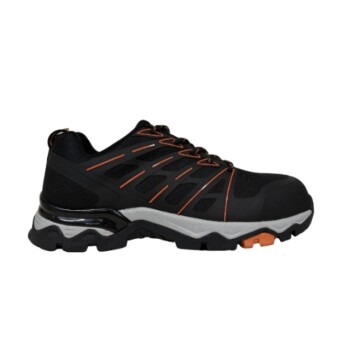
For manufacturers of safety shoes and tactical boots, process management within a Total Quality Management (TQM) framework is the operational backbone of reliability. It serves as a critical mechanism to systematically reduce rework, lower defect rates, and strictly control production costs in these labor-intensive sectors. By addressing the resource constraints common in smaller enterprises, refined process control provides the stability necessary to transition from traditional crafting to efficiency-driven manufacturing.
Process management transforms production from a reactive struggle against defects into a proactive engine for reliability, ensuring that every pair of boots meets rigorous safety standards while maximizing operational efficiency.
Elevating Production Quality and Consistency
Mitigating Risks in High-Stakes Manufacturing
Safety footwear and tactical boots are functional equipment, not just apparel. Refined process control is essential because a failure in bonding or reinforcement can compromise the wearer's physical safety.
Ensuring Compliance through Centralization
A centralized production background integrates everything from raw material sourcing to final assembly. This structure reduces the quality risks associated with low supply chain transparency.
It ensures critical processes, such as reinforcement, bonding, and the application of functional coatings, are performed in controlled environments. This is the only way to consistently meet rigorous international safety standards for impact and puncture resistance.
Economic Efficiency and Resource Optimization
Controlling Costs via Defect Reduction
For labor-intensive industries, rework is a major profit drain. Systematic process management identifies errors before they compound.
By lowering defect rates at the source, manufacturers effectively control production costs. This is particularly vital for smaller enterprises facing strict resource constraints.
Leveraging Economies of Scale
Process management lays the groundwork for rational scale expansion. Expanding operations allows manufacturers to spread R&D costs and fixed equipment investments over a larger production volume.
This approach reduces the unit production cost. It enables a transition from traditional methods to modern, efficiency-driven models that maximize resource utilization.
Enabling Lifecycle Management and Repair
Design for Replaceability
High-strength footwear requires a lifecycle approach to process management. Initial design processes must incorporate replaceable elements, such as midsoles or outsoles, to allow for lifetime maintenance.
Maintaining Safety Ratings Post-Repair
Repair processes must be as strictly managed as initial production. Manufacturers must utilize professional sewing and refurbishing equipment to ensure repairs do not degrade performance.
A controlled repair process ensures that refurbished footwear maintains its original safety certifications for impact and puncture resistance, extending the operational life of the product.
Understanding the Trade-offs
The Cost of Transition
Implementing a robust process management system requires a shift in organizational culture and upfront investment. Moving from flexible, traditional methods to a systematic, centralized approach can initially feel rigid and resource-heavy.
Balancing Scale and Agility
While expanding scale reduces unit costs, it introduces complexity. Manufacturers must balance the drive for economies of scale with the need to remain agile. Over-expansion without solidified process controls can lead to systemic inefficiencies rather than savings.
Making the Right Choice for Your Goal
To effectively implement process management in your footwear manufacturing operations, consider your immediate strategic priorities:
- If your primary focus is Risk Mitigation: Prioritize centralized control over bonding and reinforcement processes to ensure compliance with international safety standards.
- If your primary focus is Cost Efficiency: Focus on standardized workflows to reduce rework and defect rates, utilizing scale to lower unit costs.
- If your primary focus is Brand Longevity: Implement design processes that support component replacement and professional refurbishment to offer lifetime maintenance.
Process management is not merely a tool for organization; it is the fundamental strategy for achieving a sustainable competitive advantage in the safety footwear market.
Summary Table:
| Strategic Focus | Key Process Area | Primary Benefit |
|---|---|---|
| Risk Mitigation | Centralized bonding & reinforcement | Guaranteed compliance with international safety standards |
| Cost Efficiency | Standardized workflows & defect reduction | Lower unit costs and reduced resource waste |
| Brand Longevity | Lifecycle design & repair management | Enhanced product durability and post-sale service value |
| Operational Scale | R&D and equipment integration | Improved resource utilization and R&D cost amortization |
Partner with a Manufacturing Leader for Your Footwear Success
As a large-scale manufacturer serving distributors and brand owners, 3515 offers comprehensive production capabilities for all footwear types, anchored by our flagship Safety Shoes series. Our extensive portfolio covers work and tactical boots, outdoor shoes, training shoes, and sneakers, as well as Dress & Formal shoes to meet diverse bulk requirements.
By choosing 3515, you gain access to a partner committed to the highest TQM standards, ensuring every pair of boots is a benchmark for reliability and safety. Whether you are looking to scale your brand or optimize your supply chain, we provide the manufacturing excellence you need to succeed in a competitive market.
Ready to elevate your footwear production? Contact us today to discuss your specific requirements and learn how our scale can benefit your business.
References
- Munawar Muchlish, Mazda Eko Sri Tjahyono. Influence of TQM on increasing sustainable competitive advantage with transformational leadership as a mediation variable. DOI: 10.20525/ijrbs.v10i8.1473
This article is also based on technical information from 3515 Knowledge Base .
Related Products
- Premium Suede Sport Safety Shoes for Wholesale & Bulk Orders
- Premium Lightweight Safety Shoes for Wholesale & Bulk Orders
- Wholesale Anti-Smash & Puncture-Proof Safety Shoes Custom Manufacturing for Brands
- Premium KPU Injection Athletic Style Safety Shoes
- Premium Safety Shoes with Rotating Buckle Safety Sneakers
People Also Ask
- What are the primary functions of professional safety shoes? Maximize Safety in Water Supply Confined Spaces
- What industries have specific OSHA footwear requirements? Ensure Compliance & Protect Your Workforce
- What role do specialized safety shoes play in preventing falls? Engineering Stability in Industrial Environments
- How does professional industrial cleaning equipment maintain the performance stability of safety shoes? Pro Maintenance
- How do specialized safety shoes protect against battery maintenance injuries? Prevent Impact and Chemical Burns