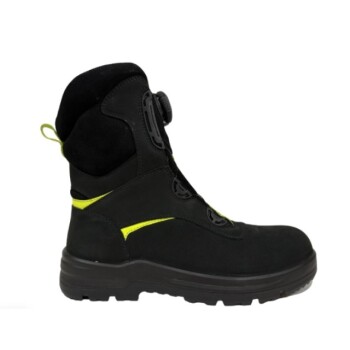
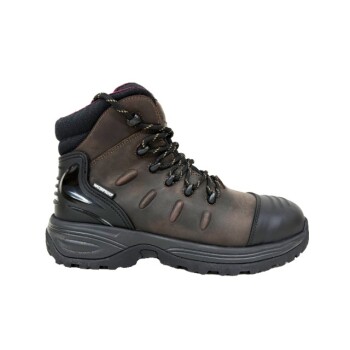
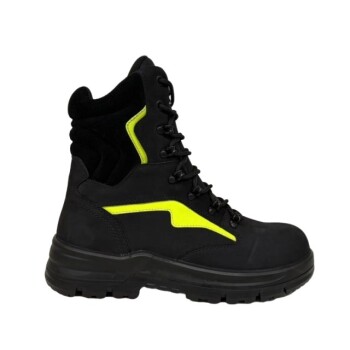
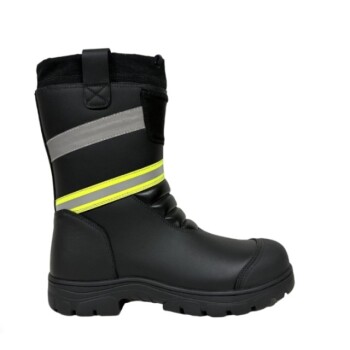
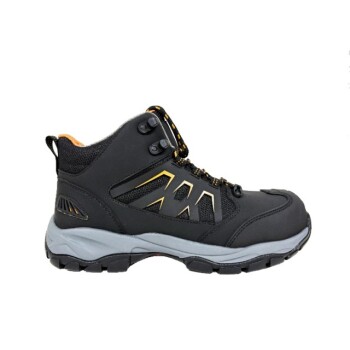
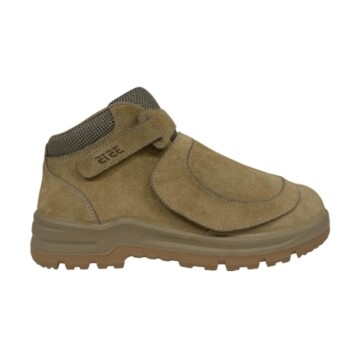
For industrial workers with peripheral neuropathy, professional-grade safety footwear acts as a vital substitute for the body's natural warning systems. Because these individuals often cannot perceive pain signals caused by friction, compression, or impact, they require the robust construction of professional gear—such as lace-up steel-toe boots—to act as a primary defense against mechanical hazards and to prevent the formation of pressure sores and ulcers.
Peripheral neuropathy eliminates the sensory feedback that warns of injury. High-quality safety footwear bridges this gap by providing a verified mechanical barrier against hazards, preventing severe complications like foot ulcers that typically arise from unperceived friction or trauma.
The Critical Role of Robust Construction
Compensating for Sensory Loss
The defining characteristic of peripheral neuropathy is the loss of sensation. In a typical scenario, pain alerts a worker that a boot is too tight or that an object has struck their foot.
Workers with neuropathy lack this feedback loop. Professional-grade footwear compensates for this by utilizing high-support structures that minimize foot movement and rubbing, which are primary causes of unseen tissue damage.
Mitigating Mechanical Hazards
Standard footwear often lacks the structural integrity to protect against industrial risks. Professional options, particularly lace-up steel-toe boots, offer rigid protection against crushing injuries.
Furthermore, the "robust construction" mentioned in industry standards ensures that the boot maintains its shape. This prevents the upper material from collapsing onto the foot, reducing the risk of compression sores and subsequent blisters.
Preventing Foot Ulcers
The ultimate goal of this protective equipment is the prevention of ulcers. By ensuring proper sizing and utilizing materials designed to withstand industrial environments, these boots significantly reduce the likelihood of pressure points.
Preventing the initial blister or sore is critical, as the lack of pain perception means minor injuries often go unnoticed until they progress into severe, hard-to-treat ulcers.
Ensuring Continued Reliability
The Reality of Material Aging
Buying the right boot is only the first step; maintenance is equally critical. Over time, the protective materials in safety footwear degrade.
Outsole wear and material aging lead to a sharp decline in protective performance. A boot that appears visually intact may have lost the material toughness required to withstand an industrial impact.
Standardized Inspection Protocols
To maintain safety, workers must implement standardized inspection mechanisms. This involves regularly checking core protective features against functional safety standards.
Key inspection points include anti-slip tread depth and the structural integrity of the steel toe cap. Determining the service life of the footwear prevents users from relying on gear that has effectively "expired."
Avoiding Catastrophic Failure
Failure to replace worn equipment can lead to production accidents. A worn outsole increases the risk of slips, while a compromised toe cap may fail during a crushing incident.
For a worker with neuropathy, these accidents are doubly dangerous because the severity of the injury may not be immediately felt, delaying medical treatment.
Common Pitfalls and Trade-offs
The Risk of Improper Sizing
While robust construction is essential, it creates a trade-off regarding fit. Rigid materials do not "break in" or stretch like casual footwear.
If a steel-toe boot is even slightly too small, the rigid cap becomes a hazard itself, creating constant pressure on the toes. Because the worker cannot feel this pressure, it can rapidly lead to the very ulcers the boot is meant to prevent. Precision sizing is non-negotiable.
False Security from Old Gear
There is a tendency to trust equipment simply because it was high-quality when purchased. Relying on the original specification of a boot without accounting for wear and tear is a dangerous oversight.
Material fatigue is invisible. Trusting a boot past its determined service life offers a false sense of security, leaving the worker vulnerable to crushing injuries or falls due to degraded tread.
Strategies for Long-Term Safety
To ensure maximum protection, you must match your equipment maintenance to your specific environmental risks.
- If your primary focus is preventing impact injuries: Prioritize the regular testing of steel toe cap compression resistance to ensure the protective shell remains uncompromised against crushing hazards.
- If your primary focus is preventing falls: Implement a strict schedule for measuring anti-slip tread depth to guarantee traction remains within functional safety standards.
By treating safety footwear as a proactive medical device rather than simple workwear, you safeguard your health against the invisible risks of neuropathy.
Summary Table:
| Feature | Benefit for Neuropathy | Critical Maintenance |
|---|---|---|
| Rigid Steel Toe | Prevents crushing injuries without worker feeling impact. | Check for structural integrity/compression fatigue. |
| Lace-up Support | Minimizes foot movement and friction to prevent blisters. | Ensure precision sizing to avoid constant pressure. |
| Anti-slip Outsole | Provides stability to compensate for balance/sensory loss. | Monitor tread depth regularly for traction loss. |
| Robust Construction | Creates a mechanical barrier against unseen trauma. | Replace when material aging compromises toughness. |
Secure Your Workforce with Premium Protective Footwear
As a large-scale manufacturer serving global distributors and brand owners, 3515 delivers the precision-engineered protection industrial workers need. Our flagship Safety Shoes series is specifically designed for high-risk environments, offering the structural integrity required to protect workers with specialized health needs like peripheral neuropathy.
Why partner with 3515?
- Comprehensive Portfolio: From tactical and work boots to sneakers and formal dress shoes.
- Bulk Manufacturing Excellence: Reliable production capabilities to meet large-scale demand.
- Verified Safety Standards: High-quality materials that resist aging and mechanical hazards.
Contact us today to discuss your bulk footwear requirements and see how our production expertise can add value to your brand.
References
- Rita McMorrow, Jo‐Anne Manski‐Nankervis. Preventing diabetes-related foot ulcers through early detection of peripheral neuropathy. DOI: 10.31128/ajgp-06-22-6456
This article is also based on technical information from 3515 Knowledge Base .
Related Products
- Puncture-Resistant Velcro Safety Boots for Wholesale & Custom Manufacturing
- Wholesale Durable Safety Boots | Custom Steel Toe & Puncture-Resistant Manufacturing
- Premium Grain Leather Safety Boots for Bulk Supply
- Heavy-Duty Waterproof Nubuck Safety Boots Safety Shoes for Bulk Supply
- Premium High-Cut Waterproof Safety Boots Manufacturing & Wholesale Solutions
People Also Ask
- Why are industrial safety boots with steel toes necessary for machine operators? Essential Foot Protection for Safety
- What are the characteristics of steel toe safety boots? Maximum Protection, Key Trade-offs
- Is it true that steel toes can cause toes to get cut off? Debunking the Dangerous Myth
- What are the primary safety functions of safety boots with steel-toe designs? Essential Protection for Industry
- What do the symbols M, F, I, and C represent on safety toe boots? Decode ASTM F2413 for Maximum Protection