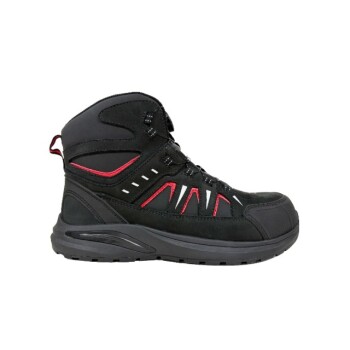
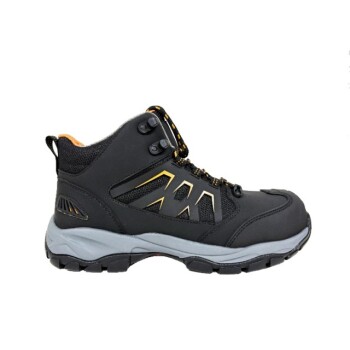
Accurate simulation of high-speed impact requires accounting for how materials change behavior under stress, particularly when safety is on the line. The Cowper-Symonds constitutive equation is required for Martensitic steel because this material exhibits significant strain rate dependency. Under the dynamic impact conditions of a safety shoe test, the steel becomes stronger than it is at rest, and this equation mathematically scales the yield stress to reflect that hardening effect.
Standard static material models fail to predict the behavior of Ultra-High Strength Steel (UHSS) during rapid impact events. The Cowper-Symonds equation provides the necessary mathematical correction to account for the increase in material strength caused by high deformation rates, ensuring numerical simulations match physical reality.
The Physics of Dynamic Impact
Understanding Strain Rate Dependency
Martensitic steel, categorized as an Ultra-High Strength Steel (UHSS), does not behave uniformly across all conditions. Its mechanical properties change drastically based on how fast it is deformed.
When a heavy object impacts a safety shoe toe cap, the deformation happens in milliseconds. This rapid deformation is known as a high strain rate.
The Phenomenon of Dynamic Hardening
At these high strain rates, Martensitic steel exhibits "dynamic hardening." This means the material effectively becomes harder and stronger during the impact than it is during a slow, static crush test.
If you rely solely on static strength data, your simulation will underestimate the toe cap's ability to resist deformation. This could lead to over-engineering the part or misinterpreting safety margins.
The Role of the Cowper-Symonds Equation
Mathematical Description of Hardening
Numerical simulations cannot inherently "know" that a material gets stronger when hit hard. They require a constitutive model to tell them how to adjust the math.
The Cowper-Symonds equation serves as this bridge. It calculates a scaling factor based on the speed of deformation and applies it to the static yield stress.
The Function of Parameters D and q
To make this equation accurate for a specific material, it uses distinct coefficients known as D and q.
These parameters are material-specific constants derived from experimental data. They allow the equation to precisely match the hardening curve of the specific Martensitic steel grade used in the toe cap.
Without accurate $D$ and $q$ values, the equation acts as a generic placeholder rather than a precise engineering tool.
Critical Considerations and Limitations
The Risk of Parameter Sensitivity
While the Cowper-Symonds equation is essential, it is not a "magic bullet" if the input data is flawed. The reliability of your simulation is entirely dependent on the accuracy of the $D$ and $q$ parameters.
Using generic values for these constants can result in significant errors. If the parameters do not align with your specific batch of Martensitic steel, the simulation may predict safety compliance where none exists.
Ensuring Simulation Reliability
To effectively utilize the Cowper-Symonds equation in safety shoe design, you must align your approach with your specific engineering goals:
- If your primary focus is Simulation Accuracy: Prioritize obtaining experimental $D$ and $q$ values that strictly match the specific grade of Martensitic steel you are analyzing.
- If your primary focus is Safety Certification: Use the equation to demonstrate that the toe cap withstands dynamic loads without exceeding the maximum deformation limits allowed to protect the user's toes.
By correctly applying this constitutive model, you transform static material data into a dynamic prediction that ensures real-world safety.
Summary Table:
| Feature | Static Material Models | Cowper-Symonds Constitutive Equation |
|---|---|---|
| Core Focus | Slow, constant stress levels | High-speed, dynamic impact events |
| Material Behavior | Fixed yield strength | Dynamic hardening based on strain rate |
| Application | Basic structural analysis | UHSS / Martensitic steel safety testing |
| Key Parameters | Elastic Modulus, Yield Point | D and q (Material-specific constants) |
| Simulation Goal | General deformation prediction | Accurate safety certification compliance |
Elevate Your Safety Footwear Performance with 3515
As a leading large-scale manufacturer serving global distributors and brand owners, 3515 leverages advanced engineering insights to deliver superior protective gear. Our flagship Safety Shoes series utilizes high-performance Martensitic steel and rigorous dynamic testing to ensure maximum impact resistance. Beyond safety, our comprehensive production capabilities extend to tactical boots, outdoor shoes, training sneakers, and formal dress shoes to meet your bulk procurement needs.
Partner with a manufacturer that understands the science of safety. Contact us today to discuss your custom manufacturing requirements and see how our expertise adds value to your brand.
References
- Nuno Peixinho, João Pedro Mendonça. Experimental and Numerical Assessment of the Impact Test Performance Between Two UHSS Toe Cap Models. DOI: 10.1590/1980-5373-mr-2022-0167
This article is also based on technical information from 3515 Knowledge Base .
Related Products
- Advanced KPU Athletic Safety Shoe with Steel Toe Cap Anti-Slip Rotary Lacing System
- Wholesale Safety Footwear Manufacturer for Bulk & Custom OEM Orders
- Wholesale Mesh Steel Toe Safety Shoes with Dial Closure Factory Production
- Durable Steel Toe Safety Boots Wholesale & Custom Manufacturing
- Athletic Safety Shoes with Dial Closure & Steel Toe for Wholesale & Custom Manufacturing
People Also Ask
- What are the key differences between steel toe and composite toe caps? Choose the Right Safety for Your Job
- What impact do steel toe caps have on toe skin health? Prevent Friction and Pressure in Your Safety Shoes
- What are the primary protective functions of safety shoes with steel toes in the automotive repair industry?
- What type of safety shoe is recommended for workers exposed to heavy machinery? Steel Toe Boots for Ultimate Protection
- How does defining specific friction interface models in FEA assist in predicting safety shoe toe cap failure modes?