
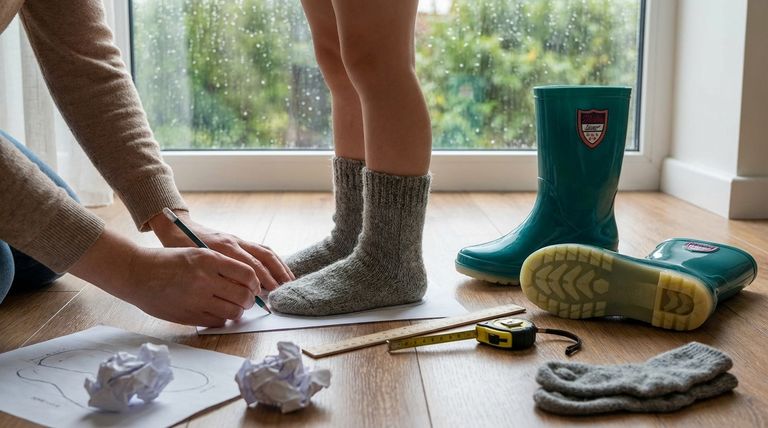
To measure a child’s feet for Wellington boots, have them stand on a piece of paper and trace the outline of both feet. Measure the length from the heel to the tip of the longest toe, and the width at the widest part. Use these measurements, particularly from the larger foot, and compare them against the specific brand's size chart.
The goal is not to match the foot's exact size, but to find a boot that provides a thumb's width of space at the end. This crucial gap accounts for thick welly socks and natural foot movement, preventing discomfort and blisters.
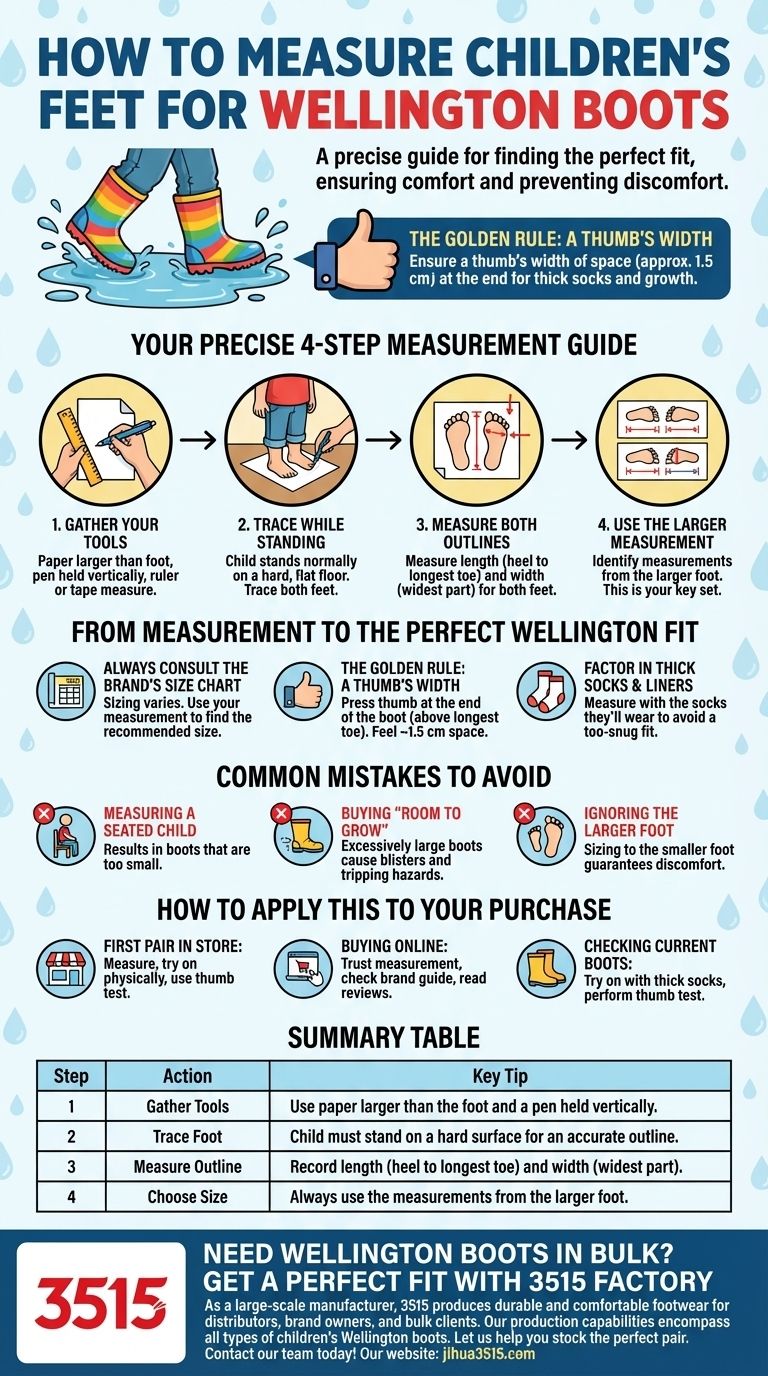
Your Precise 4-Step Measurement Guide
Getting an accurate measurement is the foundation of a good fit. It only takes a few minutes and removes the guesswork from buying boots.
Step 1: Gather Your Tools
You will need a piece of paper larger than your child's foot, a pen or pencil held vertically, and a ruler or tape measure.
Step 2: Trace While Standing
Place the paper on a hard, flat floor. Have your child stand normally on the paper, as their feet spread out and lengthen slightly when bearing weight.
Carefully trace the complete outline of their foot. If possible, have them stand still while you trace the second foot on the same or another piece of paper.
Step 3: Measure Both Outlines
Feet are rarely the exact same size. Using your ruler, measure the length from the very back of the heel to the tip of the longest toe on each tracing.
Next, measure the width across the widest part of each foot outline, which is typically the ball of the foot.
Step 4: Use the Larger Measurement
Identify the measurements from the larger of the two feet. This is the set of numbers you will use to find the correct size.
From Measurement to the Perfect Wellington Fit
A number on a chart is a starting point. The unique shape of Wellington boots requires a few extra considerations to ensure all-day comfort.
Always Consult the Brand's Size Chart
Footwear sizing is not standardized across brands. A size 7 from one company may be different from another's. Always locate the specific size chart for the brand of boots you intend to buy and use your measurement to find their recommended size.
The Golden Rule: A Thumb's Width
The most reliable in-person fit test is checking the space at the end of the boot. After your child puts the boot on, press your thumb down on the front of the boot just above their longest toe.
You should feel a space roughly the width of your thumb (about 1.5 cm). This ensures there is enough room for comfort without the foot sliding excessively.
Factor in Thick Socks and Liners
Wellington boots are almost always worn with thicker socks or thermal liners. If you measure your child's bare foot, the resulting size may be too snug once they put on proper socks. It's often wise to measure while they are wearing the type of socks they'll use with the boots.
Common Mistakes That Lead to a Poor Fit
Avoiding these simple errors is just as important as following the correct steps. A poor fit can lead to tripping hazards, blisters, and foot pain.
Measuring a Seated Child
A child's foot is smaller when they are not standing on it. Measuring them while seated will almost always result in buying boots that are too small.
Buying "Room to Grow"
While tempting, buying boots that are excessively large is a safety risk. A foot that slides around inside a boot can cause blisters and instability, leading to trips and falls. The "thumb's width" rule provides adequate room without being hazardous.
Ignoring the Larger Foot
Sizing to the smaller foot will guarantee discomfort. Always default to the measurements of the larger foot for a fit that accommodates both.
How to Apply This to Your Purchase
Use your measurements to make an informed decision based on your situation.
- If your primary focus is buying the first pair of wellies: Take your measurement and the child to a store to physically try on the boots, using the thumb-width test for confirmation.
- If your primary focus is buying online with confidence: Trust your measurement, carefully check the brand's size guide, and read reviews to see if the boots run large or small.
- If your primary focus is checking if current boots still fit: Have your child put them on with thick socks and perform the thumb-width test. If there's no longer adequate space, it's time for a new pair.
Following these steps ensures your child's feet are comfortable and protected on every rainy-day adventure.
Summary Table:
| Step | Action | Key Tip |
|---|---|---|
| 1 | Gather Tools | Use paper larger than the foot and a pen held vertically. |
| 2 | Trace Foot | Child must stand on a hard surface for an accurate outline. |
| 3 | Measure Outline | Record length (heel to longest toe) and width (widest part). |
| 4 | Choose Size | Always use the measurements from the larger foot. |
Need Wellington Boots in Bulk? Get a Perfect Fit with 3515 Factory
As a large-scale manufacturer, 3515 produces a comprehensive range of durable and comfortable footwear for distributors, brand owners, and bulk clients. Our production capabilities encompass all types of children's Wellington boots, ensuring consistent sizing and superior quality for your customers.
Let us help you stock the perfect pair. Contact our team today to discuss your requirements and request a quote!
Visual Guide
Related Products
- Durable Waterproof Rain Boots | Custom Manufacturer for Wholesale & Brands
- Durable High-Ankle Tactical Boots Wholesale Manufacturer for Custom & Bulk Orders
- Durable Leather High-Ankle Tactical Boots for Wholesale & Custom Manufacturing
- Wholesale Lightweight Tactical Boots with Dial Closure OEM & Bulk Orders
- Premium Wholesale Tactical Style Safety Shoes Boots with Quick Lacing
People Also Ask
- What are the main materials for waterproof rain boots? Choose the Right Material for Durability & Comfort
- What is the overall recommendation for choosing rain boot materials? A Guide to Rubber vs. PVC
- How does boot height affect waterproofing? Choose the Right Height for Ultimate Protection
- Why are rain boots more flexible and comfortable than snow boots? The Key Differences Explained
- What are the best types of shoes for different gardening conditions? Find Your Perfect Match.






