
In short, rubber boots are specialized footwear designed for complete waterproof protection in wet, muddy conditions or for scent control during hunting. Their primary function is to create an impermeable barrier against external moisture, making them ideal for specific, often short-duration tasks.
While rubber boots offer unparalleled protection from water, their non-breathable nature is their defining limitation. This core trade-off makes them perfect for specific scenarios but unsuitable for all-day, high-exertion activities where foot moisture becomes a problem.
The Core Principle: An Impermeable Barrier
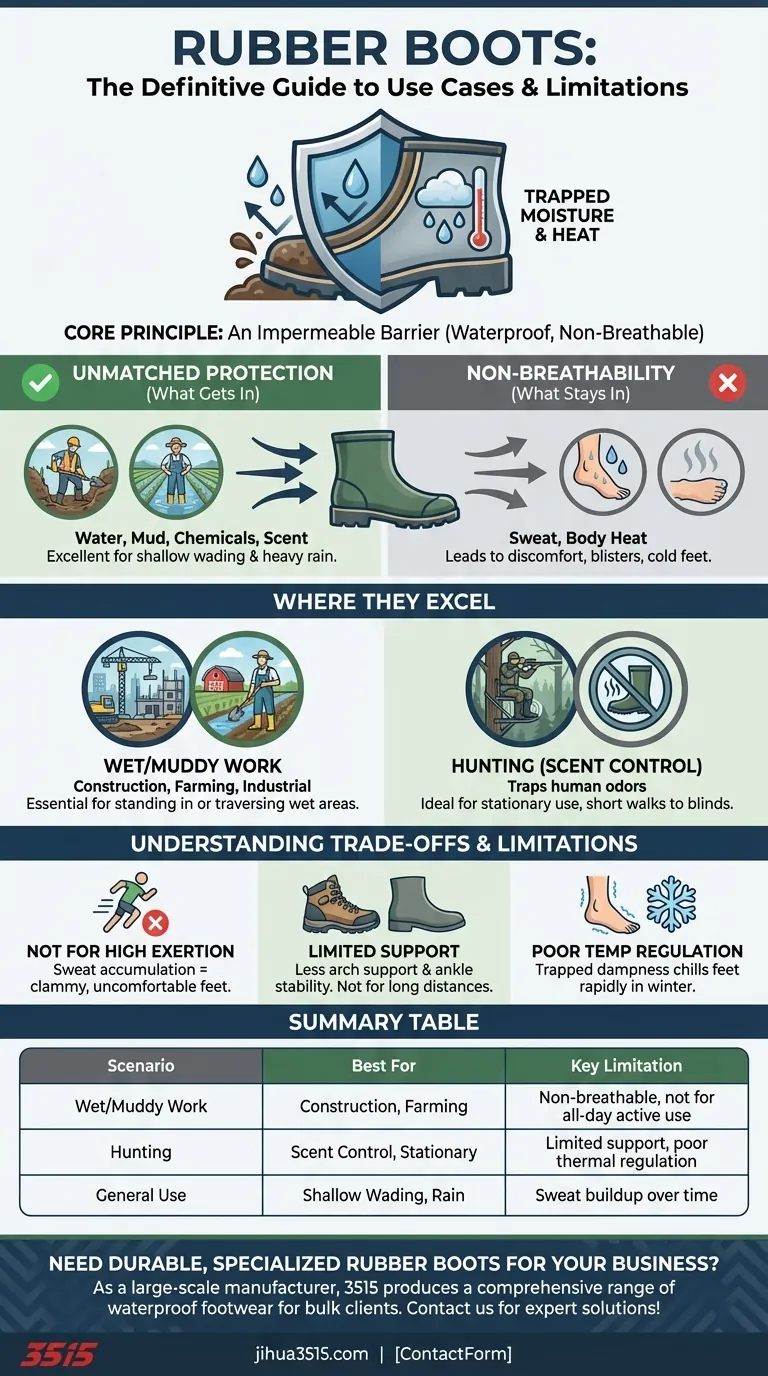
The entire value of a rubber boot stems from its material. Rubber is non-porous, creating a shell that water, mud, and chemicals cannot penetrate. This single property dictates both its strengths and its weaknesses.
### Unmatched Protection from Moisture
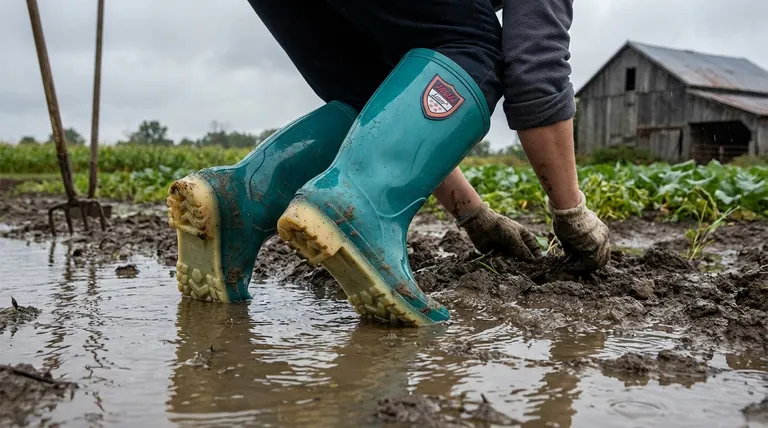
Rubber's primary job is to keep external elements out. This makes these boots the superior choice for wading in shallow water, navigating deep mud on a farm or construction site, or simply working in heavy rain.
Unlike "water-resistant" materials, solid rubber provides true, reliable waterproofness.
### The Double-Edged Sword of Non-Breathability
The very quality that makes rubber boots waterproof also makes them non-breathable. They do not allow water vapor—namely, sweat—to escape.
This is the most critical factor to understand. Over time, moisture builds up inside the boot from your own feet, which can lead to discomfort, blisters, and cold feet in winter conditions as the trapped dampness chills.
Key Scenarios Where Rubber Boots Excel
Understanding the non-breathable trade-off helps clarify exactly when rubber boots are the right tool for the job. They excel in situations where external moisture is the main threat and the duration of wear is manageable.
### Wet and Muddy Work Environments
For professionals in construction, farming, manufacturing, or industrial settings, rubber boots are essential safety equipment. They protect against water, mud, and some chemicals.
They are ideal for tasks that involve standing in or frequently traversing wet areas, but not for all-day wear if the work is highly active and takes place in dry conditions.
### A Specialized Advantage in Hunting
For hunters, rubber boots offer a unique benefit: scent control. The non-porous material traps human odors, preventing them from contaminating a trail or being detected by game.
This makes them particularly valuable for hunters walking short distances to a stationary treestand or blind, where staying dry and scent-free is more important than long-distance comfort.
Understanding the Trade-offs
Choosing the right footwear is about matching the tool to the task. Being objective about the limitations of rubber boots is key to using them effectively and avoiding discomfort.
### Not for High-Exertion Activities
For long hikes or strenuous all-day work, the lack of breathability becomes a significant problem. The sweat accumulation will make your feet clammy and uncomfortable far more than a breathable boot would.
### Limited Foot Support
Most traditional rubber boots are designed as simple shells. They typically offer less arch support and ankle stability than dedicated hiking or work boots, making them less suitable for covering long distances or navigating uneven terrain.
### Poor Temperature Regulation
Trapped moisture is the enemy of warm feet in the winter. A damp sock inside a rubber boot will make your foot feel much colder than a dry one in a breathable boot, even if the latter isn't as insulated.
Making the Right Choice for Your Goal
To decide if rubber boots are right for you, define your primary need.
- If your primary focus is keeping feet completely dry in wet, muddy, or shallow water conditions: Rubber boots are the best and most reliable choice.
- If your primary focus is scent control for stationary hunting: The impermeable nature of rubber boots gives you a distinct advantage.
- If your primary focus is all-day comfort during active work or long hikes: You should choose breathable, waterproof alternatives made from materials like leather or Gore-Tex.
Ultimately, understanding the core trade-off between total waterproofness and a lack of breathability is the key to deploying rubber boots effectively.
Summary Table:
| Scenario | Best For | Key Limitation |
|---|---|---|
| Wet/Muddy Work | Construction, farming, industrial tasks | Non-breathable; not for all-day high-exertion |
| Hunting | Scent control; short-distance stationary use | Limited foot support; poor temperature regulation |
| General Use | Shallow water wading, heavy rain protection | Sweat buildup can cause discomfort over time |
Need durable, specialized rubber boots for your business? As a large-scale manufacturer, 3515 produces a comprehensive range of waterproof footwear for distributors, brand owners, and bulk clients. Our production capabilities encompass all types of rubber boots and work footwear designed for maximum protection and reliability. Contact us today to discuss your specific needs and benefit from our expert manufacturing solutions!
Visual Guide
Related Products
- Factory Direct Wholesale Rain Boots Durable Waterproof & Fully Customizable
- Durable Rubber Sole Outdoor Shoes Wholesale & Custom Manufacturing
- Wholesale Durable Camouflage Canvas Shoes with High-Traction Cleated Rubber Sole
- Durable Leather Work Boots for Wholesale & Custom Manufacturing
- Wholesale Durable Leather Work Boots | 8-Inch Goodyear Welt Manufacturer
People Also Ask
- What are the characteristics of rain boots? A Guide to Waterproof Footwear for Every Need
- What factors should be considered when choosing rain boots? Find the Perfect Boot for Your Needs
- What are the main differences between rain boots and snow boots? Choose the Right Boot for Your Climate
- How should one decide between PVC and rubber for rain boots? A Guide to Choosing the Right Material
- Why are rain boots more flexible and comfortable than snow boots? The Key Differences Explained















