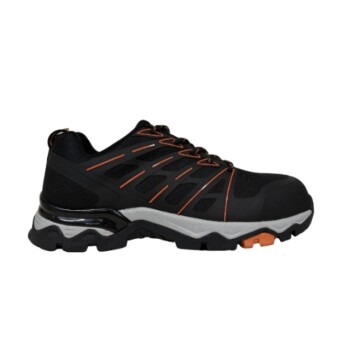
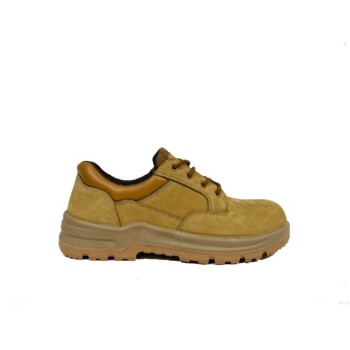
Slip resistance is the primary technical barrier against workplace injuries, serving as the most critical safety feature for footwear in industrial, medical, and food service environments. By utilizing outsoles with a high friction coefficient and specialized tread patterns, professional work boots provide the essential grip needed to maintain stability on wet, oily, or chemically treated surfaces where standard footwear fails.
High slip resistance is not merely a feature but a fundamental risk-mitigation tool that prevents the third most common cause of non-fatal workplace injuries. For enterprise-scale operations, implementing certified slip-resistant footwear is the most effective way to ensure workforce continuity and reduce liability in high-risk environments.
The Engineering Behind Superior Traction
Advanced Tread Patterns and Fluid Channeling
To maintain contact with the ground in wet or oily conditions, outsoles must effectively "pump" liquids away from the contact patch. Deep tread patterns and specialized grooves are engineered to channel water, oil, and debris outward, preventing the "aquaplaning" effect that leads to sudden falls.
Specialized Rubber Compounds and Friction
The chemical formulation of the outsole is as vital as its shape. Professional-grade safety shoes utilize high-performance rubber compounds designed to remain flexible and "tacky" even in cold or chemically harsh environments, ensuring a high friction coefficient on diverse surfaces from polished tile to mud.
Navigating International Standards (SRA, SRB, SRC)
Technical superiority is verified through rigorous testing, resulting in certifications like SRA (tested on ceramic with detergent), SRB (tested on steel with glycerin), or SRC (meeting both standards). For distributors and brand owners, these certifications are non-negotiable benchmarks that guarantee the product meets global safety mandates for high-risk zones.
Mitigating Enterprise Risk and Operational Downtime
The Economic Impact of Workplace Slips
Slips and falls represent a significant portion of occupational injuries, leading to lost workdays, decreased productivity, and increased insurance premiums. By providing footwear with proven slip resistance, enterprises protect their most valuable asset—their workforce—while stabilizing operational costs.
Reliability in High-Volume Manufacturing
For large-scale distributors, the challenge lies in maintaining these technical standards across massive production volumes. Partnering with a manufacturer with a heritage dating back to 1951 and state-of-the-art equipment ensures that every pair of boots delivered meets the same exacting slip-resistance specifications, regardless of order size.
OEM/ODM Capabilities for Niche Environments
Different high-risk environments, such as fiber optic repair on wet grass or industrial kitchens with grease-slicked floors, require tailored outsole solutions. Premium OEM/ODM services allow brand owners to customize tread designs and material formulations to solve specific industry-related grip challenges effectively.
Understanding the Trade-offs
Balancing Grip with Outsole Longevity
A common challenge in safety shoe design is the trade-off between softness (for grip) and hardness (for durability). While softer compounds offer superior slip resistance, they may wear down faster in abrasive environments; therefore, choosing the right material blend is essential for balancing safety with product lifespan.
Environmental Degradation of Outsoles
Slip-resistant properties can diminish over time due to exposure to harsh chemicals or extreme temperatures. It is critical for professionals to monitor tread wear indicators, as even the highest-rated SRC boots lose their effectiveness once the specialized tread patterns are worn smooth.
Choosing the Right Technical Specification for Your Market
When selecting or developing a line of safety footwear, the technical requirements must align with the specific hazards of the end-user's environment.
- If your primary focus is Food Service or Healthcare: Prioritize SRA-rated footwear with closed-channel tread designs that prevent organic debris from clogging the sole.
- If your primary focus is Heavy Industry or Petrochemicals: Ensure the boots carry an SRB or SRC rating, utilizing oil-resistant rubber compounds that won't degrade when exposed to lubricants.
- If your primary focus is Outdoor Maintenance or Utilities: Look for aggressive, multi-directional tread patterns and "cleated" outsoles that provide stability on mud, wet grass, and uneven terrain.
Integrating high-performance slip resistance into your product line is the most direct way to enhance brand trust and ensure long-term worker safety in any high-risk sector.
Summary Table:
| Certification | Test Surface & Lubricant | Target Environment |
|---|---|---|
| SRA | Ceramic Tile + Detergent (SLS) | Healthcare, Indoor Food Service, Labs |
| SRB | Smooth Steel + Glycerin | Petrochemical, Heavy Industry, Workshops |
| SRC | Meets both SRA and SRB | Construction, High-Risk Logistics, General Industrial |
| Tread Design | Deep Channels & Fluid Grooves | Wet, Oily, or Debris-Heavy Surfaces |
Partner with 3515 for Certified, High-Performance Safety Footwear
As a large-scale manufacturer serving distributors and brand owners since 1951, 3515 offers the industrial heritage and state-of-the-art manufacturing scale needed to secure your market position. We specialize in high-volume delivery of safety shoes with rigorous SRA/SRB/SRC certifications, ensuring your clients receive consistent, life-saving quality.
Our comprehensive production capabilities cover all footwear types, anchored by our flagship Safety Shoes series. Our extensive portfolio also includes:
- Work & Tactical Boots for extreme environments
- Outdoor & Training Shoes for durability and performance
- Sneakers & Dress/Formal Shoes for diverse bulk requirements
Whether you need premium OEM/ODM customization to solve specific industry challenges or a stable supply chain to maximize profit margins, we have the expertise to help you scale.
Ready to elevate your product line with industry-leading safety standards?
References
- Roslyn Aclan, Kate Laver. Common home hazards among healthy older aged adults and potential modifications required for age‐friendly housing. DOI: 10.1111/1440-1630.12918
This article is also based on technical information from 3515 Knowledge Base .
Related Products
- Premium Suede Sport Safety Shoes for Wholesale & Bulk Orders
- Premium Lightweight Safety Shoes for Wholesale & Bulk Orders
- Wholesale Anti-Smash & Puncture-Proof Safety Shoes Custom Manufacturing for Brands
- Premium KPU Injection Athletic Style Safety Shoes
- Premium Safety Shoes with Rotating Buckle Safety Sneakers
People Also Ask
- What industries have specific OSHA footwear requirements? Ensure Compliance & Protect Your Workforce
- What are the primary functions of professional safety shoes? Maximize Safety in Water Supply Confined Spaces
- What role do specialized safety shoes play in preventing falls? Engineering Stability in Industrial Environments
- What happens during the cutting stage of safety shoes manufacturing? Precision, Process & Quality
- How do I choose the best safety shoes? Match Certified Features to Your Hazards