
At its core, safety is the primary engineering principle behind a horse riding boot. More than just footwear, a proper boot is a critical piece of equipment designed to mitigate the specific and severe risks inherent in equestrian activities, from unpredictable horse movements to the dynamics of a potential fall.
The design of a riding boot is not about fashion; it's a calculated response to two primary dangers: preventing the rider's foot from sliding through the stirrup and being dragged, and protecting the foot and ankle from crushing or impact injuries.
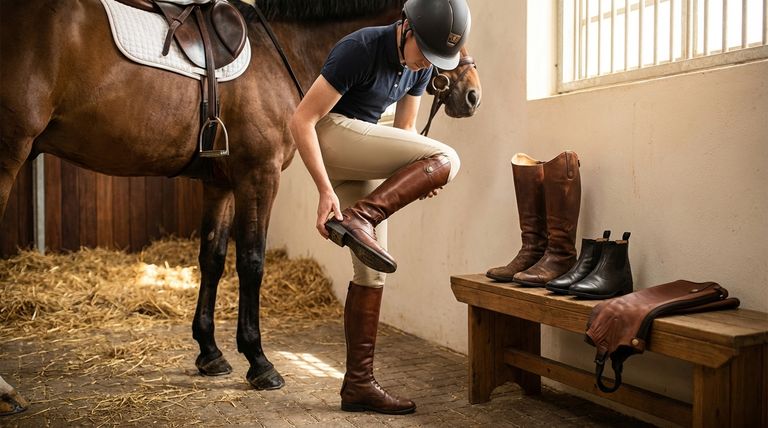
The Functional Anatomy of a Safe Riding Boot
To understand why riding boots are so important for safety, you must look at their specific design features. Each element serves a distinct protective purpose that general-purpose footwear lacks.
The Heel: Your Most Important Safeguard
The single most critical safety feature of any riding boot is its well-defined heel, typically between 1 and 1.5 inches.
This heel acts as a physical block, preventing your foot from accidentally sliding all the way through the stirrup. This is crucial because if you fall, a foot caught in the stirrup can lead to being dragged, which is one of the most dangerous situations a rider can face.
The Sole: Designed for a Quick Release
Unlike a hiking boot, a riding boot has a smooth or lightly textured sole with minimal tread.
This design is intentional. It allows your foot to slide out of the stirrup easily when you need it to, such as during a dismount or a fall. Deep treads found on work boots or trainers can get caught on the stirrup, creating the same dragging risk the heel is meant to prevent.
Structural Integrity: Protection from Impact
Riding boots are constructed from durable materials to provide crush and impact protection.
The reinforced toe box and sturdy leather or synthetic material act as a barrier. They shield your feet from being stepped on by a 1,000-pound animal, pinched by the stirrup leather, or crushed against a fence or gate.
Why Fit is a Non-Negotiable Safety Feature
A boot's safety features are rendered ineffective if it doesn't fit correctly. A proper fit is not just about comfort; it's integral to control and stability.
Ensuring Stability in the Saddle
A boot should be snug around the ankle and heel, preventing your foot from slipping inside.
This stability is essential for maintaining a secure "heels down" leg position, which is the foundation of balance and control in the saddle. If your foot is sliding around, your base of support is compromised.
Enabling Clear Communication
Your boots are a primary tool for communicating with your horse. A close-fitting calf allows for subtle leg and heel cues to be transmitted clearly.
Ill-fitting boots create sloppy, ambiguous signals. This can confuse the horse, leading to unpredictable responses and potentially unsafe situations. Clear communication is a cornerstone of a safe ride.
Common Pitfalls: The Dangers of Improper Footwear
Understanding the purpose of a riding boot makes it clear why other types of shoes are unsuitable and dangerous for riding.
The Risk of Sneakers or Trainers
These shoes have no heel and no structural support. Their flexibility and lack of a heel create a high risk of your foot slipping through the stirrup and getting caught. They offer zero protection if a horse steps on you.
The Hazard of Hiking or Work Boots
While sturdy, these boots present a different danger. Their thick, high-traction soles and chunky treads are designed not to slip, which is precisely the opposite of what you need. They can easily become wedged in the stirrup, posing a significant dragging risk.
Making the Right Choice for Your Goal
Selecting the right boot means matching its features to your riding discipline and safety needs.
- If your primary focus is maximum safety for trail or general riding: Prioritize a boot with a robust, defined heel and strong ankle support, like a good quality paddock boot.
- If your primary focus is performance and precision (e.g., dressage): A tall, close-contact boot is essential for providing the clear communication needed for advanced movements.
- If your primary focus is versatility for both barn chores and riding: A durable paddock boot paired with half-chaps offers protection in the saddle and comfort on the ground, but never compromise on the essential heel and sole design.
Investing in proper riding boots is a direct investment in your own safety and confidence as a rider.
Summary Table:
| Safety Feature | Purpose | Why It Matters |
|---|---|---|
| Defined Heel (1-1.5") | Prevents foot from sliding through stirrup | Mitigates risk of being dragged in a fall |
| Smooth Sole | Allows foot to slide out of stirrup easily | Enables a quick, safe release during a dismount or fall |
| Reinforced Toe & Ankle | Protects from impact and crushing injuries | Shields feet from being stepped on by a horse |
| Snug Fit | Provides stability and clear communication | Ensures control in the saddle and precise cues to the horse |
Ready to equip your riders with the highest standard of safety?
As a large-scale manufacturer, 3515 produces a comprehensive range of equestrian footwear designed with the critical safety features detailed above. We ensure every boot provides the essential protection, stability, and clear communication needed for safe riding.
Whether you are a distributor, brand owner, or bulk client, we can deliver the precise riding boots your customers rely on.
Contact 3515 today to discuss your manufacturing needs and enhance your product line with safety-engineered footwear.
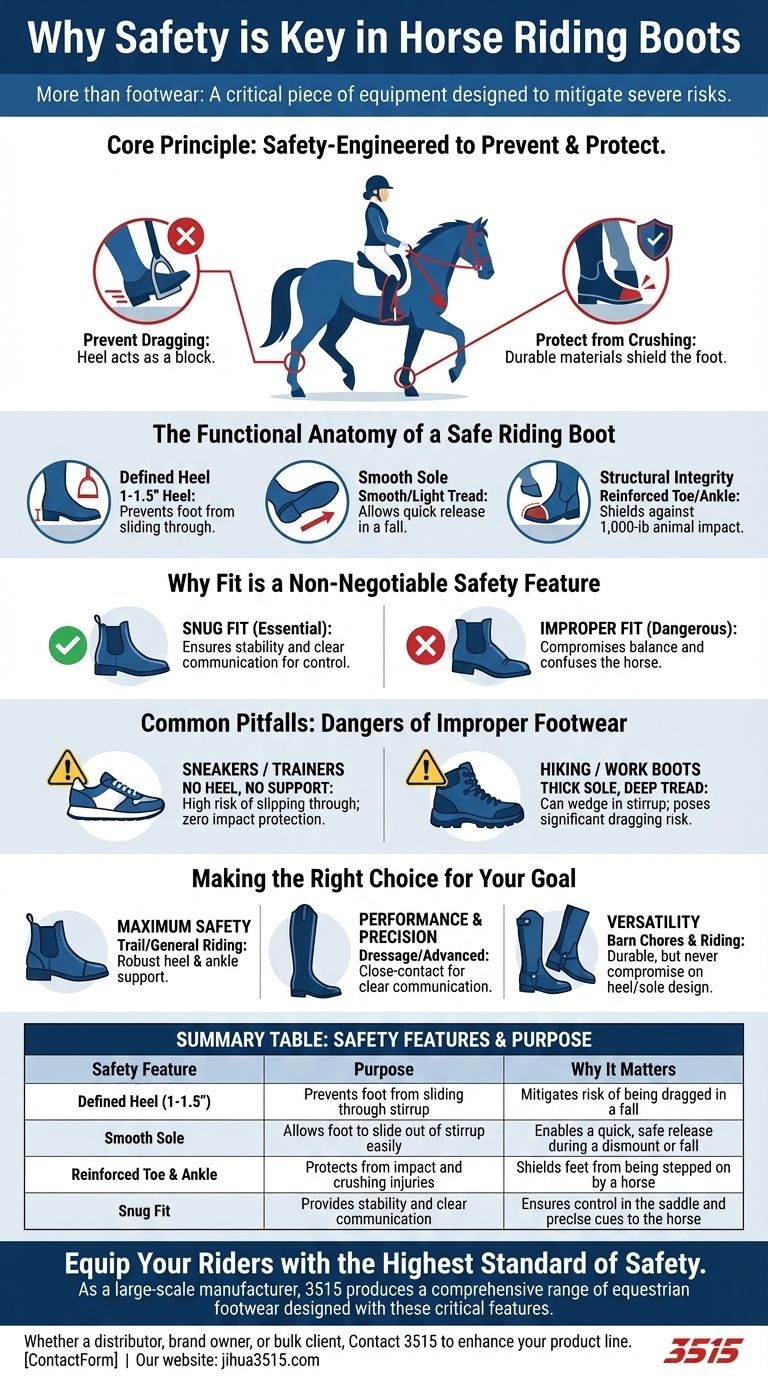
Visual Guide
Related Products
- Wholesale High-Traction Camo Boots - Custom Manufacturer for Brands
- Wholesale Tactical Boots High-Traction & Reflective for Bulk & Brand Orders
- Durable Goodyear Welt Leather Work Boots for Wholesale & Private Label
- Heavy-Duty Waterproof Nubuck Safety Boots Safety Shoes for Bulk Supply
- Durable Leather High-Ankle Tactical Boots for Wholesale & Custom Manufacturing
People Also Ask
- What are the key features of the new line of camo boots? Built for Extreme Cold & Rugged Terrain
- Are camo boots necessary for hunting success? Prioritize Performance Over Pattern
- How does the Rank Score Test identify the primary causes of premature failure in tactical and work boots? Key Insights
- What is the technical logic behind using closed-eye testing for tactical boots? Unlocking Peak Footwear Stability
- What shoes to wear for a security job? Durable, Protective Footwear for Long Shifts



















