
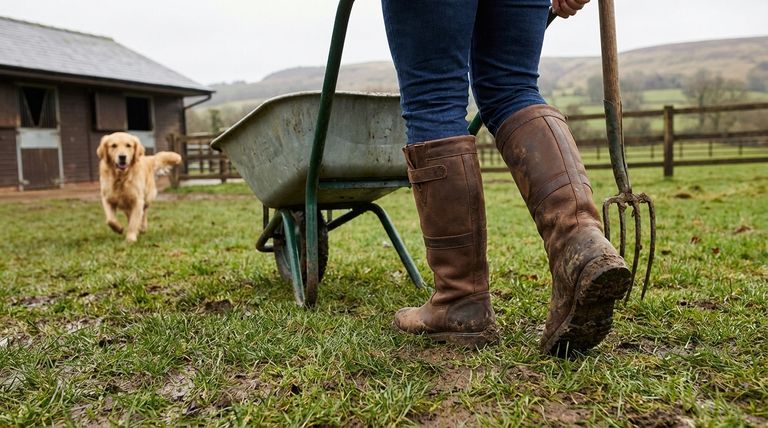
Country and yard boots are best characterized by their versatile, hybrid design. They are durable, waterproof boots engineered to handle the demands of outdoor and stable work while remaining comfortable enough for casual wear and light riding. Typically made from leather or rubber, they provide reliable traction and protection without the extreme specialization of other functional footwear.
The core purpose of a country or yard boot is not to be the absolute best at one specific task, but to be highly competent at many. They are the generalist workhorse of outdoor footwear, trading single-purpose excellence for all-day, multi-environment utility.
The Core Components of a Country and Yard Boot
All-Weather Durability
The primary requirement for these boots is the ability to withstand varied outdoor conditions. They are almost always waterproof, using materials like treated leather or rubber to keep feet dry in mud, puddles, and wet grass.
Key areas are often reinforced to resist the scuffs and wear common to yard and stable activities.
Foundational Comfort and Protection
Unlike highly specialized boots, country and yard boots are built for extended wear. They prioritize all-day comfort, allowing you to move from mucking out a stall to running errands without needing to change footwear.
They offer a solid level of protection against common outdoor hazards, shielding the foot and lower leg from impacts and scrapes.
Multi-Surface Traction
The soles are designed to provide a secure grip on a variety of surfaces. This includes uneven ground, wet grass, and slick stable floors, ensuring reliable footing in unpredictable environments.
How They Differ From Other Functional Boots
Understanding what a country boot is also means understanding what it is not. Its value lies in its balance, which distinguishes it from more specialized options.
vs. Dedicated Work Boots
Work boots are built for industrial safety. They feature long-lasting lug soles, high-cut ankle support, and critical safety components like steel toes, reinforced arches for ladder work, and insulation against electrical hazards.
Country boots lack these certified safety features, focusing instead on general durability and weather resistance for rural and agricultural tasks.
vs. Technical Hiking Boots
Hiking boots, or walking boots, are engineered for long-distance travel on rugged terrain. Their defining characteristic is maximum ankle support to prevent twists and sprains on uneven trails.
While durable, a country boot does not provide the same level of rigid support required for serious trekking.
vs. Specialized Riding Boots
Field boots, a type of English riding boot, are tall, close-fitting, and have laces at the ankle to provide flexibility for jumping. Other boots, like racing boots, have heavy reinforcement for high-speed protection.
Country boots are only suitable for casual riding. They lack the specific design, height, and ankle articulation needed for formal equestrian disciplines.
Understanding the Trade-offs
The Compromise on Specialization
The greatest strength of the country boot—its versatility—is also its main trade-off. It is not as protective as a steel-toe work boot, not as supportive as a technical hiking boot, and not as refined as a formal riding boot.
By serving many purposes well, it excels at none. This makes it ideal for general use but inadequate for highly specific or demanding professional tasks.
Not a Substitute for Safety Gear
If your work environment involves risks of heavy falling objects, punctures from below, or electrical currents, a country boot is not a safe substitute for a certified work boot. Its protection is general, not industrial.
Making the Right Choice for Your Needs
- If your primary focus is daily stable chores, gardening, and light outdoor work: Country and yard boots offer the ideal blend of waterproof protection, durability, and all-day comfort.
- If your primary focus is heavy-duty construction or industrial labor: You need the certified safety features of a dedicated work boot to ensure proper protection.
- If your primary focus is long-distance trekking on rugged trails: A true hiking boot will provide the crucial ankle support and specialized traction required for safety and comfort.
- If your primary focus is formal or competitive horse riding: A specialized field boot is the correct choice for its specific design, fit, and performance features.
Ultimately, choosing the right boot means accurately matching its intended purpose to your daily demands.
Summary Table:
| Characteristic | Description |
|---|---|
| Primary Use | Versatile, hybrid boot for yard work, stable chores, and casual wear. |
| Key Features | Waterproof, durable construction, comfortable for all-day use, reliable traction. |
| Ideal For | General outdoor tasks, light riding, gardening; not for heavy industry or technical hiking. |
| Material | Typically leather or rubber. |
Need durable, versatile footwear for your customers?
As a large-scale manufacturer, 3515 produces a comprehensive range of footwear for distributors, brand owners, and bulk clients. Our production capabilities encompass all types of durable boots, including country and yard styles designed for all-day comfort and reliable performance.
Contact us today to discuss your footwear needs and explore our catalog.
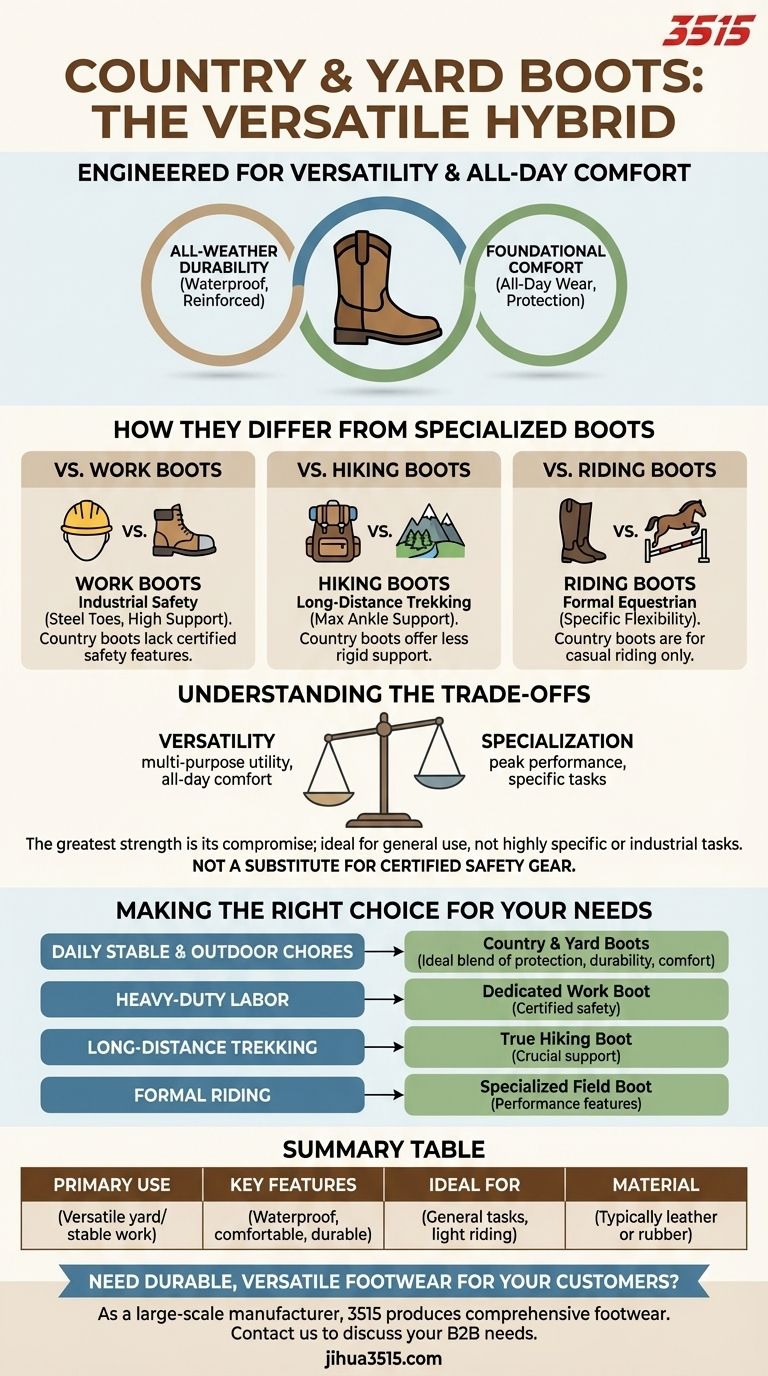
Visual Guide
Related Products
- Wholesale Lightweight Tactical Boots Custom Manufacturer for Desert & Combat Use
- High-Traction Suede Tactical Boots Wholesale & Custom Manufacturing
- Durable Leather Tactical Boots Wholesale & Custom Manufacturing for Brands
- Durable Rubber Sole Outdoor Shoes Wholesale & Custom Manufacturing
- Wholesale Waterproof Tactical Boots Custom Suede & High-Traction Soles
People Also Ask
- What are the common types of combat boots? Find the Right Boot for Your Mission
- What specialized protections do tactical boots offer? Maximize Endurance with High-Performance Footwear
- What are the different types of tactical boots available? Find the Right Boot for Your Mission
- What is the role of high-frequency acquisition hardware in technical skill analysis for outdoor and tactical boots?
- How is the compatibility of polymer materials demonstrated in smart footwear? Enhancing Tactical & Training Performance



















