
Ultimately, rubber is the default material for shoe soles because it delivers an exceptional combination of grip, durability, and flexibility. This versatile blend of properties makes it uniquely suited to protect the foot while interacting effectively with a wide variety of surfaces, from wet pavement to abrasive concrete.
While many materials excel in a single area, rubber provides an unparalleled balance of high-traction performance, resilience against wear, and comfort-enhancing flexibility, making it the most reliable and versatile foundation for footwear.
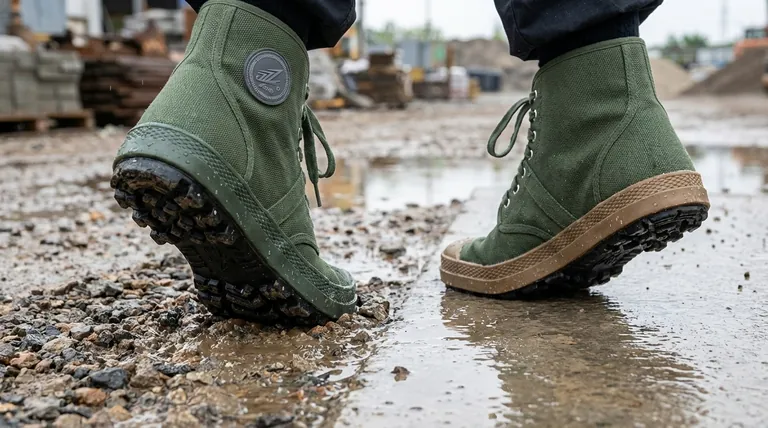
The Core Performance Characteristics of Rubber
To understand why rubber is so ubiquitous, we must look at its specific physical properties. Each one solves a critical problem in footwear design.
Unmatched Grip and Traction
The most critical function of a sole is to prevent slipping. Rubber’s high coefficient of friction provides a powerful grip on a vast range of terrains.
This extends to challenging surfaces. High-grade rubber is particularly effective at gripping wet, slippery, or even greasy surfaces, which is why it is essential for work and safety boots.
Furthermore, rubber is easily molded into complex tread patterns. This allows designers to create soles with specialized lugs and channels that enhance grip without needing separate studs.
Exceptional Durability and Resistance
A shoe sole must withstand constant punishment. Rubber is naturally resistant to abrasion, holding up against the relentless wear of hard surfaces like concrete and asphalt.
This durability ensures the shoe maintains its structural integrity and performance characteristics for a longer lifespan.
For specialized applications, certain rubber compounds are also oil-resistant, making them the top choice for industrial and workshop environments where such spills are common.
Inherent Flexibility and Comfort
A rigid sole would make walking unnatural and uncomfortable. Rubber’s natural elasticity allows the sole to bend with the foot, enabling a more natural range of motion.
This flexibility, combined with rubber’s ability to absorb impact, also provides a cushioning effect. This helps reduce fatigue during prolonged periods of standing or walking.
Protection and Versatility
As a non-porous material, rubber is inherently waterproof. This provides a crucial barrier, keeping the wearer's feet dry in wet conditions.
From a design perspective, rubber's natural white color can be easily pigmented to any color. This allows for complete aesthetic freedom, enabling the sole to match any shoe style.
Understanding the Trade-offs
Despite its advantages, rubber is not without its compromises. Acknowledging them is key to understanding its place in footwear design.
Weight vs. Durability
There is often a direct trade-off between the durability of a rubber sole and its weight. The most durable, high-density rubber compounds can be heavy, which may not be ideal for performance running shoes where every gram counts.
Breathability and Heat
Rubber is not a breathable material. While its waterproof nature is a benefit, it can also trap heat and moisture. A shoe's overall comfort, therefore, depends on the upper materials to provide ventilation.
Natural vs. Synthetic Compounds
The term "rubber" can refer to both natural, plant-derived material and various synthetic polymers. Natural rubber is biodegradable and comes from a renewable source, making it a more sustainable choice.
Synthetic rubbers, however, can be engineered for specific properties, like extreme oil resistance or enhanced durability, often at a different environmental cost.
Making the Right Choice for Your Goal
Your ideal sole material depends entirely on your primary activity. Understanding rubber's strengths allows you to select footwear engineered for your specific needs.
- If your primary focus is safety and performance: Rubber's superior grip and abrasion resistance make it the essential choice for work boots, hiking shoes, and any activity on unpredictable terrain.
- If your primary focus is everyday versatility: A well-designed rubber sole provides the perfect balance of flexibility, cushioning, and longevity for daily commuting and casual wear.
- If your primary focus is environmental impact: Seek out brands that specify the use of natural, sustainably sourced rubber for a biodegradable and renewable footwear option.
By appreciating the material science behind the sole, you can choose footwear that is truly built to serve its purpose.
Summary Table:
| Key Property | Benefit for Footwear |
|---|---|
| High Traction | Excellent grip on wet, slippery, and greasy surfaces. |
| Abrasion Resistance | Withstands wear from hard surfaces like concrete and asphalt. |
| Natural Flexibility | Bends with the foot for a comfortable, natural range of motion. |
| Waterproof | Provides a protective barrier to keep feet dry. |
| Versatile Design | Can be molded into any tread pattern and pigmented to any color. |
Ready to Source High-Performance Rubber-Soled Footwear?
As a large-scale manufacturer, 3515 produces a comprehensive range of footwear for distributors, brand owners, and bulk clients. Our production capabilities encompass all types of shoes and boots, ensuring you get the perfect balance of grip, durability, and comfort for your market.
Let's discuss your project: Contact our team today to get a quote and learn how we can bring your footwear vision to life.
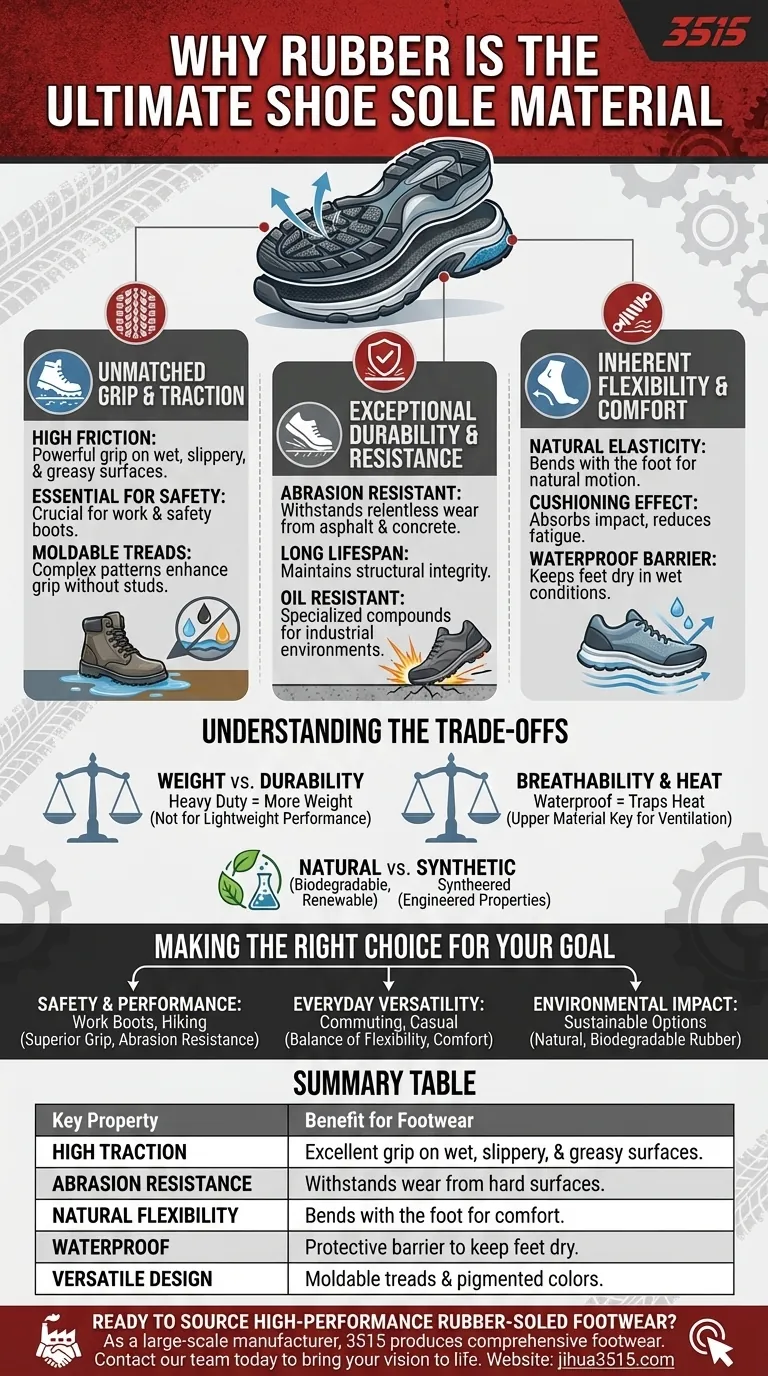
Visual Guide
Related Products
- Durable Rubber-Soled Utility Shoes for Wholesale & Custom Brand Manufacturing
- Durable Rubber Sole Outdoor Shoes Wholesale & Custom Manufacturing
- Wholesale Durable Camouflage Canvas Shoes with High-Traction Cleated Rubber Sole
- Durable Canvas Work Shoes with Rubber Lug Sole | Wholesale Manufacturer
- Wholesale Durable Camo Canvas Shoes with High-Traction Rubber Soles
People Also Ask
- Why are rubber-soled shoes considered multi-weather footwear? Unlock All-Season Traction & Protection
- Why should we wear rubber soled shoes? Unlock Superior Safety and Durability
- How do rubber soles affect a shoe's appearance? Defining Your Shoe's Style and Formality
- What are the types of rubber sole shoes available? Choose the Right Sole for Durability & Comfort
- When were rubber sole shoes invented? From 1800s Concept to Modern Mainstay



















