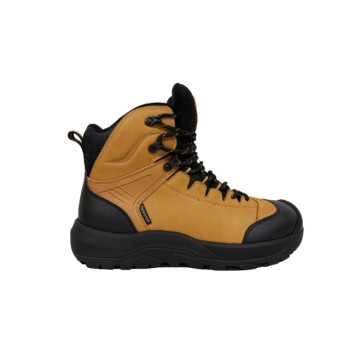
Beyond simple aesthetics, proper winter boot care is a critical maintenance practice that preserves the fundamental protective functions of your footwear. Neglecting it allows materials to degrade, directly compromising the boot's ability to provide warmth, waterproofing, and physical support, which are its primary purposes in harsh conditions.
Neglecting winter boot care is not a cosmetic issue; it is a functional failure. It systematically dismantles the three core promises of your footwear: to protect your health, ensure your safety, and deliver long-term value on your investment.
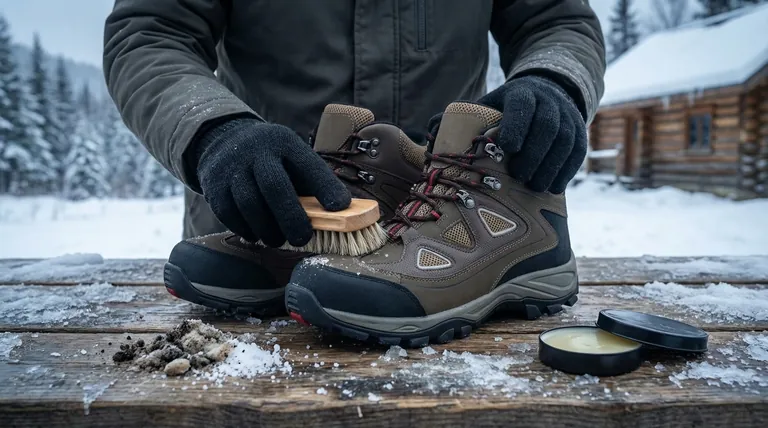
The Science of Material Degradation
Your winter boots are a system of specialized materials working together. Care isn't about keeping them looking new; it's about keeping that system functioning as intended.
Compromising Waterproofing
Most winter boots rely on treated materials or a waterproof membrane to keep your feet dry. Dirt, salt, and grime can abrade these surfaces and clog the pores of breathable membranes, rendering them ineffective over time.
Without regular cleaning and re-application of waterproofing treatments, this protective barrier will fail, allowing moisture to penetrate.
Weakening Structural Materials
Leathers, synthetics, and the stitching that holds them together require maintenance. When left unconditioned, leather dries out, cracks, and loses its strength. Seams become brittle.
This material breakdown is not just cosmetic. It weakens the entire structure of the boot, reducing its ability to support your foot and ankle.
Degrading Insulation
Insulation works by trapping air. When it becomes compacted or damp, it loses this ability, and its thermal efficiency plummets.
Proper drying and care ensure the insulation remains lofty and effective at keeping your feet warm.
From Material Failure to Personal Risk
The breakdown of boot materials has direct and serious consequences for your health, safety, and comfort.
The Health Risk: Loss of Warmth and Dryness
The most immediate consequence of failed waterproofing and insulation is cold, wet feet. This is not only deeply uncomfortable but also a health risk.
Constant dampness can lead to fungal infections, while cold feet make it difficult for your body to maintain its core temperature, impacting overall health.
The Safety Risk: Diminished Physical Support
A boot with a weakened structure cannot provide adequate support for your foot and ankle. This significantly increases the risk of musculoskeletal injuries.
Conditions like ankle sprains, plantar fasciitis, arch spasms, and tendonitis are more likely when your footwear no longer offers a firm, supportive foundation.
The Injury Risk: Reduced Traction
The structural integrity of a boot extends to its outsole. As materials in the sole become brittle or worn from neglect, their ability to grip icy and snowy surfaces diminishes.
This loss of traction turns a simple winter walk into a serious slip-and-fall hazard.
The True Cost of Neglect
Failing to care for your boots has tangible costs that go far beyond the price of cleaning supplies.
The Financial Cost: Frequent Replacement
Winter boots are an investment in specialized equipment. Regular care preserves that investment by extending the functional lifespan of the footwear.
Neglect accelerates material failure, forcing you to replace expensive gear far more often, ultimately costing you more money.
The Performance Cost: Unreliable Equipment
For anyone who relies on their footwear for winter activities like hiking or work, equipment failure is not an option.
A boot that fails mid-activity compromises your safety and ability to complete your objective. Consistent care ensures your gear is reliable when you need it most.
Applying This to Your Goals
Your approach to care should align with what you value most from your footwear.
- If your primary focus is safety and injury prevention: Concentrate your care on preserving the boot's structural integrity, from the firmness of the ankle support to the condition of the outsole.
- If your primary focus is health and comfort: Prioritize a consistent cleaning and waterproofing routine to guarantee your feet remain warm and dry in all conditions.
- If your primary focus is maximizing financial value: Implement a complete and regular care schedule to significantly extend the lifespan of your investment and avoid premature replacement.
Consistent care transforms your winter boots from a disposable item into reliable, long-term safety equipment.
Summary Table:
| Risk of Neglect | Consequence | Key Focus for Care |
|---|---|---|
| Loss of Waterproofing | Wet feet, health risks (e.g., fungal infections) | Regular cleaning & re-waterproofing |
| Weakened Structure | Ankle/foot injuries (e.g., sprains, plantar fasciitis) | Conditioning materials & checking seams |
| Degraded Insulation | Cold feet, reduced core body temperature | Proper drying to maintain loft |
| Reduced Traction | Increased slip-and-fall hazards on ice/snow | Inspecting and maintaining outsole condition |
Invest in reliable performance and safety. As a large-scale manufacturer, 3515 produces a comprehensive range of durable winter footwear for distributors, brand owners, and bulk clients. Our expertise ensures your footwear is built to last with proper care. Contact our team today to discuss your winter boot needs and discover how our production capabilities can deliver value and reliability for your customers.
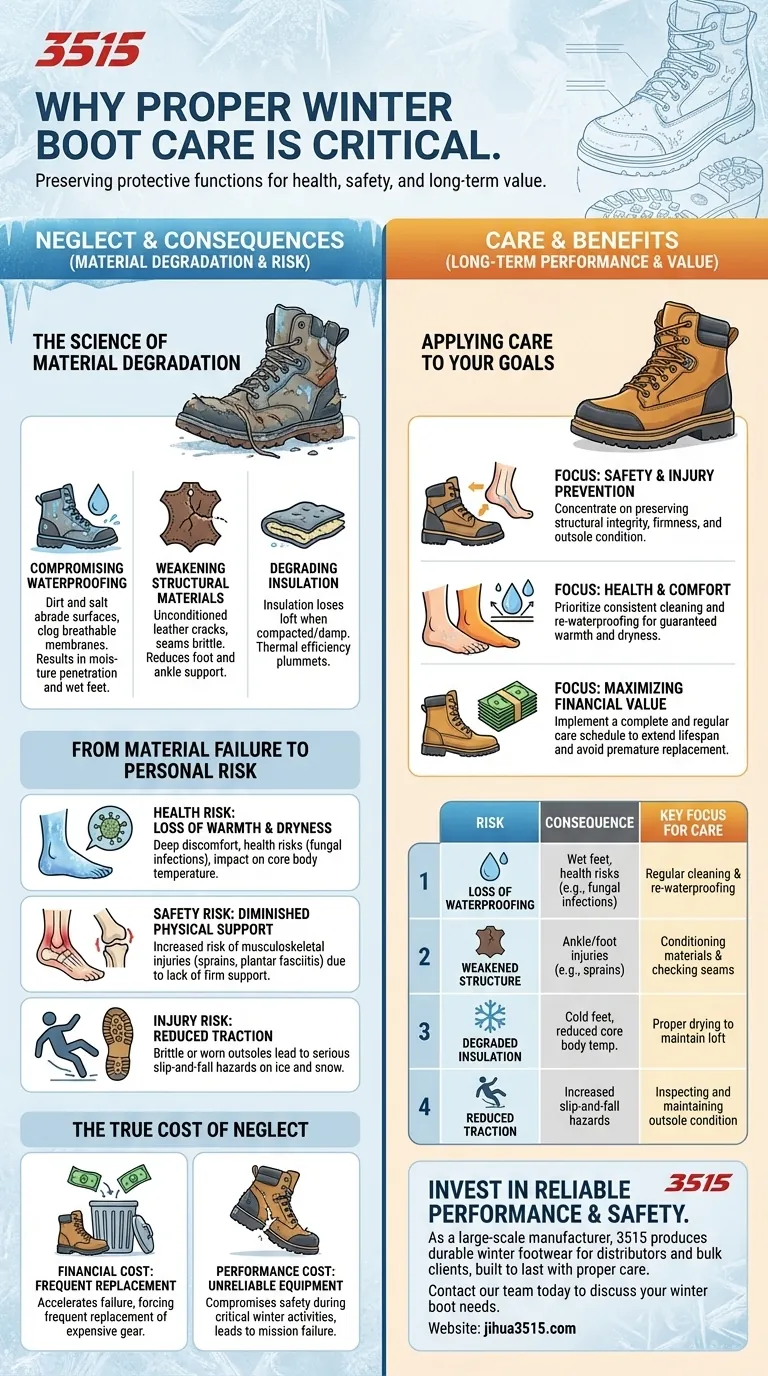
Visual Guide
Related Products
- Premium Insulated Safety Boots and Shoes for Wholesale & Bulk Orders
- Factory Direct Wholesale Rain Boots Durable Waterproof & Fully Customizable
- Durable Waterproof Rain Boots | Custom Manufacturer for Wholesale & Brands
- Wholesale Waterproof Tactical Boots Custom Suede & High-Traction Soles
- Premium Waterproof High-Cut Industrial Safety Boots for Wholesale and Bulk Orders
People Also Ask
- What are the recommended insulation ratings for mild winter conditions? A Guide for Active & Stationary Workers
- How does insulation thickness correlate with temperature ranges? A Guide to Choosing the Right Warmth
- What insulation level is needed for severe cold and stationary work? 1200g or Higher is Essential
- What safety advantages do insulated boots offer beyond warmth? Dielectric Protection & Superior Grip
- How does fleece lining contribute to the warmth of insulated boots? Trapping Air for Superior Cold Protection