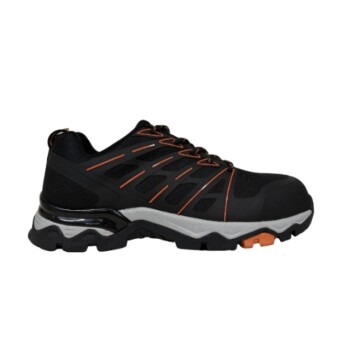
The universal pressing machine ensures bonding quality by applying comprehensive high pressure that forces adhesive deep into the material's structural foundation. By utilizing specialized pneumatic pads or pressure blocks that mirror the anatomical curves of the human foot, the machine guarantees that every square millimeter of the interface receives equal force. This mechanical compression eliminates air gaps and ensures a permanent, structural fusion between the outsole and the upper.
Quality bonding in safety footwear is achieved through the uniform distribution of high pressure, which enables adhesive to penetrate material micropores and create a bond capable of withstanding extreme industrial environments.
The Mechanics of Uniform Pressure Distribution
Simulating Anatomical Geometry
The machine employs pressure blocks or pneumatic pads specifically designed to simulate the complex curves of the human foot.
This contoured approach ensures that pressure is not just vertical, but distributed evenly across the entire 3D surface of the outsole.
Without this specialized geometry, high-stress areas like the arch or the heel might receive insufficient pressure, leading to premature delamination.
Maximizing Adhesive Penetration
The primary role of high-intensity pressure is to force the liquid adhesive into the material micropores of both the upper and the outsole.
When the adhesive is driven deep into these microscopic openings, it creates a mechanical interlock once cured.
This penetration is what transforms a surface-level attachment into a permanent structural bond that can resist shearing forces.
Ensuring Durability in Extreme Conditions
Resistance to Mechanical Stress
Safety shoes are subjected to constant flexing, heavy impacts, and chemical exposure that challenge the integrity of the bond.
The universal pressing machine provides the comprehensive compression required to ensure the bond remains intact under these rigorous mechanical stresses.
A well-pressed bond acts as a single unit, preventing moisture or debris from infiltrating the seam and degrading the adhesive over time.
Consistency Across Production Units
Because the machine is "universal," it can be calibrated to provide repeatable pressure levels across different shoe sizes and styles.
This industrial consistency ensures that every shoe meeting the safety standard possesses the same bond strength and durability.
Automated pressure regulation minimizes the risk of human error, which is the leading cause of bonding failures in manual assembly.
Understanding Potential Pitfalls
Inaccurate Block Alignment
If the pressure blocks or pneumatic pads are not perfectly aligned with the shoe last, pressure voids can occur.
Even a slight misalignment can result in "weak spots" where the adhesive did not penetrate the micropores, leading to localized peeling.
Improper Pressure Dwell Time
Applying high pressure is only effective if it is maintained for the correct dwell time to allow the bond to set.
Releasing pressure too early can cause the materials to "spring back" slightly, compromising the micro-interlock before the adhesive has stabilized.
Making the Right Choice for Your Goal
How to Apply This to Your Project
To ensure the highest bonding standards in your footwear production, consider your specific environmental requirements.
- If your primary focus is maximum durability in wet environments: Prioritize machines with high-sensitivity pneumatic pads to ensure a moisture-tight seal at the edges.
- If your primary focus is high-volume production consistency: Opt for universal presses with programmable logic controllers (PLCs) to maintain identical pressure cycles for every unit.
- If your primary focus is complex footwear geometry: Utilize customized pressure blocks that precisely match your specific shoe lasts to prevent pressure shadows.
By mastering the distribution of pressure through universal pressing technology, you secure the structural integrity necessary for professional-grade safety footwear.
Summary Table:
| Key Feature | Functional Benefit | Impact on Quality |
|---|---|---|
| Anatomical Pads | Even force distribution on 3D surfaces | Eliminates weak spots and air gaps |
| High-Intensity Pressure | Deep adhesive micropore penetration | Creates a permanent mechanical interlock |
| PLC Calibration | Repeatable pressure cycles | Ensures consistent durability across bulk orders |
| Full Compression | Moisture and debris resistance | Prevents delamination in extreme environments |
Partner with 3515 for Professional-Grade Footwear Manufacturing
As a large-scale manufacturer serving global distributors and brand owners, 3515 leverages advanced universal pressing technology to ensure the highest structural integrity across our entire product range. Our comprehensive production capabilities cover:
- Flagship Safety Shoes & Tactical Boots: Built to withstand extreme industrial and field conditions.
- Outdoor & Training Shoes: Engineered for durability and high-performance movement.
- Sneakers, Dress & Formal Shoes: High-volume consistency for diverse market requirements.
Whether you are scaling a brand or sourcing for large-scale distribution, 3515 provides the technical expertise and manufacturing power to meet your bulk needs.
Ready to elevate your footwear line? Contact us today to discuss your production requirements!
References
- Eko Fandra Winata, Sugiyono Sugiyono. Analysis of Safety Shoes Product Quality Control at PT. BINA USAHA SEJAHTERA With Statistical Quality Control (SQC) Method Case Study of PT Bina Usaha Sejahtera (BINUSA). DOI: 10.55927/ijba.v4i1.8323
This article is also based on technical information from 3515 Knowledge Base .
Related Products
- Advanced KPU Athletic Safety Shoe with Steel Toe Cap Anti-Slip Rotary Lacing System
- Premium KPU Injection Athletic Style Safety Shoes
- Premium KPU Athletic Safety Shoes for Wholesale
- Premium Wholesale Tactical Style Safety Shoes Boots with Quick Lacing
- Wholesale Mesh Steel Toe Safety Shoes with Dial Closure Factory Production
People Also Ask
- What are the key differences between steel toe and composite toe caps? Choose the Right Safety for Your Job
- What impact do steel toe caps have on toe skin health? Prevent Friction and Pressure in Your Safety Shoes
- What are the primary protective functions of safety shoes with steel toes in the automotive repair industry?
- What type of safety shoe is recommended for workers exposed to heavy machinery? Steel Toe Boots for Ultimate Protection
- How does defining specific friction interface models in FEA assist in predicting safety shoe toe cap failure modes?