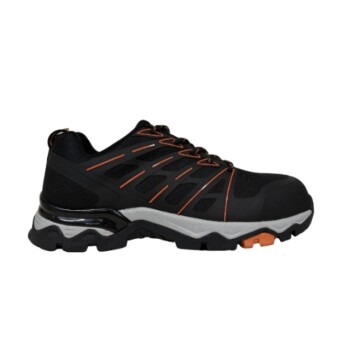
Professional foot protection is a mandatory safety requirement because the fabric unpacking process involves high-risk activities such as cutting tensioned binding ropes and navigating floors cluttered with obscured obstacles. During these tasks, workers face a dual threat: severe lacerations from accidentally dropped sharp tools and impact injuries from hidden pallet edges.
Professional safety shoes equipped with anti-smashing and anti-puncture features are essential to neutralize the risks of falling blades and hidden physical hazards inherent in fabric handling environments.
Mitigating Hazards from Sharp Tools
The Danger of Cutting Binding Ropes
Unpacking fabric frequently requires the use of specialized knives or sharp tools to cut through binding ropes and packaging.
If a tool slips during the cutting process or is accidentally dropped, the gravitational force can cause the blade to pierce standard footwear easily.
Professional foot protection provides a reinforced barrier that prevents these blades from reaching the skin, effectively eliminating the risk of foot lacerations.
The Role of Anti-Puncture Technology
Standard shoes are typically made of soft materials that offer no resistance to sharp, downward-moving objects.
Safety shoes with anti-puncture soles and uppers are engineered to withstand significant pressure from sharp points and edges.
This protection is critical in "fabric degree" work where the frequency of tool usage increases the mathematical probability of a drop incident.
Navigating Obscured Environments
The Visibility Challenge of Fabric Spillage
During the unpacking process, loose fabric often drapes over the sides of pallets and spills onto the surrounding floor.
This creates a hazardous environment where the structural edges of pallets are frequently obscured from the worker's line of sight.
Without a clear view of the floor, workers are much more likely to strike their feet against heavy wooden or plastic pallet corners.
Preventing Impact and Trip Injuries
Safety shoes with anti-smashing toe caps are designed to absorb the kinetic energy of an impact with a hard object.
When a worker strikes a hidden pallet edge, the reinforced cap protects the small bones of the foot from fractures and crushing injuries.
Additionally, the stability provided by professional footwear reduces the likelihood of falling over these hidden protrusions while carrying heavy fabric loads.
Understanding the Trade-offs
Comfort vs. Protection
One common pitfall is prioritizing lightweight, breathable footwear over the heavier, more rigid construction of safety shoes.
While standard athletic shoes may reduce fatigue in the short term, they provide zero protection against the specific mechanical risks found in fabric unpacking.
Modern professional footwear often utilizes composite materials to balance the need for high-level protection with ergonomic comfort.
The Risk of Equipment Neglect
Even the highest-quality safety shoes lose their effectiveness if the outer material is compromised or the internal structure is dented.
Failing to inspect footwear for signs of wear can lead to a false sense of security, where the worker assumes they are protected by gear that no longer meets safety standards.
How to Apply This to Your Safety Protocol
Selecting the right equipment depends on the specific intensity of your unpacking environment.
- If your primary focus is preventing tool-drop injuries: Ensure all personnel are equipped with safety shoes that have a certified anti-puncture rating and reinforced uppers.
- If your primary focus is navigating high-density pallet areas: Prioritize footwear with steel or composite toe caps to mitigate the impact of striking obscured pallet edges.
By integrating professional foot protection into your standard operating procedures, you ensure a high level of physical safety against the most common mechanical risks in fabric handling.
Summary Table:
| Hazard Category | Specific Risk Factor | Protective Feature Required |
|---|---|---|
| Sharp Tools | Dropped knives or cutting ropes | Anti-puncture soles & uppers |
| Obscured Obstacles | Hidden pallet edges under fabric | Anti-smashing (Steel/Composite) toe caps |
| Floor Environment | Heavy fabric loads and spills | Slip-resistant & stable outsoles |
| Mechanical Impact | Fractures from striking protrusions | Impact-absorbing reinforced construction |
Secure Your Workforce with 3515 High-Performance Footwear
As a premier large-scale manufacturer serving global distributors and brand owners, 3515 delivers the specialized protection required for high-risk industrial environments. Our flagship Safety Shoes series is engineered with advanced anti-smashing and anti-puncture technologies to safeguard your team during complex fabric handling and unpacking tasks.
From rugged work and tactical boots to versatile training shoes and formal dress footwear, our comprehensive production capabilities ensure we meet your diverse bulk requirements with uncompromising quality. Contact us today to discuss your wholesale needs and let us provide the durable footwear solutions your brand deserves.
References
- Farida Novianti, Anafil Windriya. Hazard Analysis of Occupational Health and Safety (OHS) Using The JSA (Job Safety Analysis) Method in Grey Weaving 2 Warehouse PT XYZ. DOI: 10.14710/ajlm.2023.19038
This article is also based on technical information from 3515 Knowledge Base .
Related Products
- Premium Suede Sport Safety Shoes for Wholesale & Bulk Orders
- Premium Lightweight Safety Shoes for Wholesale & Bulk Orders
- Wholesale Anti-Smash & Puncture-Proof Safety Shoes Custom Manufacturing for Brands
- Premium KPU Injection Athletic Style Safety Shoes
- Premium Safety Shoes with Rotating Buckle Safety Sneakers
People Also Ask
- What industries have specific OSHA footwear requirements? Ensure Compliance & Protect Your Workforce
- What are the primary functions of professional safety shoes? Maximize Safety in Water Supply Confined Spaces
- What role do specialized safety shoes play in preventing falls? Engineering Stability in Industrial Environments
- Why wear protective masks, gloves, and safety shoes in 5S Shine? Elevate Safety and Discipline
- How do specialized safety shoes protect against battery maintenance injuries? Prevent Impact and Chemical Burns