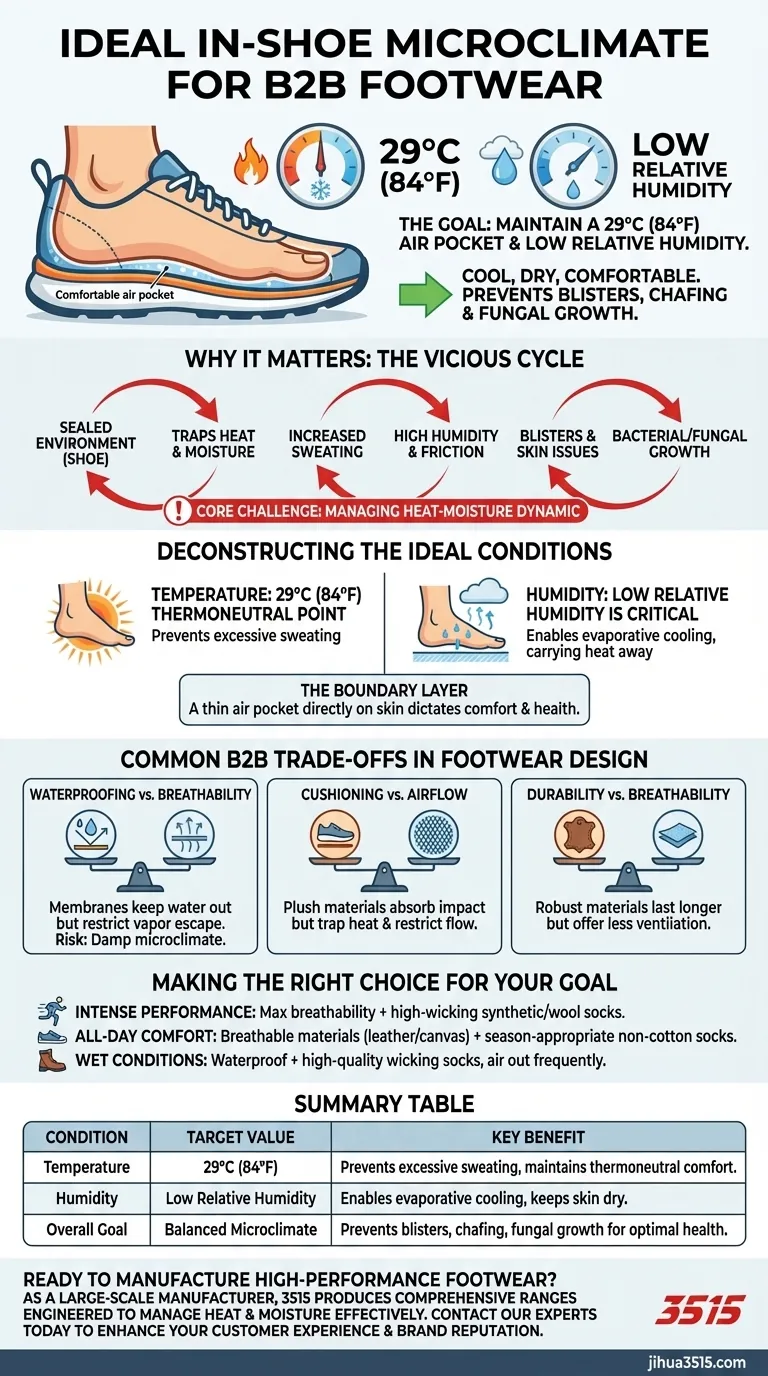
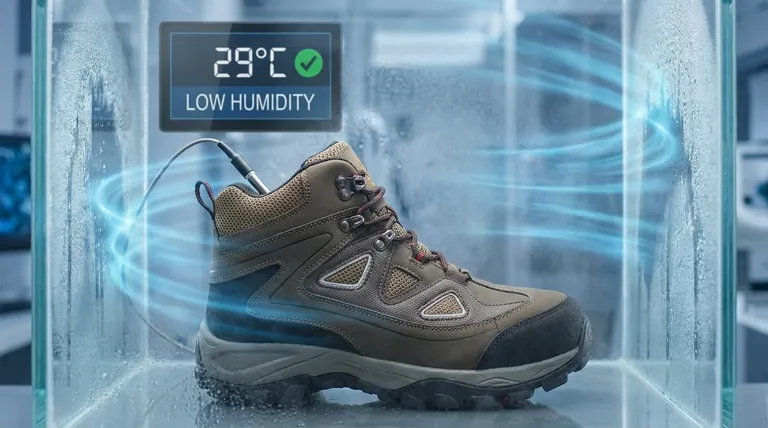
The ideal in-shoe microclimate is achieved by maintaining the small pocket of air surrounding the foot at approximately 29°C (84°F) with low relative humidity. This specific environment is the key to keeping the foot cool, dry, and comfortable, which is the most effective way to prevent common issues like blisters, chafing, and fungal growth.
The core challenge is not just managing temperature or moisture in isolation, but controlling the dynamic relationship between them. An optimal in-shoe microclimate allows your foot's natural cooling system—sweating—to function efficiently without creating a damp, high-friction environment.
Why the In-Shoe Microclimate Matters
To effectively manage the environment inside your shoe, you first have to understand the forces at play. A shoe is a sealed system that presents a unique physiological challenge.
The Core Problem: A Sealed Environment
A shoe encloses the foot, which has one of the highest concentrations of sweat glands in the body. This creates an environment that naturally traps both heat and moisture.
The Vicious Cycle of Heat and Moisture
Your feet radiate heat to regulate body temperature. Inside a shoe, this heat gets trapped, raising the local temperature and triggering your sweat glands to cool the skin down.
Without adequate ventilation, this sweat cannot evaporate. This raises the in-shoe humidity, which in turn inhibits further evaporation, trapping even more heat and moisture.
The Direct Link to Blisters and Skin Health
This high-humidity, high-temperature environment is the primary cause of foot issues. Damp skin has a higher coefficient of friction, dramatically increasing the likelihood of blisters. It also softens the skin (a process called maceration), making it more susceptible to damage and creating an ideal breeding ground for bacteria and fungus.
Deconstructing the Ideal Conditions
The specific targets for temperature and humidity are based on the physiological needs of the skin. They represent the point of maximum comfort and efficiency.
The 29°C Temperature Target
A skin temperature of 29°C is considered a thermoneutral point for the foot. It is a comfortable balance where the body does not feel the need to expend significant energy to either heat up or cool down the area.
Maintaining this temperature prevents the excessive sweating that occurs when the foot becomes too hot.
The Critical Role of Low Humidity
Low relative humidity is arguably the more important factor. It is the key that enables evaporative cooling—the body's most effective method of heat regulation.
When the air inside the shoe is dry, sweat can easily evaporate from the skin, carrying heat away with it. When humidity is high, this process stalls, leaving the foot feeling hot and clammy even at moderate temperatures.
The Concept of the Boundary Layer
The goal is to manage the "boundary layer," which is the very thin pocket of air directly in contact with your skin. The condition of this layer dictates skin health and comfort, and it is directly influenced by your choice of socks and footwear.
Common Pitfalls and Trade-offs
Achieving a perfect microclimate often involves balancing competing footwear features. Understanding these trade-offs is essential for making an informed choice.
Waterproofing vs. Breathability
This is the most significant trade-off. Waterproof membranes are excellent at keeping external water out but are inherently less effective at letting internal water vapor (sweat) escape.
Even the most advanced "breathable-waterproof" materials struggle to keep up with sweat output during intense activity, often leading to a damp, humid microclimate.
Cushioning vs. Airflow
Thick, cushioned midsoles and plush uppers can provide excellent impact absorption and comfort. However, these dense materials can also restrict airflow and trap more heat compared to minimalist or highly ventilated designs.
Durability vs. Breathability
Materials chosen for maximum durability, such as thick leathers or robust synthetic fabrics, are often less breathable. Lightweight mesh uppers, while excellent for ventilation, typically offer less protection and a shorter lifespan.
Making the Right Choice for Your Goal
Achieving the ideal in-shoe climate requires aligning your footwear and sock choices with your specific activity and environment.
- If your primary focus is intense athletic performance: Prioritize footwear with maximum breathability and pair it with high-performance synthetic or wool socks that actively wick moisture away from the skin.
- If your primary focus is all-day comfort for casual wear: Select shoes made from naturally breathable materials like leather or canvas, and choose socks appropriate for the season, always avoiding moisture-trapping cotton.
- If your primary focus is staying dry in wet conditions: Acknowledge the breathability trade-off of waterproof footwear and mitigate it by using high-quality wicking socks and taking opportunities to air out your feet and shoes.
By consciously managing the heat and moisture inside your shoes, you take direct control over your foot health, comfort, and performance.
Summary Table:
| Ideal Condition | Target Value | Key Benefit |
|---|---|---|
| Temperature | 29°C (84°F) | Prevents excessive sweating, maintains thermoneutral comfort. |
| Humidity | Low Relative Humidity | Enables evaporative cooling, keeps skin dry to reduce friction. |
| Overall Goal | Balanced Microclimate | Prevents blisters, chafing, and fungal growth for optimal foot health. |
Ready to manufacture footwear that delivers the ideal in-shoe microclimate?
As a large-scale manufacturer, 3515 produces a comprehensive range of footwear for distributors, brand owners, and bulk clients. Our production capabilities encompass all types of shoes and boots, engineered with the right materials and construction techniques to manage heat and moisture effectively.
We can help you create products that keep your customers' feet cool, dry, and comfortable, enhancing their experience and your brand's reputation.
Contact our experts today to discuss your manufacturing needs and bring high-performance, comfortable footwear to market.
Visual Guide