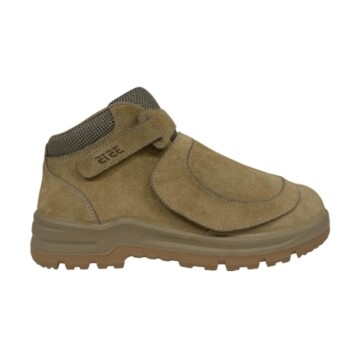
Improving the thermal dissipation and dehumidification performance of personal protective equipment (PPE) is strictly necessary to bridge the gap between heavy-duty physical protection and human physiological limits. By integrating advanced composite materials that actively manage heat and moisture, manufacturers can effectively mitigate the humidity stress and heat load that accumulate during prolonged use. This optimization is not merely for luxury; it is a critical functional requirement to prevent heat exhaustion and skin conditions, ensuring that high-performance safety boots do not become a health hazard themselves.
Effective PPE must solve for the internal environment as well as the external one. If safety gear causes heat stress or discomfort, it compromises the user's physical health and significantly lowers the likelihood of consistent compliance.
The Physiological Imperative
Mitigating Heat Load and Humidity Stress
High-performance safety boots act as an enclosure, trapping body heat and perspiration generated during strenuous work. Advanced composite materials are required to break this cycle by facilitating the release of trapped heat. Without these properties, the wearer experiences rapid accumulation of humidity stress, leading to severe discomfort and fatigue.
Preventing Medical Complications
The lack of adequate dehumidification creates a damp microclimate inside the footwear. This environment significantly increases the risk of occupational skin problems, such as fungal infections and maceration. Furthermore, poor thermal dissipation contributes to systemic overheating, elevating the risk of heat exhaustion for frontline workers.
The Connection to Operational Safety
Increasing User Compliance
The protective efficacy of any equipment is nullified if the worker removes it due to discomfort. Improving the internal climate of safety boots directly increases the willingness of workers to wear their protective equipment for the full duration of their shift. Comfort, in this specific context, acts as a mechanism for regulatory compliance.
Maintaining Situational Awareness
Discomfort caused by overheating acts as a cognitive distraction. By managing the thermal load, workers can maintain focus on their tasks rather than their physical distress. This focus is vital in high-risk industrial scenarios where attention to detail prevents accidents.
Understanding the Trade-offs
Balancing Protection and Permeability
There is often an inherent conflict between the density required for protection and the porosity required for breathability. Physical barriers designed to stop heavy object impacts or chemical corrosion (as noted in standard safety requirements) naturally tend to trap heat. The engineering challenge lies in maintaining these rigorous protective standards without creating a sealed "oven" effect for the foot.
Material Complexity and Cost
Integrating moisture-wicking and heat-dissipating functions often requires complex composite structures. This can increase the manufacturing cost and complexity compared to standard, less breathable materials. However, the long-term cost of worker injury or non-compliance often outweighs the initial investment in higher-performance materials.
Making the Right Choice for Your Goals
To select or design the most effective safety footwear, you must align material properties with your specific safety objectives.
- If your primary focus is Workforce Compliance: Prioritize dehumidification performance to maximize comfort, ensuring workers voluntarily keep their boots on during long shifts.
- If your primary focus is Occupational Health: Select materials with superior thermal dissipation to directly lower the incidence of heat stress and dermatology claims.
- If your primary focus is Harsh Environment Safety: Ensure that breathability enhancements do not compromise the foundational barrier against impact, punctures, or chemical corrosion.
True safety is achieved only when the equipment protects the wearer from external hazards without creating internal physiological threats.
Summary Table:
| Feature | Physiological/Safety Impact | Long-term Benefit |
|---|---|---|
| Thermal Dissipation | Reduces internal heat load and systemic overheating | Prevents heat exhaustion and fatigue |
| Dehumidification | Eliminates moisture buildup and damp microclimates | Reduces fungal infections and skin issues |
| Climate Management | Minimizes cognitive distraction from discomfort | Enhances focus and situational awareness |
| Breathable Materials | Bridges the gap between protection and comfort | Increases PPE compliance and worker health |
Elevate Your Protection Standards with 3515 Footwear Solutions
At 3515, we understand that true safety requires a balance between heavy-duty protection and physiological health. As a leading large-scale manufacturer serving global distributors and brand owners, we specialize in high-performance footwear that integrates advanced thermal dissipation and dehumidification technologies.
Our flagship Safety Shoes series and extensive portfolio—including tactical boots, outdoor shoes, training sneakers, and formal dress shoes—are engineered to meet rigorous bulk requirements while ensuring maximum comfort and compliance.
Ready to upgrade your inventory with superior PPE performance?
Contact our team today to discuss your production needs
References
- Xinglin Chen, Shuaiqi Yuan. Occupational Health and Safety in China: A Systematic Analysis of Research Trends and Future Perspectives. DOI: 10.3390/su151914061
This article is also based on technical information from 3515 Knowledge Base .
Related Products
- Puncture-Resistant Velcro Safety Boots for Wholesale & Custom Manufacturing
- Wholesale Durable Safety Boots | Custom Steel Toe & Puncture-Resistant Manufacturing
- Premium Grain Leather Safety Boots for Bulk Supply
- Heavy-Duty Waterproof Nubuck Safety Boots Safety Shoes for Bulk Supply
- Premium High-Cut Waterproof Safety Boots Manufacturing & Wholesale Solutions
People Also Ask
- Why are industrial safety boots with steel toes necessary for machine operators? Essential Foot Protection for Safety
- What are the characteristics of steel toe safety boots? Maximum Protection, Key Trade-offs
- Is it true that steel toes can cause toes to get cut off? Debunking the Dangerous Myth
- What are the primary safety functions of safety boots with steel-toe designs? Essential Protection for Industry
- What do the symbols M, F, I, and C represent on safety toe boots? Decode ASTM F2413 for Maximum Protection