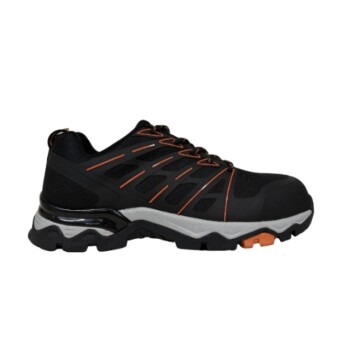
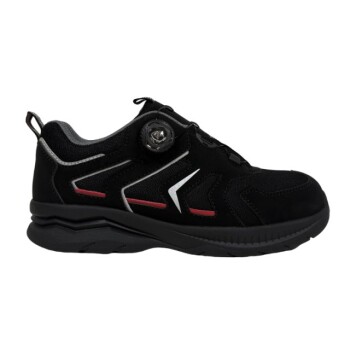
Configuring professional footwear is a strict requirement for high-fidelity simulation. It is necessary because the specific multi-layered geometry of a shoe—including the fabric, insole, midsole, and outsole—fundamentally dictates the contact friction and force transmission between the pedestrian, the road, and the vehicle. Without this level of detail, the simulation cannot accurately reproduce the biomechanical realities of a collision.
Detailed footwear modeling bridges the gap between theoretical geometry and real-world physics. By simulating the specific cushioning and friction of professional shoes, engineers can accurately predict post-impact trajectories and assess injury risks to the lower extremities with biomechanical consistency.
The Physics of Contact and Interaction
Simulating Realistic Friction
The interaction between the foot and the ground is not merely a geometric collision; it is a friction-dependent event. Detailed outsole modeling is required to replicate the specific grip and slip characteristics of the shoe against the road surface.
This friction directly influences how the foot plants or slides at the moment of impact. Accurate modeling ensures that the simulation reflects the true physical resistance the pedestrian experiences against the ground.
Managing Force Transmission
Professional footwear consists of complex, multi-layered structures designed to absorb and distribute energy. Insoles and midsoles play a critical role in how impact forces are transmitted from the ground up into the skeletal structure.
Refining these layers allows the simulation to capture the damping effects of the shoe. This prevents the overestimation or underestimation of shock forces entering the foot and ankle.
Biomechanical Implications
Influence on Trajectory
The characteristics of the footwear determine the kinematic response of the entire body. Post-impact movement trajectory and lateral displacement are heavily influenced by the shoe's cushioning and traction.
If the footwear is modeled as a simple rigid block, the simulation will fail to predict how the body rotates or shifts laterally after contact. This leads to inaccurate kinematic data regarding the pedestrian's overall motion.
Assessing Lower Limb Risks
The ultimate goal of these simulations is ensuring safety and predicting injury. Biomechanical consistency is paramount for evaluating trauma to the lower leg, tibia, and feet.
By configuring the footwear correctly, you ensure that the stress and strain calculated on these body parts are valid. This allows for a precise assessment of fracture risks and ligament damage.
Understanding the Trade-offs
Complexity vs. Accuracy
Implementing detailed footwear models introduces significant geometric complexity. Multi-layered structures require higher mesh densities and more complex material definitions than simplified foot models.
While this increases the computational load of the simulation, it is a necessary trade-off. The gain in biomechanical accuracy and injury prediction reliability outweighs the additional processing requirements.
Making the Right Choice for Your Simulation
To ensure your virtual testing yields valid safety data, consider your specific simulation goals:
- If your primary focus is kinematics: Prioritize the accuracy of the outsole and friction parameters to correctly predict lateral displacement and body trajectory.
- If your primary focus is injury assessment: Ensure the model includes the full multi-layered internal structure (insoles and midsoles) to capture precise force transmission to the tibia and feet.
Prioritizing footwear fidelity transforms your simulation from a rough approximation into a biomechanically consistent tool for safety analysis.
Summary Table:
| Factor | Influence on Simulation | Key Benefit |
|---|---|---|
| Multi-layered Structure | Dictates damping and force distribution | Accurate shock transmission to tibia/ankles |
| Detailed Outsole | Replicates grip and slip characteristics | Realistic friction and plant/slide physics |
| Cushioning Geometry | Determines body rotation and displacement | Validated post-impact movement trajectories |
| Material Definitions | Absorbs energy during the collision | Precise assessment of fracture and ligament risks |
Partner with 3515 for Precision-Engineered Footwear Solutions
As a large-scale manufacturer serving distributors and brand owners worldwide, 3515 offers comprehensive production capabilities for all footwear types, anchored by our flagship Safety Shoes series. Our extensive portfolio covers work and tactical boots, outdoor shoes, training shoes, and sneakers, as well as Dress & Formal shoes to meet diverse bulk requirements.
Whether you need footwear that meets rigorous biomechanical standards for safety or high-performance athletic gear, our expertise ensures your products deliver unmatched quality and durability. Let us support your brand's growth with our advanced manufacturing power.
Contact us today to discuss your bulk requirements and custom production needs!
References
- Christian Lackner, Corina Klug. Investigations on tram-pedestrian impacts by application of virtual testing with human body models. DOI: 10.1186/s12544-023-00595-0
This article is also based on technical information from 3515 Knowledge Base .
Related Products
- Premium Suede Sport Safety Shoes for Wholesale & Bulk Orders
- Premium Lightweight Safety Shoes for Wholesale & Bulk Orders
- Wholesale Anti-Smash & Puncture-Proof Safety Shoes Custom Manufacturing for Brands
- Premium KPU Injection Athletic Style Safety Shoes
- Premium Safety Shoes with Rotating Buckle Safety Sneakers
People Also Ask
- What are the primary functions of professional safety shoes? Maximize Safety in Water Supply Confined Spaces
- What industries have specific OSHA footwear requirements? Ensure Compliance & Protect Your Workforce
- What role do specialized safety shoes play in preventing falls? Engineering Stability in Industrial Environments
- How do the 3R principles influence green footwear design? Master Sustainable Safety Shoe Manufacturing
- How do gait analysis algorithms ensure accuracy in footwear? Master Step Length Precision for Boots & Sneakers