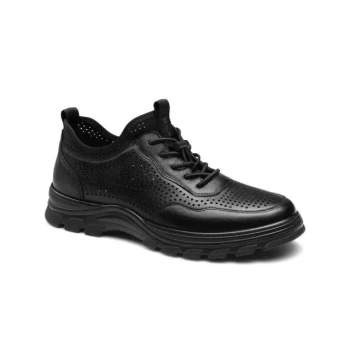
To ensure data accuracy and patient safety, participants must wear professional training shoes or daily footwear during obstacle-crossing gait tasks. This requirement serves two fundamental purposes: it simulates actual daily life scenarios to ensure the data has high ecological validity, and it provides the necessary grip and support to maintain stability during complex movements.
The Core Reality
Gait analysis is only valuable if it reflects how a patient moves in the real world while controlling for external variables. Standardizing footwear bridges the gap between clinical safety and realistic data collection, ensuring that observed movement patterns are driven by the patient's physiology, not their equipment.
Ensuring Ecological Validity
Simulating Real-World Conditions
The primary goal of gait analysis is to understand how a patient functions outside the laboratory. Most daily activities involve wearing shoes, not walking barefoot.
By requiring daily footwear or professional training shoes, you ensure the collected parameters reflect the true effectiveness of the intervention in a natural context.
Bridging the Gap Between Lab and Life
Data collected in artificial conditions (e.g., barefoot on a sterile surface) often fails to translate to real-world application.
Using standard footwear increases the ecological validity of the study, confirming that the patient's ability to cross obstacles in the lab predicts their ability to navigate their actual environment.
Isolating Biological Variables
Eliminating Equipment-Based Noise
In any experiment, you must remove external variables to isolate the cause of an effect.
Uniformly wearing shoes with consistent grip and sole hardness eliminates experimental errors caused by varying friction levels, heel heights, or material properties.
Validating Gait Abnormalities
When footwear is standardized, researchers can be confident that observed deviations—such as trunk leaning or knee flexion—are genuine biological responses.
This ensures the data reflects changes in the patient's spinal or muscular structure, rather than a compensatory strategy for slippery or uncomfortable shoes.
Biomechanical Support and Safety
Providing Essential Stability
Crossing obstacles is a high-difficulty movement that challenges a patient's balance.
High-quality training shoes provide a reliable biomechanical foundation, offering the heel stability and anti-slip performance necessary to execute these tasks safely.
Protecting Vulnerable Populations
For specific groups, such as children with low muscle tone or a tendency toward foot eversion, proper footwear is critical to prevent secondary injuries.
Professional shoes ensure accurate sensory input and prevent the foot from rolling during complex maneuvers, guaranteeing that rehabilitation training remains safe and effective.
Common Pitfalls to Avoid
The Risk of Non-Standardization
If participants are allowed to wear vastly different shoes (e.g., one in dress shoes, another in running shoes), the data becomes noisy. You will struggle to determine if a stumble was caused by motor control issues or a lack of traction.
The Risk of Over-Constraint
While standardization is key, forcing a patient into footwear that causes pain or drastically alters their natural gait can also skew results. The goal is a balance between experimental consistency and patient comfort.
Making the Right Choice for Your Goal
Depending on the focus of your gait analysis, prioritize the following footwear protocols:
- If your primary focus is Clinical Rehabilitation: Prioritize support and safety. Ensure the shoe corrects for issues like eversion to prevent injury during the learning process.
- If your primary focus is Research Data Integrity: Prioritize uniformity. Ensure all participants wear shoes with identical sole hardness and friction coefficients to eliminate equipment variables.
By grounding your footwear choice in these principles, you ensure that your gait analysis is both scientifically robust and clinically safe.
Summary Table:
| Factor | Benefit of Professional/Daily Footwear | Impact on Gait Analysis |
|---|---|---|
| Ecological Validity | Simulates real-world daily scenarios | Ensures data translates to real-life function |
| Variable Control | Standardizes friction and sole hardness | Eliminates 'noise' from equipment differences |
| Biomechanical Support | Provides heel stability and anti-slip grip | Reduces compensatory movements and injury risk |
| Data Reliability | Isolates biological movement patterns | Confirms deviations are physiological, not gear-based |
Elevate Your Footwear Standards with 3515
As a large-scale manufacturer serving distributors and brand owners, 3515 offers comprehensive production capabilities for all footwear types, anchored by our flagship Safety Shoes series. Our extensive portfolio covers work and tactical boots, outdoor shoes, training shoes, and sneakers, as well as Dress & Formal shoes to meet diverse bulk requirements.
Whether you are equipping a clinical study or stocking high-performance training gear, we provide the stability, safety, and uniformity your clients demand. Contact us today to discuss how our manufacturing expertise can support your brand's growth and deliver unmatched value to your customers.
References
- Sophia Rhiel, Corinne Ammann‐Reiffer. Comparing Walking-Related Everyday Life Tasks of Children with Gait Disorders in a Virtual Reality Setup With a Physical Setup: Cross-Sectional Noninferiority Study. DOI: 10.2196/49550
This article is also based on technical information from 3515 Knowledge Base .
Related Products
- Lightweight Breathable Training Shoes for Wholesale & Custom OEM Manufacturing
- Custom OEM Training Shoes Wholesale Manufacturer Durable & Breathable
- Wholesale Breathable & Cushioned Training Shoes Custom Factory Production
- Wholesale Durable & Breathable Training Shoes for Custom Brands
- Wholesale Breathable Training Shoes Custom Athletic Footwear Manufacturer
People Also Ask
- Why are lightweight training shoes often preferred over professional hiking boots in urban walking? Maximize City Comfort
- What is the primary role of specialized training or orthopedic shoes? Enhance Safety in Elderly Balance Training
- Why are professional-grade training shoes essential for physical therapy? Ensure Patient Safety and Gait Stability
- Why are the slip-resistance and stability performance of training shoes critical in gait analysis? Ensure Data Accuracy
- Why is the use of flat-soled or professional training shoes essential for WBV? Maximize Vibration Energy Transfer