
Wearing the right motorcycle boots is a non-negotiable aspect of rider safety. They are purpose-built equipment engineered to protect your feet and ankles from the unique and severe forces of a motorcycle crash. Unlike casual shoes, they provide critical protection against impact, abrasion, and crushing, while also enhancing your control and comfort on the bike.
Your feet and ankles are incredibly vulnerable in a crash. Standard footwear offers virtually no protection, whereas a proper motorcycle boot is a piece of technical safety gear designed specifically to prevent severe, life-altering injuries.
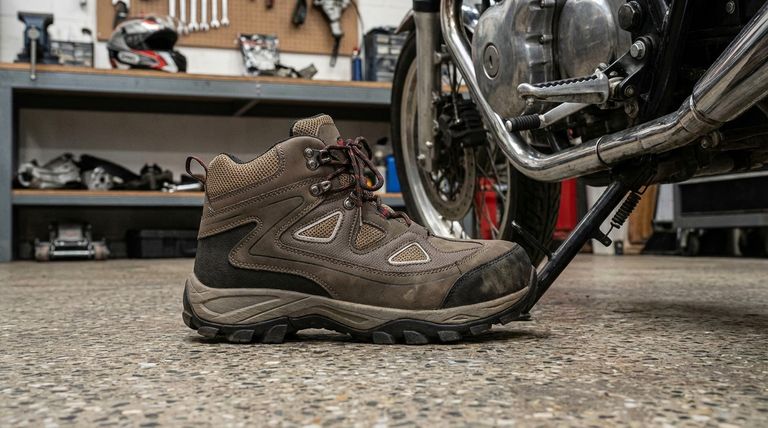
The Anatomy of Protection: What a Boot Actually Does
A common mistake is viewing motorcycle boots as simple, sturdy shoes. In reality, they are a complex system of armor and support designed to counter specific, predictable risks of riding.
Resisting Impact and Crushing Forces
Your feet are directly in line with potential impacts from other vehicles or stationary objects.
Dedicated riding boots feature reinforced toe boxes and heel cups, often made from thermoplastic polyurethane (TPU). This armor is designed to distribute and absorb the energy of a direct hit, preventing the small bones in your feet from shattering.
Many boots also include shin guards and integrated armor over the ankle bones to protect you from impacts with the road or the bike itself during a fall.
Preventing Twists and Sprains
One of the most common riding injuries is a severe ankle sprain or break caused by the foot being twisted unnaturally.
Motorcycle boots are engineered with significant torsional rigidity. This means they are built to resist twisting motions, keeping your ankle locked in a safe and stable position if your foot gets trapped during a slide or fall.
This structural stiffness, often achieved with internal braces and a rigid sole, is a key safety feature that work boots and hiking boots almost always lack.
Defeating Abrasion
Sliding on asphalt, even at low speeds, will shred conventional materials like canvas, suede, or thin leather in seconds.
Proper boots are constructed from thick, abrasion-resistant materials like full-grain leather or advanced textiles. They are stitched together with heavy-duty, melt-resistant thread to ensure the boot doesn't disintegrate during a slide, keeping the armor in place and your skin protected.
Beyond Protection: Enhancing Control and Comfort
The right boots don't just protect you in a crash; they make you a better, more comfortable rider every moment you're on the bike.
The Critical Role of the Sole
The sole of a motorcycle boot serves several functions. It must be made from a slip-resistant compound to give you secure footing on the pegs and when you stop on uncertain or oily surfaces.
The sole is also intentionally stiff. This prevents it from flexing over the footpeg, reducing foot fatigue on long rides and providing a stable platform for precise control inputs for shifting and braking.
Designed for the Riding Posture
Motorcycle boots are shaped to be comfortable in a riding position. Many feature a slight forward cant and a molded profile that supports your foot and ankle naturally while you're on the bike.
They also use secure closure systems—like zippers, buckles, or specialized laces—to ensure the boot stays firmly in place, both for comfort and so it cannot fly off in an accident.
Common Pitfalls and Inadequate Alternatives
Not all boots are created equal. Choosing the wrong footwear can provide a false sense of security and introduce new dangers.
The Misconception of Work Boots
While a heavy-duty work boot is better than a sneaker, it is not an adequate substitute for a motorcycle boot.
Work boots are designed primarily for puncture resistance and protection from falling objects. They lack the critical torsional rigidity to prevent ankle twisting and do not have armor designed to absorb high-speed impacts or slide on pavement.
Why Casual Footwear Fails
Footwear not intended for riding is a significant liability.
Hi-top sneakers offer no meaningful impact or abrasion resistance. Cowboy boots often have smooth leather soles that can easily slip off pegs or on pavement. Boots with long, exposed laces create a serious snag hazard, with the potential to get caught in your chain, shifter, or brake pedal.
Selecting the Right Boot for Your Ride
Your choice of boot should align directly with your primary style of riding, as each type prioritizes different features.
- If your primary focus is daily commuting: Look for certified riding shoes or short boots that blend protection with walkability and understated style.
- If your primary focus is long-distance touring: Prioritize boots with certified waterproofing, all-day comfort features, and robust protection for varied conditions.
- If your primary focus is track or sport riding: You need maximum rigidity, extensive external armor, and precise feel for the controls.
- If your primary focus is off-road or adventure riding: Emphasize tall, buckle-secured boots with extreme impact protection for the shins, heels, and toes.
Investing in a proper pair of motorcycle boots is one of the most important safety decisions you can make as a rider.
Summary Table:
| Feature | Standard Footwear | Motorcycle Boots |
|---|---|---|
| Impact Protection | Minimal to None | Reinforced toe box, heel cup, and shin armor |
| Ankle Support | Limited | High torsional rigidity to prevent twists |
| Abrasion Resistance | Low (shreds quickly) | High (thick leather/textiles, melt-resistant thread) |
| Sole Grip & Control | Variable, can be slippery | Slip-resistant, stiff for precise shifting/braking |
| Riding-Specific Design | No | Yes (comfortable riding posture, secure closures) |
Protect Your Ride with Professional-Grade Footwear from 3515
As a large-scale manufacturer, 3515 produces a comprehensive range of certified safety footwear for distributors, brand owners, and bulk clients. Our production capabilities encompass all types of motorcycle boots and shoes, engineered with the critical protection features detailed above—from reinforced armor and abrasion-resistant materials to slip-resistant soles designed for optimal control.
Whether you need gear for commuting, touring, sport, or off-road riding, we can provide high-quality, reliable footwear that meets the demands of your customers. Contact us today to discuss your requirements and how we can support your business with our manufacturing expertise.
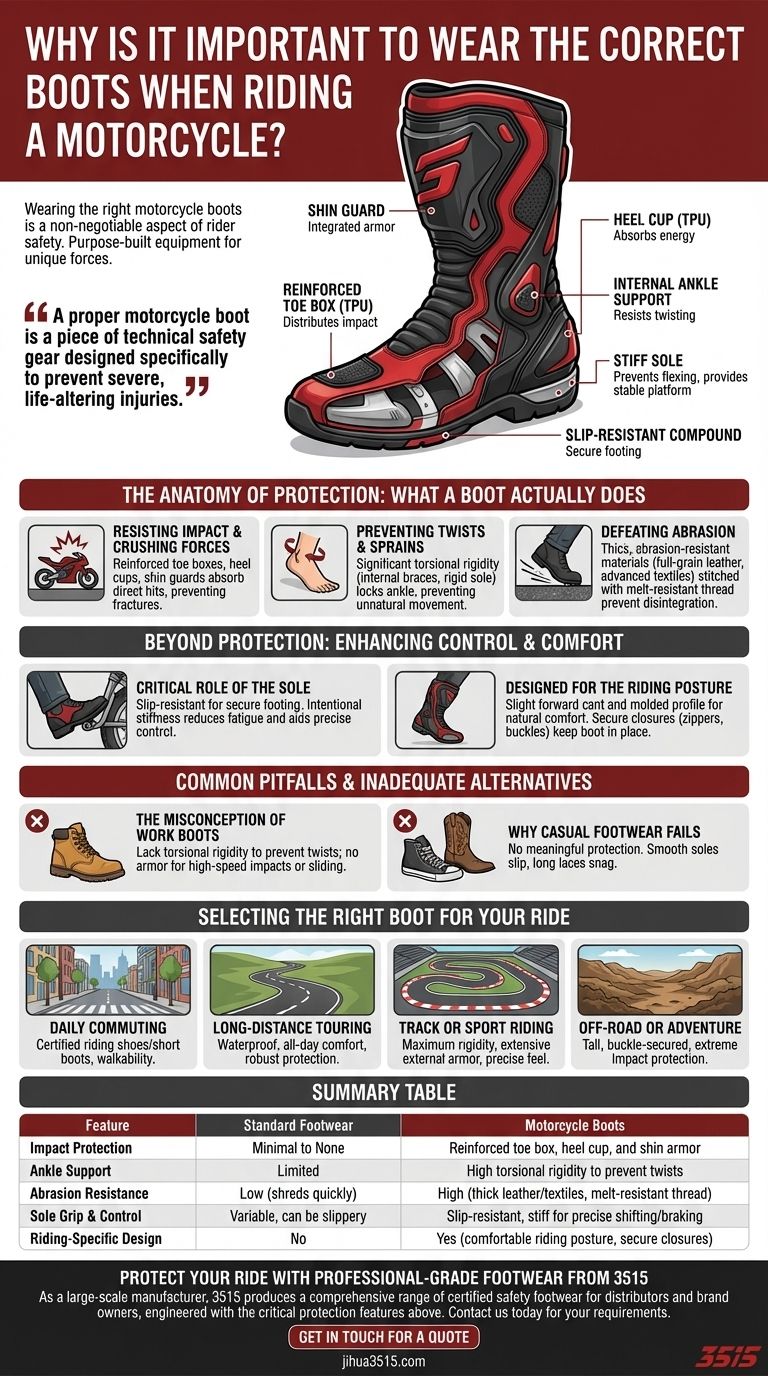
Visual Guide
Related Products
- Wholesale Tactical Boots High-Traction & Reflective for Bulk & Brand Orders
- High Performance Fire-Retardant Waterproof Safety Boots
- Durable Goodyear Welt Leather Work Boots for Wholesale & Private Label
- Wholesale High-Traction Camo Boots - Custom Manufacturer for Brands
- Heavy-Duty Waterproof Nubuck Safety Boots Safety Shoes for Bulk Supply
People Also Ask
- How do tactical boots protect against injuries? Discover the Integrated Safety System
- How should one choose the right tactical boots? Match Your Mission for Optimal Performance & Safety
- What role do heavy-duty footwear play in identity expression? Subvert Aesthetic Norms with Tactical & Industrial Style
- How does additive manufacturing equipment reduce environmental risks? Sustainable Tactics for Modern Footwear Production
- What features do tactical boots typically have? A Guide to Rugged Durability & Performance



















