
Tactical boots protect against injury by creating an integrated system of defense for your feet and ankles. They combine rigid external shields against direct threats like impacts and punctures with a supportive structure that stabilizes your ankle to prevent twists, sprains, and fractures caused by movement on uneven terrain.
The core function of a tactical boot is not just to cover the foot, but to act as a comprehensive safety system. It simultaneously defends against external hazards while reinforcing the foot and ankle's natural biomechanics to prevent self-inflicted injuries during strenuous activity.
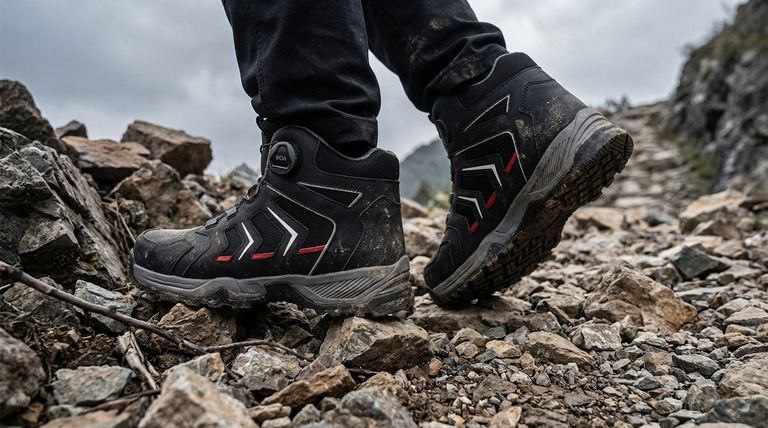
Shielding Against External Threats
The most obvious function of a tactical boot is to serve as a physical barrier between your foot and the environment. This is accomplished through several specialized components designed to counter specific dangers.
Impact and Compression Protection
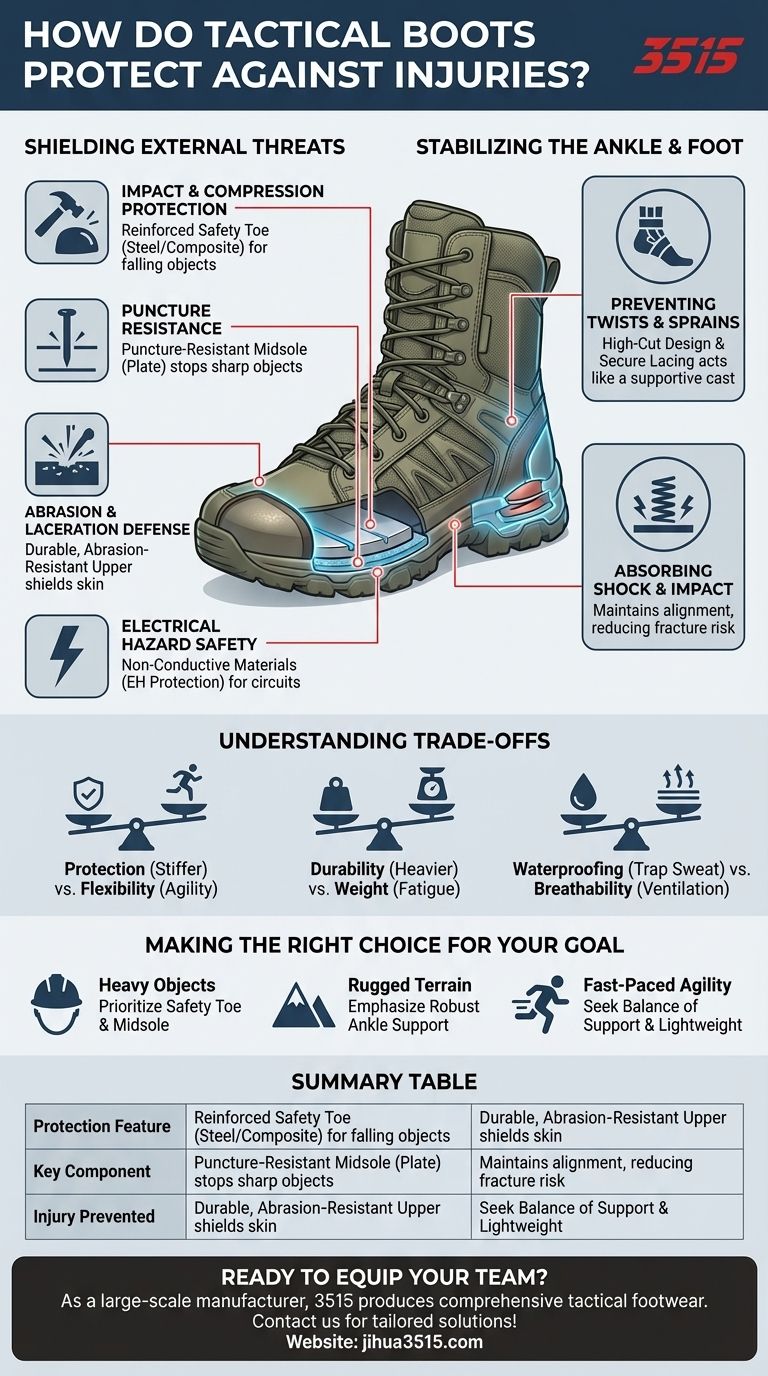
A reinforced toe box, often a certified safety toe made of steel or composite materials, is the first line of defense. This feature is engineered to protect your toes from injuries caused by falling objects or compression.
Puncture Resistance
The bottom of your foot is protected by a puncture-resistant midsole. This is typically a steel or advanced non-metallic plate integrated into the sole, designed to stop sharp objects like nails or glass from penetrating the boot from below.
Abrasion and Laceration Defense
The boot's upper is constructed from durable, abrasion-resistant materials. This tough exterior shields the skin on your foot and ankle from being cut, scraped, or gashed by contact with rough surfaces or sharp objects.
Electrical Hazard Safety
Many tactical boots are rated for electrical hazard (EH) protection. This means they are built with non-conductive materials to provide an extra layer of defense against accidental contact with live electrical circuits.
Stabilizing the Ankle and Foot
Beyond shielding from external objects, a boot's structural design is critical for preventing injuries caused by the body's own movements, especially under stress.
Preventing Twists and Sprains
The high-cut design and secure lacing system work together to function like a supportive cast for your ankle. This structure limits excessive side-to-side and rotational movement, which is the primary cause of sprains and ligament damage on uneven ground.
Absorbing Shock and Impact
By stabilizing the entire joint, the boot helps absorb the shock from sudden jolts and impacts. This structural support helps maintain the leg's natural alignment during a fall or when navigating difficult terrain, significantly reducing the risk of fractures.
Understanding the Trade-offs
No single boot is perfect for every situation. Understanding the inherent compromises in design is key to choosing the right tool for the job.
Protection vs. Flexibility
Boots with the highest levels of protection, such as those with extensive hard plating, are often stiffer. This rigidity can limit ankle flexibility, which may be a disadvantage in situations requiring high agility or running.
Durability vs. Weight
Heavier, more durable materials and reinforced components add significant weight. While excellent for protection, this can lead to faster fatigue over long distances compared to lighter, more minimalist designs.
Waterproofing vs. Breathability
Waterproof membranes are excellent for keeping feet dry from external moisture. However, they can trap sweat and reduce breathability, which can be a major issue in hot climates or during periods of high physical exertion.
Making the Right Choice for Your Goal
Selecting the correct boot means aligning its protective features with the specific risks you anticipate facing.
- If your primary focus is working around heavy objects: Prioritize a certified safety toe and a puncture-resistant midsole to guard against impact and ground-level hazards.
- If your primary focus is traversing rugged, uneven terrain: Emphasize robust ankle support with a high-cut design to prevent sprains and fractures.
- If your primary focus is fast-paced agility: Seek a balance between moderate ankle support, light weight, and flexibility to ensure you can move quickly and safely.
Ultimately, selecting the right tactical boot means matching its specific protective systems to the real-world risks you face.
Summary Table:
| Protection Feature | Key Component | Injury Prevented |
|---|---|---|
| Impact & Compression | Reinforced Safety Toe (Steel/Composite) | Toe injuries from falling objects |
| Puncture Resistance | Puncture-Resistant Midsole | Foot penetration from sharp objects |
| Ankle Stability | High-Cut Design & Lacing System | Sprains, twists, and fractures |
| Electrical Hazards | Non-Conductive Materials | Electric shock from live circuits |
| Abrasion Defense | Durable, Abrasion-Resistant Upper | Cuts and scrapes from rough surfaces |
Ready to equip your team with superior protection? As a large-scale manufacturer, 3515 produces a comprehensive range of tactical footwear for distributors, brand owners, and bulk clients. Our production capabilities encompass all types of safety boots, ensuring durability, compliance, and tailored solutions for your specific needs. Contact us today to discuss your requirements and discover how we can enhance your safety gear lineup!
Visual Guide
Related Products
- Durable Leather Tactical Boots Wholesale & Custom Manufacturing for Brands
- High-Traction Suede Tactical Boots Wholesale & Custom Manufacturing
- Durable Leather High-Ankle Tactical Boots for Wholesale & Custom Manufacturing
- Durable Mid-Cut Tactical Boots for Wholesale & Private Label
- Wholesale Waterproof Tactical Boots Custom Suede & High-Traction Soles
People Also Ask
- What specialized protections do tactical boots offer? Maximize Endurance with High-Performance Footwear
- What features should law enforcement officers look for in tactical boots? Essential Guide for Safety & Performance
- Importance of Professional Tactical Boots in Loess Gully Regions: Ensure Safety and Precision for Field Monitoring
- What is rucking, and why are tactical boots suitable for it? Discover the Ultimate Footwear for Heavy Loads
- What makes the traction of tactical boots superior? Unlock the Science of Unbeatable Grip














