Properly tying your work boots is a foundational safety practice, not just a matter of convenience. It is the primary way to ensure the boot functions as a cohesive system with your foot, providing critical ankle support, preventing injuries, and maximizing the lifespan of your investment by eliminating internal friction and wear.
The goal of proper lacing is to create a secure, integrated unit of your foot and boot. This simple act transforms the boot from a loose covering into an essential piece of personal protective equipment that directly impacts your safety, comfort, and the longevity of your gear.
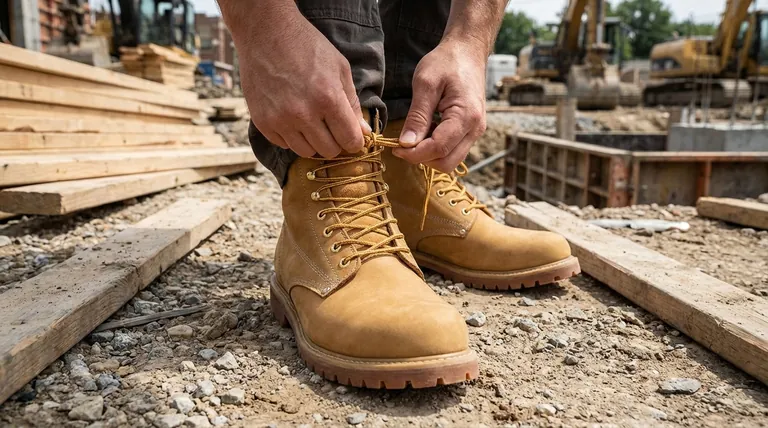
The Critical Link Between Lacing and On-Site Safety
A work boot's protective features are only effective when the boot is securely fastened to your foot. A loose boot is a significant and often overlooked hazard.
Preventing Slips, Trips, and Falls
The most immediate danger of improperly tied boots is the risk of tripping. Loose laces can easily get caught on equipment, debris, or scaffolding, leading to a potentially serious fall.
Maximizing Ankle Support
A key function of a work boot is to protect against twists and sprains. Proper lacing locks your heel into the back of the boot, providing the stability needed to prevent your ankle from rolling on uneven or unstable surfaces.
Ensuring a Secure and Stable Fit
A snug fit ensures the boot moves with your foot, not around it. This gives you better feedback from the ground, improves your balance, and provides more predictable traction and control with every step.
Impact on Foot Health and All-Day Comfort
Discomfort isn't just an annoyance; it's a precursor to injury and a major source of fatigue. The way you tie your boots has a direct effect on your physical well-being.
Eliminating Internal Friction
As noted in maintenance guides, the most common source of internal damage is a foot sliding around inside the boot. This same friction is what causes painful hot spots, chafing, and blisters on your feet.
Distributing Pressure Evenly
Correct lacing distributes the pressure of the boot evenly across the top of your foot. This prevents the creation of painful pressure points that can lead to soreness and bruising after a long day.
Preserving the Lifespan of Your Boots
Your work boots are a significant investment. How you tie them directly impacts how long they will last and perform as intended.
Reducing Internal Wear and Tear
A foot that is constantly shifting inside the boot acts like sandpaper against the inner lining. This friction prematurely wears out the padding and fabric, compromising the boot's comfort and support systems.
Maintaining Structural Integrity
When a boot is worn loosely, it is forced to bend and flex in ways it wasn't designed for. This abnormal movement leads to distorted shaping, deep creasing, and uneven wear on the soles, shortening the boot's functional life.
Understanding the Trade-offs and Common Mistakes
There is a difference between a boot that is secure and one that is too tight. Finding the right balance is key to both safety and comfort.
The "Too Tight" Problem
Overtightening your laces, especially across the top of the foot, can restrict blood flow. This can lead to numbness, tingling, and foot pain, creating a new set of problems.
The "Too Loose" Consequence
As established, a loose boot fails at its most basic functions. It offers minimal ankle support, creates a tripping hazard, and actively damages both your foot and the boot itself through constant friction.
Forgetting to Lock the Heel
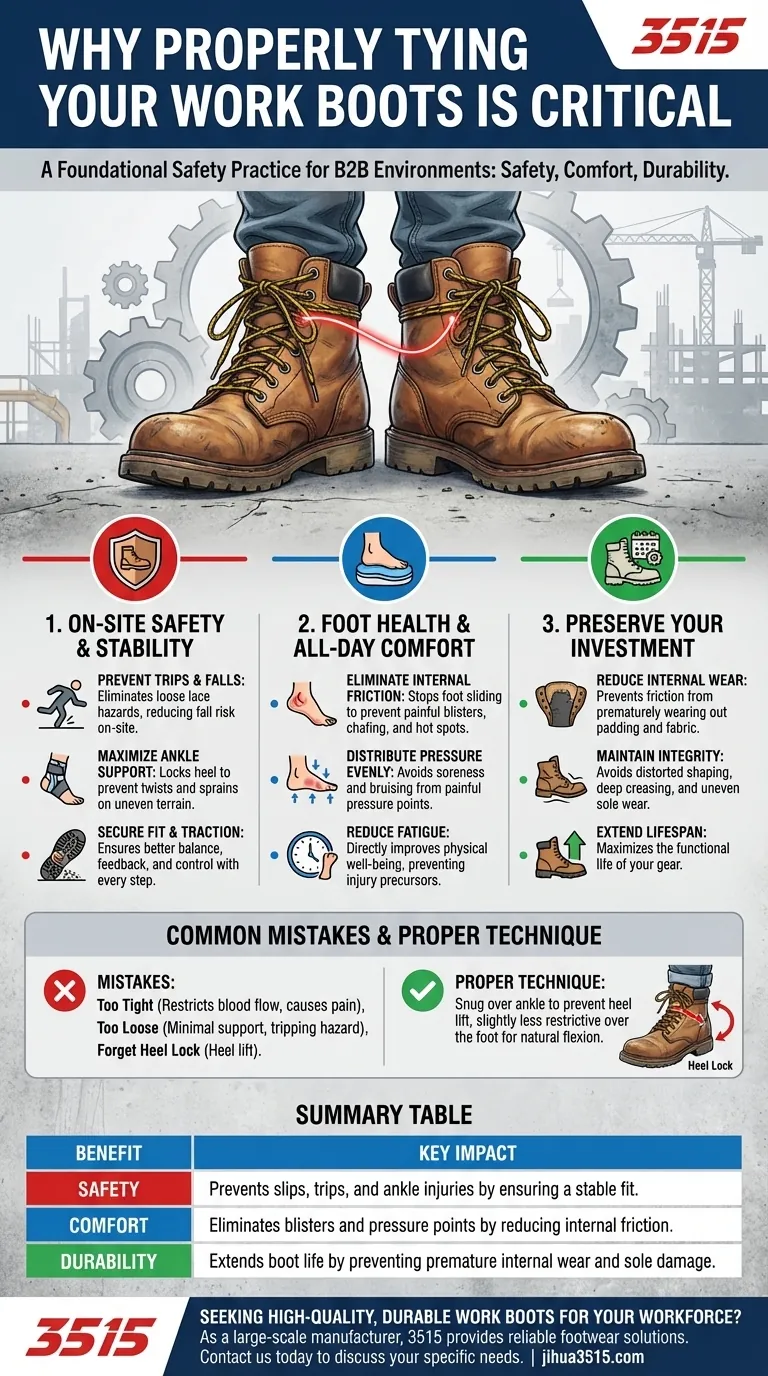
The most common mistake is simply pulling the laces tight from top to bottom. The most effective technique is to ensure the laces over the ankle are snug enough to prevent heel lift, while the laces over the foot can be slightly less restrictive to allow for natural foot flexion.
Tying Your Boots for Your Specific Needs
Adjust your lacing strategy based on the primary demand of your workday to maximize performance and protection.
- If your primary focus is maximum ankle support on uneven terrain: Use a "heel lock" or "surgeon's knot" lacing technique at the ankle eyelets to firmly secure your heel in the back of the boot.
- If your primary focus is all-day comfort on flat surfaces: Ensure your laces are snug but not constrictive across the top of your foot, allowing for natural swelling throughout the day while still keeping your heel secure.
- If your primary focus is extending the life of your boots: Make it a habit to check that your laces are snug before starting any demanding task, preventing the internal sliding that causes the most destructive wear.
Taking ten extra seconds to lace your boots correctly is the simplest investment you can make in your daily safety and long-term well-being.
Summary Table:
| Benefit | Key Impact |
|---|---|
| Safety | Prevents slips, trips, and ankle injuries by ensuring a stable fit. |
| Comfort | Eliminates blisters and pressure points by reducing internal friction. |
| Durability | Extends boot life by preventing premature internal wear and sole damage. |
Are you a distributor, brand owner, or bulk client seeking high-quality, durable work boots for your workforce?
As a large-scale manufacturer, 3515 produces a comprehensive range of footwear designed for the demands of industrial and safety environments. Our production capabilities encompass all types of safety shoes and boots, built to last and support your team.
Contact us today to discuss your specific needs and discover how our reliable footwear solutions can enhance safety and performance.
Visual Guide
Related Products
- Durable Leather Work Boots for Wholesale & Custom Manufacturing
- Durable Leather Work Boots for Wholesale & Custom OEM Manufacturing
- Durable Leather Work Boots Wholesale Manufacturer & Custom Factory
- Durable Leather Moc Toe Work Boots for Wholesale & Custom Manufacturing
- Wholesale Durable 6-Inch Work Boots | Custom & Private Label Manufacturer
People Also Ask
- What is the difference between full-grain and top-grain leather? Premium Material Guide for Boot Manufacturers
- What are the common workplace hazards that can be mitigated with the right work boots? Protect Your Workforce
- What are the common foot issues workers face due to uncomfortable work boots? Prevent Pain & Deformities
- What are the advantages of leather versus synthetic work boots? A Guide to Choosing the Right Material
- What are the key components of modern work boots? Engineered for Ultimate Durability and Comfort