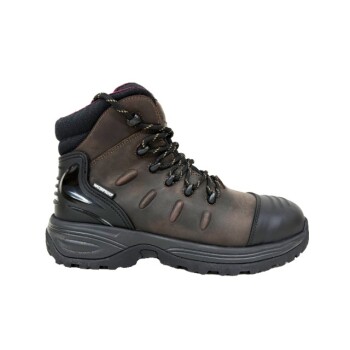
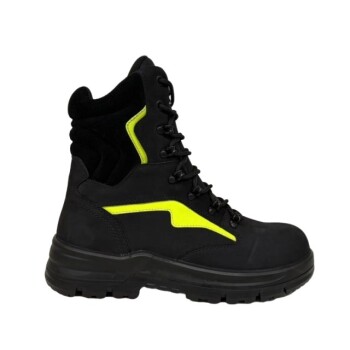
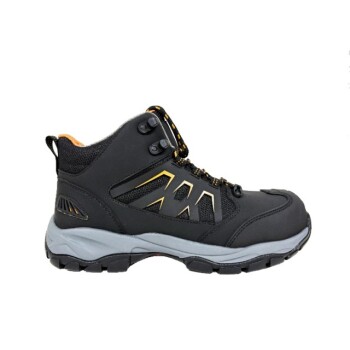
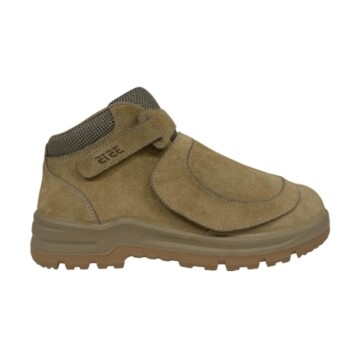
Restricting professional safety boots to the construction site is essential for preserving the integrity of their protective structures. Using these specialized boots for daily commuting or casual wear exposes them to unnecessary friction and stress in non-hazardous environments, which accelerates the degradation of critical features like impact resistance and puncture resistance before they are needed for actual work.
Treating safety footwear as dedicated professional equipment rather than general-purpose clothing ensures that protective capabilities are preserved for high-risk environments, extending the equipment's lifespan and reliability.
Preserving Critical Safety Mechanisms
Impact on Protective Structures
Professional safety boots are engineered to withstand complex mechanical demands specific to construction sites. Every mile walked on pavement or concrete outside of work contributes to material fatigue.
Overusing the boots in non-hazardous settings leads to performance degradation. This weakens the structural components designed to protect your feet from crushing injuries or sharp objects.
The "Invisible" Wear Factor
Damage to safety gear is not always visible to the naked eye. Internal cushioning and protective plate mountings can deteriorate through standard walking mechanics.
By limiting use to the job site, you ensure that the boot's structure remains in optimal condition. You want the boots to be at 100% capacity when a legitimate workplace hazard occurs.
Professional Equipment Status
Dedicated Gear Maintenance
Ideally, safety boots should be viewed with the same regard as a hard hat or a fall-protection harness. They are dedicated professional equipment, not apparel.
Maintaining this status prevents the blurring of lines between work tools and daily wear. It fosters a mindset of safety where equipment is inspected and cared for, rather than taken for granted.
Economic and Environmental Impact
Beyond safety, there is a practical economic argument. Neglect and overuse shorten the effective lifespan of the boot, leading to more frequent replacement cycles.
Proper care extends the life of the boot, which saves money over time. Additionally, this practice benefits the environment by minimizing waste associated with discarding worn-out footwear prematurely.
Understanding the Trade-offs
The Convenience Challenge
The primary trade-off of this approach is logistical inconvenience. It requires carrying a second pair of shoes for commuting and creates the need for a changing routine at the start and end of every shift.
Storage Logistics
You must also manage the storage of dirty or muddy boots. Leaving them at the site or transporting them in a separate bag requires planning, which is less convenient than simply wearing the same pair of shoes all day.
Making the Right Choice for Your Goal
To maximize the utility and safety of your professional footwear, consider your primary motivation:
- If your primary focus is Maximum Safety: Limit boot usage strictly to the work zone to ensure impact and puncture resistance features are never compromised by unnecessary wear.
- If your primary focus is Cost Efficiency: distinct daily footwear for commuting to significantly extend the lifespan of your expensive work boots and reduce replacement frequency.
Your safety equipment is your last line of defense; treat it with the respect required to ensure it works when you need it most.
Summary Table:
| Feature | Site-Only Use | Daily Casual Use |
|---|---|---|
| Structural Integrity | Preserved for hazards | Accelerated material fatigue |
| Protection Level | 100% capacity in risk zones | Degraded impact/puncture resistance |
| Lifespan | Extended (Cost-efficient) | Shortened (Frequent replacement) |
| Maintenance | Treated as professional gear | Treated as general apparel |
| Hygiene & Logistics | Contaminants kept on-site | Risk of spreading site debris |
As a large-scale manufacturer serving distributors and brand owners, 3515 offers comprehensive production capabilities for all footwear types, anchored by our flagship Safety Shoes series. Our extensive portfolio covers work and tactical boots, outdoor shoes, training shoes, and sneakers, as well as Dress & Formal shoes to meet diverse bulk requirements. Ensure your workforce or customers have access to high-performance, durable protective gear. Contact us today to discuss your bulk manufacturing needs and discover how our expertise can add value to your brand.
References
- A. Nimo-Boakye. Reviewing Measuring Health And Safety Management Performance In The Construction Industry. DOI: 10.26437/ajar.03.2022.25
This article is also based on technical information from 3515 Knowledge Base .
Related Products
- Puncture-Resistant Velcro Safety Boots for Wholesale & Custom Manufacturing
- Wholesale Durable Safety Boots | Custom Steel Toe & Puncture-Resistant Manufacturing
- Premium Grain Leather Safety Boots for Bulk Supply
- Heavy-Duty Waterproof Nubuck Safety Boots Safety Shoes for Bulk Supply
- Premium High-Cut Waterproof Safety Boots Manufacturing & Wholesale Solutions
People Also Ask
- Why are industrial safety boots with steel toes necessary for machine operators? Essential Foot Protection for Safety
- What are the characteristics of steel toe safety boots? Maximum Protection, Key Trade-offs
- Is it true that steel toes can cause toes to get cut off? Debunking the Dangerous Myth
- What are the primary safety functions of safety boots with steel-toe designs? Essential Protection for Industry
- What are the different types of safety toe boots available? Choose the Right Protection for Your Job