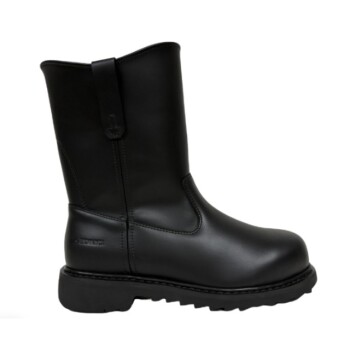
The chemical stability of polymer safety boots acts as a critical molecular shield. In the pharmaceutical and chemical industries, boots made from materials like nitrile or fluoroelastomer provide a dense barrier that prevents hazardous solvents from passing through the material. This stability is the primary defense against permeation, ensuring that toxic chemicals do not absorb through the skin, enter the circulatory system, and cause severe systemic health issues.
By maintaining a high density at the molecular level, chemically stable polymers prevent solvents from bypassing physical barriers and entering the bloodstream, thereby neutralizing the risk of chronic internal pathologies.
The Mechanism of Protection
Creating a Dense Molecular Barrier
The core function of chemical stability in safety footwear is the creation of a dense molecular structure. Materials such as nitrile and fluoroelastomer are engineered to resist breakdown when in contact with aggressive substances.
Preventing Permeation
Unlike standard footwear, which may allow chemicals to soak through, these polymers possess high anti-permeation properties. This characteristic ensures that the material remains impermeable even when exposed to liquid hazards for extended periods.
Defending Against Specific Chemical Threats
Neutralizing Solvent Risks
Pharmaceutical and chemical environments frequently handle chlorinated and oxygenated solvents. These substances are notorious for their ability to dissolve or penetrate standard materials.
Managing Leakage Scenarios
In the event of accidental chemical leakage, the stability of the boot is the only line of defense for the worker's feet. The polymer must resist immediate degradation to maintain the integrity of the protective barrier.
The Health Implications: Preventing Systemic Damage
Blocking Skin Absorption
The most critical role of these boots is preventing transdermal absorption. If a solvent penetrates the boot, the skin acts as a pathway rather than a barrier.
Stopping Circulatory Entry
Once absorbed by the skin, hazardous chemicals can enter the circulatory system. This transforms a local exposure event into a systemic health crisis affecting internal organs.
avoiding Systemic Pathologies
By stopping the chemical at the source, stable polymers prevent systemic pathologies. These are long-term, often irreversible health conditions caused by internal exposure to toxins.
Critical Considerations and Trade-offs
Material Specificity is Non-Negotiable
Not all polymers offer the same level of protection. Relying on generic safety boots in a chemical environment is a common pitfall; they often lack the specific molecular density required to stop aggressive solvents.
The Limits of Protection
While nitrile and fluoroelastomer are highly effective, no material is universally impervious forever. Understanding the specific chemical breakthrough times for your chosen footwear is essential to avoid overestimating protection duration.
Making the Right Choice for Your Safety Protocol
To ensure the long-term health of your workforce, select footwear based on the specific chemical hazards present in your facility.
- If your primary focus is heavy solvent exposure: Prioritize boots made of fluoroelastomer or nitrile for their superior anti-permeation properties against chlorinated and oxygenated solvents.
- If your primary focus is preventing long-term illness: Select footwear explicitly certified to block skin absorption to eliminate the risk of contaminants entering the circulatory system.
True safety in chemical environments goes beyond preventing injuries; it requires a molecular defense strategy to protect the body's internal systems.
Summary Table:
| Feature | Protection Mechanism | Health Benefit |
|---|---|---|
| Molecular Density | Resists structural breakdown from solvents | Prevents material failure during leaks |
| Anti-Permeation | Blocks hazardous liquids from soaking through | Stops chemicals from reaching the skin |
| Skin Barrier | Prevents transdermal absorption | Neutralizes the risk of circulatory entry |
| Material Type | Nitrile/Fluoroelastomer specific engineering | Defends against chronic internal pathologies |
Secure Your Workforce with 3515 High-Performance Safety Footwear
As a premier large-scale manufacturer serving global distributors and brand owners, 3515 delivers the molecular-level defense your clients require. Our flagship Safety Shoes series is engineered for the rigorous demands of the pharmaceutical and chemical sectors, providing a critical shield against systemic health risks.
Our comprehensive production capabilities include:
- Specialized Safety & Tactical Boots: High-density polymers for superior chemical resistance.
- Versatile Footwear Portfolio: From outdoor and training shoes to sneakers and professional Dress & Formal shoes.
- Bulk Manufacturing Excellence: Tailored solutions to meet diverse industrial and brand requirements.
Partner with a manufacturer that prioritizes long-term worker health. Contact us today to discuss your bulk requirements and see how our footwear solutions can strengthen your product lineup.
References
- Stefania Massari, Alessandro Marinaccio. Occupational Mortality Matrix: A Tool for Epidemiological Assessment of Work-Related Risk Based on Current Data Sources. DOI: 10.3390/ijerph19095652
This article is also based on technical information from 3515 Knowledge Base .
Related Products
- Puncture-Resistant Velcro Safety Boots for Wholesale & Custom Manufacturing
- Wholesale Durable Safety Boots | Custom Steel Toe & Puncture-Resistant Manufacturing
- High Performance Fire-Retardant Waterproof Safety Boots
- Durable Steel Toe Safety Boots Wholesale & Custom Manufacturing
- Premium Oil Wax Leather Safety Boots for Bulk Purchase
People Also Ask
- Why are industrial safety boots with steel toes necessary for machine operators? Essential Foot Protection for Safety
- What are the characteristics of steel toe safety boots? Maximum Protection, Key Trade-offs
- Is it true that steel toes can cause toes to get cut off? Debunking the Dangerous Myth
- What are the primary safety functions of safety boots with steel-toe designs? Essential Protection for Industry
- What are the different types of safety toe boots available? Choose the Right Protection for Your Job