Maintaining your waterproof leather boots is an act of preservation, not just cleaning. It is essential because leather is a natural material that will crack, stiffen, and lose its water-resistant properties without regular care. Proper maintenance directly extends the functional lifespan of your boots, ensures they remain comfortable, and guarantees they perform as intended when you need them most.
The core issue is that "waterproof" is a temporary state, not a permanent feature of leather. Maintenance is the ongoing process required to preserve the leather's health and continually renew its barrier against moisture, preventing premature failure and protecting your investment.
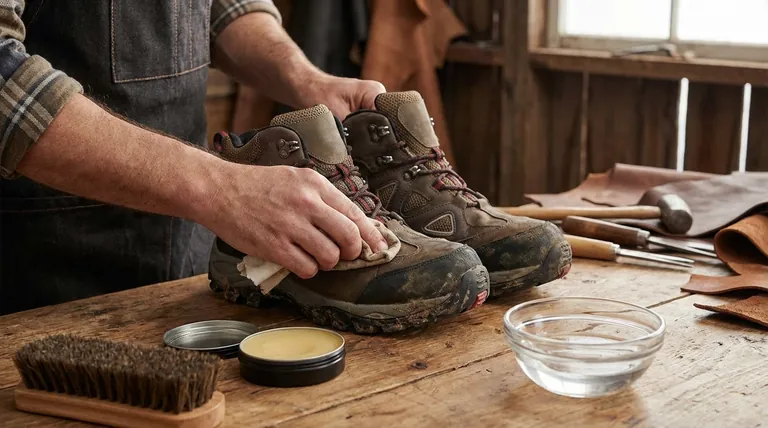
The Core Functions of Boot Maintenance
To understand the importance of maintenance, you must view your boots as a high-performance tool. Like any tool, it requires upkeep to function correctly. Each step in the care process serves a distinct and critical purpose.
Preserving the Leather's Integrity
Leather contains natural oils that keep it supple and strong. Over time, exposure to water, dirt, and heat strips these oils away, causing the leather to dry out.
Dried-out leather becomes brittle and prone to cracking, especially along flex points. This damage is often irreversible and represents the primary point of failure for high-quality boots.
Regularly conditioning your boots replenishes these essential oils, keeping the leather flexible and resilient against physical stress.
Reinforcing the Waterproof Barrier
Most waterproof leather boots have a two-part system: the treated leather exterior and sometimes an internal waterproof membrane. The exterior treatment is the first line of defense.
This external barrier wears down with use, abrasion, and exposure to the elements. Once it fails, water can saturate the leather, compromising the entire system.
Applying a waterproofing product, like a wax or spray, restores this crucial external shield, preventing water from ever soaking into the leather itself.
Ensuring Long-Term Durability
Dirt and grit are highly abrasive. When particles work their way into the leather's pores and seams, they act like sandpaper, slowly breaking down fibers and stitching.
Proper cleaning removes these damaging particles before they can cause lasting harm. This simple step is fundamental to the boot's structural longevity.
The Consequences of Neglect
Ignoring boot maintenance leads to a predictable cycle of decay that goes far beyond minor cosmetic issues. The consequences are a loss of performance, comfort, and ultimately, the money you invested.
The Myth of "Permanent" Waterproofing
No leather boot is permanently waterproof without care. Even those with advanced waterproof liners (like Gore-Tex) will fail to perform if the outer leather becomes saturated.
This condition, known as "wetting out," makes the boots heavy and eliminates their breathability. Your feet will feel damp and cold from trapped sweat, even if no external water gets in.
The Cycle of Material Breakdown
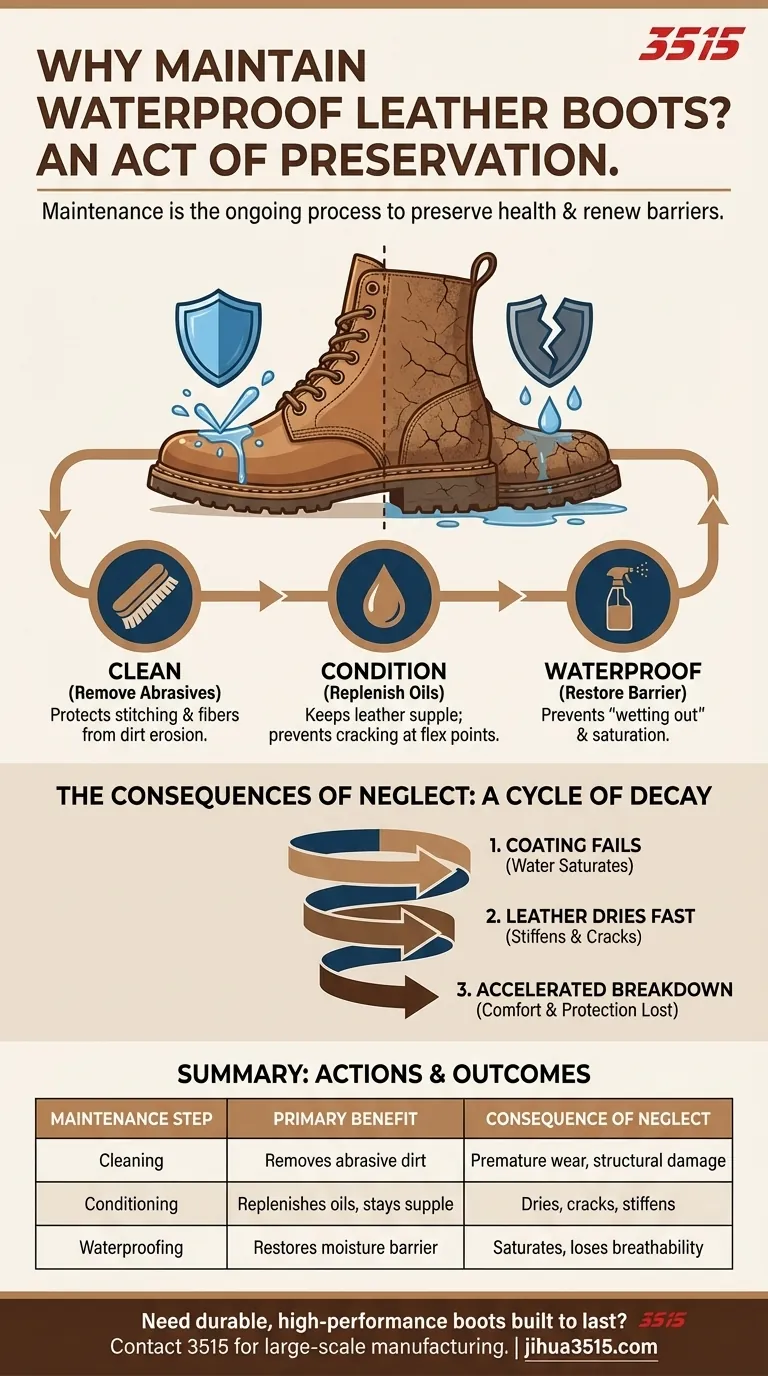
Neglect creates a domino effect. First, the waterproof coating wears off. Then, water saturates the leather, which then dries out too quickly, causing it to stiffen and crack.
These new cracks provide more entry points for water and dirt, accelerating the cycle of decay. This is how a premium pair of boots can fail in just a season or two.
Reduced Comfort and Protection
Dry, stiff leather doesn't just look bad; it's extremely uncomfortable. It creates painful pressure points and reduces the boot's ability to support your foot.
Furthermore, degraded leather loses its protective qualities, offering less resistance to abrasion and impact, which can be a critical safety issue in work or outdoor environments.
Making the Right Choice for Your Goal
Consistent care is about matching your maintenance routine to your level of use. A proactive approach is always more effective than trying to repair damage after it has occurred.
- If your primary focus is casual wear in mild conditions: A basic cleaning and conditioning treatment every few months is sufficient to keep the leather healthy and looking its best.
- If your primary focus is regular work or hiking in varied weather: Perform a full maintenance cycle (clean, condition, and waterproof) at the beginning of each season and after any particularly harsh use in mud or water.
- If your primary focus is maximum longevity in harsh environments: Clean your boots after every significant use and re-apply a waterproofing treatment whenever you notice water is absorbing into the leather rather than beading off the surface.
Proper maintenance transforms your boots from a disposable purchase into reliable, long-term equipment.
Summary Table:
| Maintenance Step | Primary Benefit | Consequence of Neglect |
|---|---|---|
| Cleaning | Removes abrasive dirt, protects stitching | Premature wear, structural damage |
| Conditioning | Replenishes oils, keeps leather supple | Leather dries, cracks, and stiffens |
| Waterproofing | Restores moisture barrier, beading effect | Leather saturates, loses breathability |
Need durable, high-performance leather boots built to last?
As a large-scale manufacturer, 3515 produces a comprehensive range of waterproof footwear for distributors, brand owners, and bulk clients. Our production capabilities ensure your boots are crafted for longevity and performance from the start.
Contact us today to discuss your footwear needs and benefit from our manufacturing expertise.
Visual Guide
Related Products
- Premium Oil Wax Leather Safety Boots for Bulk Purchase
- Wholesale Waterproof Tactical Boots Custom Suede & High-Traction Soles
- Premium Wholesale Waterproof Safety Boots High Performance Protection for Industrial Markets
- Durable Waterproof Rain Boots | Custom Manufacturer for Wholesale & Brands
- High Performance Fire-Retardant Waterproof Safety Boots
People Also Ask
- What materials are commonly used for outsoles in safety boots? A Guide to Durability, Grip, and Comfort
- How do safety boots reduce cutting hazards? Essential Protection for Your Workforce
- What are the common types of safety boots and their primary uses? A Guide to Industrial Footwear
- Which organizations develop safety standards for work boots? Ensure Compliance & Worker Safety
- What primary protective functions do professional safety boots provide in urban solid waste recovery and waste picking processes? Discover Dual-Layer Protection.