
Ignoring the sharp, stabbing pain of plantar fasciitis is a gamble against your body's mechanics. It is a condition that rarely resolves on its own because it stems from persistent mechanical stress, not a one-time injury. Continuing your normal routine without intervention allows the underlying causes to worsen, transforming acute discomfort into a chronic, debilitating problem.
The core issue is that plantar fasciitis is a repetitive strain injury. Without making intentional changes to your footwear, activities, or biomechanics, you are effectively re-injuring the sensitive plantar fascia ligament with every step you take.
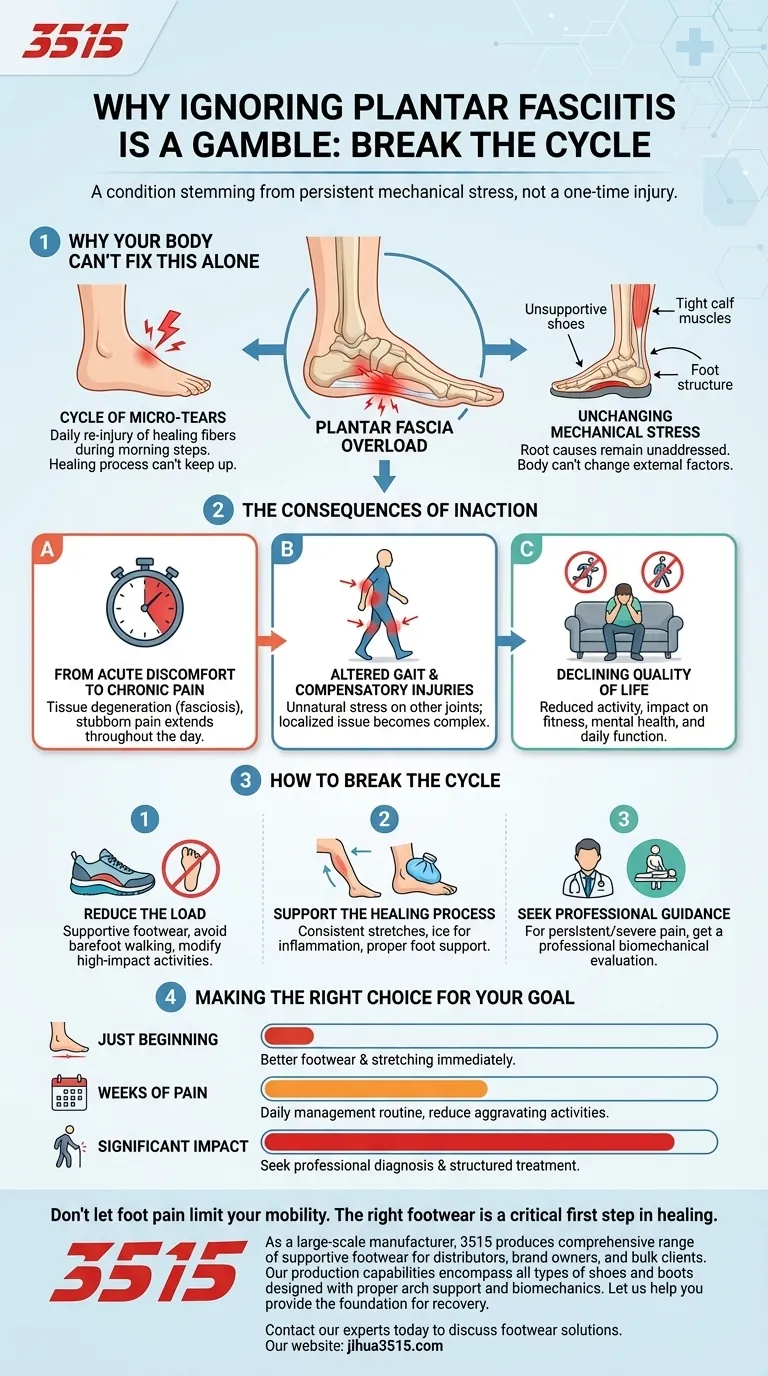
Why Your Body Can't Fix This Alone
Plantar fasciitis is fundamentally a problem of overload. The plantar fascia, a thick band of tissue supporting your foot's arch, is being stressed beyond its capacity to repair itself.
The Cycle of Micro-Tears
The pain you feel is caused by micro-tears in the plantar fascia ligament. Every morning, that first painful step can re-tear the delicate fibers that tried to heal overnight.
This creates a frustrating cycle of injury, inflammation, and re-injury. Your body's healing process simply can't keep up with the daily damage.
The Unchanging Mechanical Stress
The root cause is often mechanical—issues like unsupportive footwear, tight calf muscles, a sudden increase in activity, or your natural foot structure.
Your body cannot change these external factors. It cannot buy you better shoes or stretch your calves for you. Ignoring the pain means the root cause of the stress remains unaddressed.
The Consequences of Inaction
Hoping the pain will simply vanish can lead to a cascade of more significant issues that extend far beyond your foot.
From Acute Discomfort to Chronic Pain
What starts as morning pain can gradually extend throughout the day. Over time, the tissue can degenerate, a condition known as fasciosis, which involves less inflammation but more chronic, stubborn pain.
Altered Gait and Compensatory Injuries
To avoid the sharp heel pain, you naturally begin to change the way you walk. This altered gait is your body's attempt to protect the injured area.
However, this compensation places unnatural stress on other parts of your body. This can lead to new problems in your knees, hips, or lower back, turning a localized foot issue into a complex, multi-joint problem.
A Declining Quality of Life
Persistent foot pain forces you to become less active. You may have to give up running, walking, or sports that you enjoy. This can impact your physical fitness, mental health, and overall daily function.
How to Break the Cycle
Effective management is not about a single "cure," but about consistently giving the tissue a chance to heal while addressing the mechanical overload.
Step 1: Reduce the Load
The immediate priority is to decrease the stress on the plantar fascia. This is achieved through supportive footwear with good arch support, avoiding walking barefoot on hard surfaces, and temporarily modifying high-impact activities.
Step 2: Support the Healing Process
Simple, consistent habits are crucial. This includes targeted stretches for the calf and plantar fascia, using ice to manage inflammation after activity, and ensuring you have proper foot support throughout the day.
Step 3: Seek Professional Guidance
If the pain is persistent or severe, a professional evaluation is necessary. A physiotherapist or podiatrist can identify the specific biomechanical causes unique to you and create a tailored recovery plan.
Making the Right Choice for Your Goal
Your approach should be dictated by the severity and duration of your symptoms.
- If you are just beginning to feel heel pain: Focus immediately on better footwear and consistent stretching to stop the condition from becoming chronic.
- If you have been in pain for several weeks: You must commit to a daily management routine and consciously reduce aggravating activities.
- If your pain significantly impacts your daily life: Seek professional guidance to diagnose the specific cause and get a structured, effective treatment plan.
Ultimately, addressing plantar fasciitis proactively is the only way to break the cycle of pain and reclaim your mobility.
Summary Table:
| Consequence of Ignoring Pain | Key Outcome |
|---|---|
| Chronic Pain Development | Acute pain becomes persistent, stubborn fasciosis. |
| Altered Gait (Walking Pattern) | Compensation leads to knee, hip, or back problems. |
| Decline in Activity & Quality of Life | Forces reduction in enjoyable activities and fitness. |
Don't let foot pain limit your mobility. The right footwear is a critical first step in healing. As a large-scale manufacturer, 3515 produces a comprehensive range of supportive footwear for distributors, brand owners, and bulk clients. Our production capabilities encompass all types of shoes and boots designed with proper arch support and biomechanics in mind. Let us help you provide the foundation for recovery. Contact our experts today to discuss footwear solutions that support healing and prevent future injury.
Visual Guide
Related Products
- Custom OEM Training Shoes Wholesale Manufacturer Durable & Breathable
- Lightweight Breathable Training Shoes for Wholesale & Custom OEM Manufacturing
- Wholesale Durable & Breathable Training Shoes for Custom Brands
- Wholesale Breathable & Cushioned Training Shoes Custom Factory Production
- Wholesale Breathable Training Shoes Custom Athletic Footwear Manufacturer
People Also Ask
- Why is specialized athletic footwear necessary for ankle rehab? Unlock Safety and Stability in Recovery
- Why is sole stiffness testing using a force gauge necessary? Build Superior Training Shoes with Precision
- Why is it necessary for participants to wear professional training shoes? Ensuring Data Accuracy & Patient Safety
- Why is the integration of advanced cushioning in training shoes necessary for athletes? Boost Recovery and Performance
- Why is the use of flat-soled or professional training shoes essential for WBV? Maximize Vibration Energy Transfer




