The fundamental purpose of insulation in winter boots is to keep your feet warm by trapping the heat your body naturally produces. This process creates a thermal barrier against the cold ground and air, which is essential not only for comfort but for regulating your overall body temperature and preventing cold-related health issues.
The core function of insulation is not to create heat, but to prevent heat loss. The key to winter comfort is choosing the right amount of insulation for your specific activity level and climate, as too much can be just as problematic as too little.
How Boot Insulation Actually Works
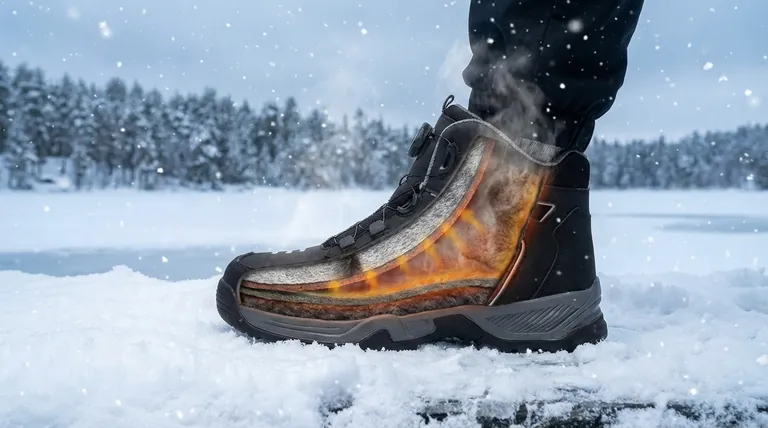
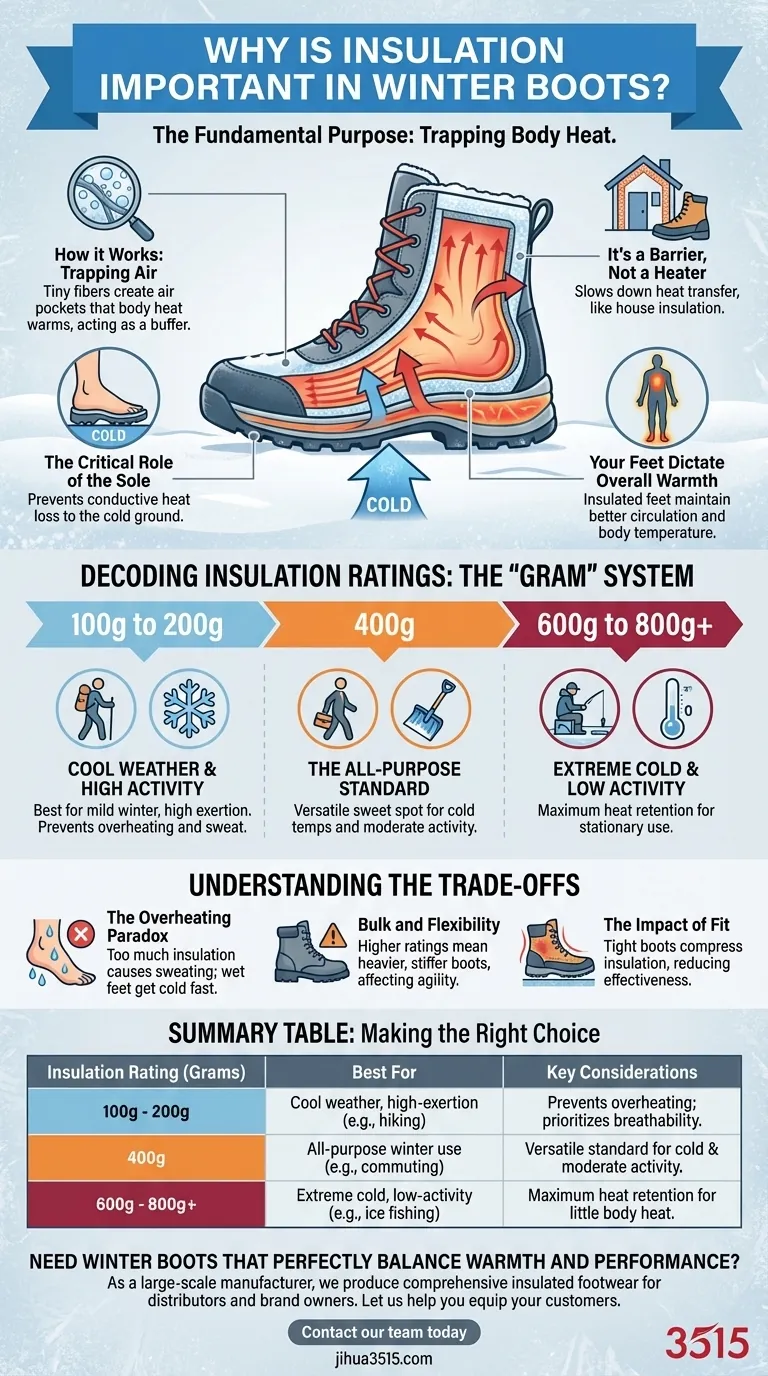
Insulation's effectiveness comes down to a simple principle: trapping air. The materials used are designed with thousands of tiny fibers that create small air pockets. Your body heat warms this trapped air, which then acts as a buffer against the external cold.
It's a Barrier, Not a Heater
Insulation material itself does not generate warmth. Its job is to slow down the process of heat transfer, keeping the warmth from your feet from escaping into the cold environment.
Think of it like the insulation in the walls of a house; it keeps the heated air inside during the winter.
The Critical Role of the Sole
A significant amount of heat is lost directly to the cold ground through a process called conduction. A thick, insulated sole is one of your most important defenses.
This is why simply wearing thick socks is often not enough. When you stand or walk, your body weight compresses the sock fibers, reducing their ability to trap air and diminishing their insulating value precisely where you need it most—underfoot.
Your Feet Dictate Overall Warmth
Your body works to maintain a stable core temperature. When your feet get cold, your body may react by constricting blood vessels to reduce heat loss, which can make your entire body feel colder.
Keeping your feet properly insulated helps maintain better circulation and contributes significantly to your overall feeling of warmth and well-being.
Decoding Insulation Ratings: The "Gram" System
Winter boot insulation is typically measured in grams (g), which refers to the weight of the insulation material per square meter of fabric. A higher gram rating means a denser, thicker layer of insulation capable of trapping more heat.
100g to 200g: For Cool Weather and High Activity
This level of insulation is best suited for mild winter days or high-exertion activities like winter hiking. When you're moving a lot, your body generates significant heat, and less insulation helps prevent your feet from overheating and sweating.
400g: The All-Purpose Winter Standard
Consider 400g the versatile sweet spot for general winter use. It provides enough warmth for cold temperatures and moderate activity levels, such as commuting, shoveling snow, or running errands in freezing weather.
600g to 800g+: For Extreme Cold and Low Activity
When temperatures drop deep into sub-zero territory or for stationary activities like ice fishing or watching an outdoor event, you need maximum heat retention. Heavier insulation is designed to keep you warm when your body isn't generating much heat on its own.
Understanding the Trade-offs
Choosing the right insulation isn't just about picking the highest number. More insulation is not always better, and it comes with clear trade-offs.
The Overheating Paradox
The most common mistake is choosing too much insulation for your activity level. Over-insulated boots will cause your feet to sweat. Moisture is a rapid conductor of heat, meaning wet feet will get cold much faster than dry ones, completely defeating the purpose of the insulation.
Bulk and Flexibility
Higher insulation ratings almost always mean a heavier and bulkier boot. This added weight and stiffness can be a disadvantage for activities that require agility or for long-distance walking, leading to fatigue more quickly.
The Impact of Fit
For insulation to work, it needs space to trap air. A boot that is too tight will compress the insulation (and your socks), dramatically reducing its effectiveness. A proper fit that allows for some air circulation is crucial.
Making the Right Choice for Your Goal
To select the perfect boot, you must align the insulation rating with your intended use.
- If your primary focus is high-exertion activity (winter hiking, snowshoeing): Start with a lower rating like 200g-400g to prioritize breathability and prevent sweat-induced cold.
- If your primary focus is everyday winter wear (commuting, walking): A 400g rating offers a reliable balance of warmth for cold days without causing overheating during moderate activity.
- If your primary focus is low-activity in extreme cold (ice fishing, spectating): Opt for 600g, 800g, or higher to ensure maximum heat retention when you are stationary.
By matching your boot's insulation to your activity and climate, you ensure your feet remain warm, dry, and comfortable all winter.
Summary Table:
| Insulation Rating (Grams) | Best For | Key Considerations |
|---|---|---|
| 100g - 200g | Cool weather, high-exertion activities (e.g., hiking) | Prevents overheating and sweat; prioritizes breathability. |
| 400g | All-purpose winter use (e.g., commuting, shoveling snow) | The versatile standard for cold temperatures and moderate activity. |
| 600g - 800g+ | Extreme cold, low-activity (e.g., ice fishing, spectating) | Maximum heat retention for when the body generates little heat. |
Need Winter Boots That Perfectly Balance Warmth and Performance?
As a large-scale manufacturer, 3515 produces a comprehensive range of insulated footwear for distributors, brand owners, and bulk clients. We understand that the right insulation is critical for comfort and safety. Our production capabilities encompass all types of insulated shoes and boots, ensuring your customers get the perfect fit for any climate and activity level.
Let us help you equip your customers with the right winter footwear.
Contact our team today to discuss your specific needs and explore our extensive catalog.
Visual Guide
Related Products
- Premium Insulated Safety Boots and Shoes for Wholesale & Bulk Orders
- Factory Direct Wholesale Rain Boots Durable Waterproof & Fully Customizable
- Durable Waterproof Rain Boots | Custom Manufacturer for Wholesale & Brands
- Wholesale Waterproof Tactical Boots Custom Suede & High-Traction Soles
- Heavy-Duty Waterproof Nubuck Safety Boots Safety Shoes for Bulk Supply
People Also Ask
- What are the recommended insulation ratings for mild winter conditions? A Guide for Active & Stationary Workers
- How does insulation thickness correlate with temperature ranges? A Guide to Choosing the Right Warmth
- What insulation level is needed for severe cold and stationary work? 1200g or Higher is Essential
- What safety advantages do insulated boots offer beyond warmth? Dielectric Protection & Superior Grip
- How does fleece lining contribute to the warmth of insulated boots? Trapping Air for Superior Cold Protection