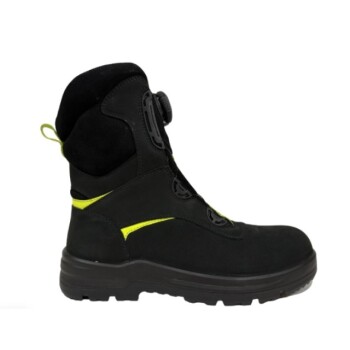
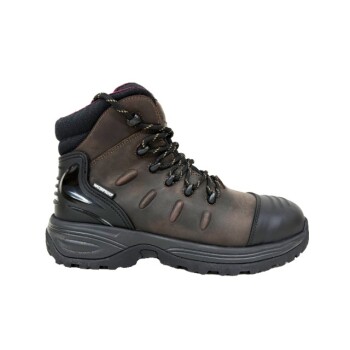
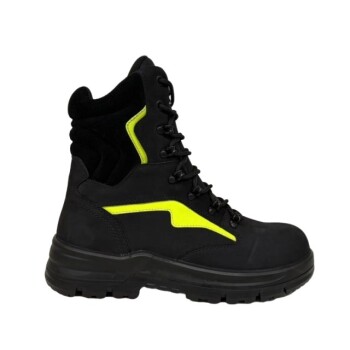
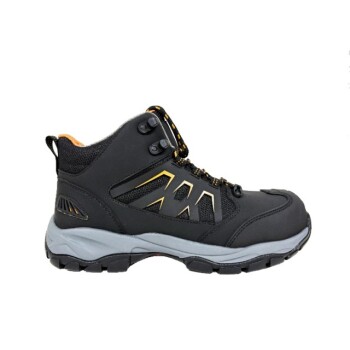
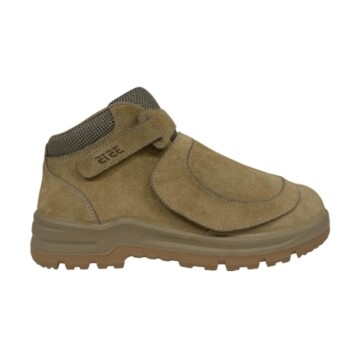
High-ankle support is the primary defense against debilitating sprains in mining environments characterized by unstable ground. By physically bracing the ankle joint, these boots provide the necessary structural rigidity to navigate steep slopes, loose debris, and irregular road surfaces safely.
Mining environments are defined by their unpredictability and rough terrain. High-ankle boots do not just cover the foot; they act as a stabilization system, preventing joint injury during the frequent, high-risk transitions between walking surfaces and machinery.
The Challenge of Complex Terrain
Stabilizing Against Irregular Surfaces
Mining sites rarely offer flat, paved walkways. Workers constantly traverse steep slopes and uneven road surfaces.
A high-ankle design restricts excessive lateral movement of the joint. This prevents the ankle from rolling when a worker steps on a rock, a rut, or a patch of loose earth.
Mitigating Trip Hazards
The operational floor of a mine is often cluttered. Personnel must frequently step over cables, debris, and potholes.
When navigating these obstacles, foot placement is often imperfect. The upper shaft of the boot absorbs the stress of a misstep, ensuring the ankle remains aligned even if footing is momentarily lost.
Operational Risks for Mobile Personnel
Boarding High-Clearance Machinery
One of the most specific risks in mining is entering and exiting equipment. Climbing into the cabs of high-clearance machinery places significant torque on the ankle.
The boot's support system is critical during this ascent and descent. It stabilizes the leg as weight is transferred, preventing twists during one of the most common daily maneuvers.
Protection for High-Mobility Roles
Supervisors and service personnel face unique risks due to their movement patterns. They traverse diverse and unpredictable mining interfaces more frequently than stationary operators.
Because they move rapidly between muddy floors, rocky inclines, and steel ladders, their exposure to terrain variability is higher. Consistent ankle support is their baseline protection against cumulative fatigue and acute injury.
Common Pitfalls to Avoid
Support Without Traction is Insufficient
While ankle support stabilizes the joint, it cannot prevent the initial slip. Relying solely on the boot shaft without considering the outsole is a critical error.
For wet, muddy, or rugged shafts, the boot must also feature a slip-resistant, high-traction outsole. The ankle support mitigates the damage of a fall, but the traction prevents the fall from happening in the first place.
The Load-Bearing Factor
Ankle support becomes even more vital when the worker is under load. Carrying heavy objects shifts the worker's center of gravity and increases the force applied to the joints.
In these scenarios, boots with reinforced heel counters work in tandem with the high ankle shaft. This combination locks the foot in place, ensuring stability even when external weight threatens balance.
Making the Right Choice for Your Goal
To select the correct footwear, assess the specific mobility requirements of the role.
- If your primary focus is Personnel Supervision: Prioritize boots that balance high-ankle rigidity with long-term comfort, as these roles involve frequent transitions across diverse terrain types.
- If your primary focus is Machinery Operation: Ensure the boot provides maximum stiffness around the ankle to support the vertical climbing required to access high-clearance cabs.
- If your primary focus is Material Handling: Look for boots that combine high-ankle shafts with strong heel counters to maintain stability while carrying heavy loads on uneven ground.
True safety in mining starts with a stable foundation; the right boot turns unpredictable terrain into a manageable work surface.
Summary Table:
| Hazard Category | Risk Factor | Role of High-Ankle Support |
|---|---|---|
| Terrain Hazards | Steep slopes, loose debris, ruts | Restricts lateral movement to prevent ankle rolls. |
| Equipment Interaction | Climbing high-clearance machinery cabs | Stabilizes the leg during weight transfer and high torque. |
| Operational Tasks | Carrying heavy loads, personnel mobility | Maintains joint alignment under increased center of gravity. |
| Environmental Obstacles | Cables, potholes, and steel ladders | Absorbs stress from missteps to maintain alignment. |
Secure Your Workforce with Industry-Leading Protection
As a large-scale manufacturer serving distributors and brand owners, 3515 offers comprehensive production capabilities for all footwear types, anchored by our flagship Safety Shoes series. We understand that in mining, the right footwear is a baseline for operational safety. Our extensive portfolio covers work and tactical boots, outdoor shoes, training shoes, and sneakers, as well as Dress & Formal shoes to meet diverse bulk requirements.
Partner with us to provide your customers with high-performance boots designed for the toughest terrains. Contact 3515 today to discuss your bulk manufacturing needs.
References
- Fadhilah Fadhilah, Risma Erwi Gusvita. Hazard Identification, Risk Assessment and Determining Control (HIRADC) in Mining Operations at PT Semen Padang. DOI: 10.46574/motivection.v5i3.249
This article is also based on technical information from 3515 Knowledge Base .
Related Products
- Puncture-Resistant Velcro Safety Boots for Wholesale & Custom Manufacturing
- Wholesale Durable Safety Boots | Custom Steel Toe & Puncture-Resistant Manufacturing
- Premium Grain Leather Safety Boots for Bulk Supply
- Heavy-Duty Waterproof Nubuck Safety Boots Safety Shoes for Bulk Supply
- Premium High-Cut Waterproof Safety Boots Manufacturing & Wholesale Solutions
People Also Ask
- Why are industrial safety boots with steel toes necessary for machine operators? Essential Foot Protection for Safety
- What are the characteristics of steel toe safety boots? Maximum Protection, Key Trade-offs
- Is it true that steel toes can cause toes to get cut off? Debunking the Dangerous Myth
- What are the primary safety functions of safety boots with steel-toe designs? Essential Protection for Industry
- What do the symbols M, F, I, and C represent on safety toe boots? Decode ASTM F2413 for Maximum Protection