
The fundamental purpose of grip in wellington boots is to ensure your safety and stability. In environments where wellies are worn—wet fields, muddy paths, or slippery yards—the outsole's grip is the critical feature that prevents potentially dangerous slips and falls, allowing you to move with confidence.
Choosing a wellington boot is not just about keeping your feet dry; it's about ensuring your footing is secure. The grip is the functional heart of the boot, directly translating to your stability and safety on compromised surfaces.
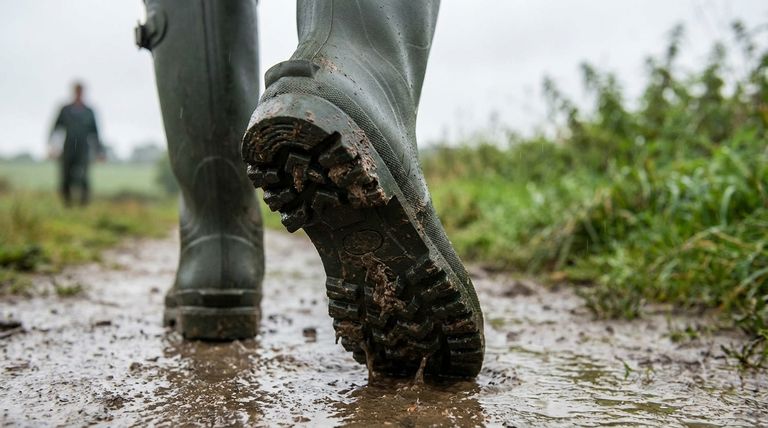
The Mechanics of a Secure Footing
Understanding how grip works reveals why it is the most critical performance feature of a wellington boot. It’s a combination of material science and mechanical design working in concert.
The Role of the Outsole
The outsole is the part of the boot that makes contact with the ground. It is typically made from durable rubber or similar synthetic materials specifically chosen for their high friction and slip-resistant properties.
How Treads Create Traction
The pattern on the bottom of the boot, known as the tread or lugs, is not for aesthetics. These deep grooves are engineered to dig into soft surfaces like mud and soil for a stronger hold.
Channeling Away Hazards
On wet or slick surfaces, the channels in the tread pattern are crucial. They work by directing water, oil, and loose debris away from the sole's contact points, allowing the rubber to make a solid, secure connection with the ground underneath.
Beyond Grip: Why Overall Support Matters
Excellent grip provides a stable base, but that stability is lost if your foot is not secure inside the boot. True safety comes from the combination of a high-traction outsole and a supportive boot structure.
Preventing Twists and Sprains
A firm boot structure, especially around the ankle, provides essential support on uneven ground. This stability helps prevent common injuries like ankle sprains, tendonitis, or arch spasms that can occur when your foot shifts or rolls unexpectedly.
The Link Between Structure and Stability
A well-designed wellington boot acts as a single, cohesive system. The grip holds the boot to the ground, while the boot’s structure holds your foot firmly in place, ensuring every step is secure and controlled.
Understanding the Trade-offs
Not all grip designs are created equal, and the ideal tread pattern often depends on the intended use. Recognizing these differences is key to selecting the right boot.
Aggressive Treads vs. Daily Comfort
Boots with extremely deep, widely spaced lugs are exceptional for deep mud but can feel clunky and uncomfortable on hard, flat surfaces like pavement or concrete.
Material Hardness vs. Flexibility
Harder rubber compounds offer excellent durability and a long lifespan. However, slightly softer compounds can provide better "stickiness" and superior grip on smooth, wet surfaces like slick rocks or tiles.
General vs. Certified Slip-Resistance
For casual use, a good tread is sufficient. For professional environments, however, many boots are officially certified with slip-resistance ratings (e.g., for oil or chemicals), providing a guaranteed level of safety for specific workplace hazards.
Making the Right Choice for Your Goal
Selecting the right wellington boot means matching the outsole's design to your primary activities.
- If your primary focus is light gardening and yard work: A boot with a moderate tread depth will provide a good balance of reliable grip on wet grass and soil without being uncomfortable.
- If your primary focus is hiking, farming, or navigating deep mud: Prioritize boots with deep, aggressive, and widely spaced lugs that can bite into soft terrain and effectively shed debris.
- If your primary focus is safety in a professional setting: Look for boots with a certified slip-resistant rating appropriate for the specific hazards (like water, oil, or slick floors) you encounter.
Ultimately, viewing grip as an essential safety system rather than just a feature will ensure your footwear serves you effectively and securely.
Summary Table:
| Grip Feature | Key Function | Ideal Use Case |
|---|---|---|
| Tread Pattern | Digs into soft ground and channels away water/debris | Muddy fields, hiking trails |
| Material Hardness | Balances durability and surface 'stickiness' | Wet rocks, slick floors |
| Certified Slip-Resistance | Provides guaranteed safety against specific hazards | Professional/oil-resistant work environments |
| Ankle Support | Prevents twists and sprains by securing the foot | Uneven terrain, long-duration wear |
Need durable, high-grip wellington boots for your business or customers?
As a large-scale manufacturer, 3515 produces a comprehensive range of safety footwear for distributors, brand owners, and bulk clients. Our production capabilities encompass all types of slip-resistant boots, from aggressive tread designs for farming to certified professional-grade options.
Let us provide you with reliable, secure footwear that meets your specific needs. Contact our team today for competitive pricing and custom solutions!
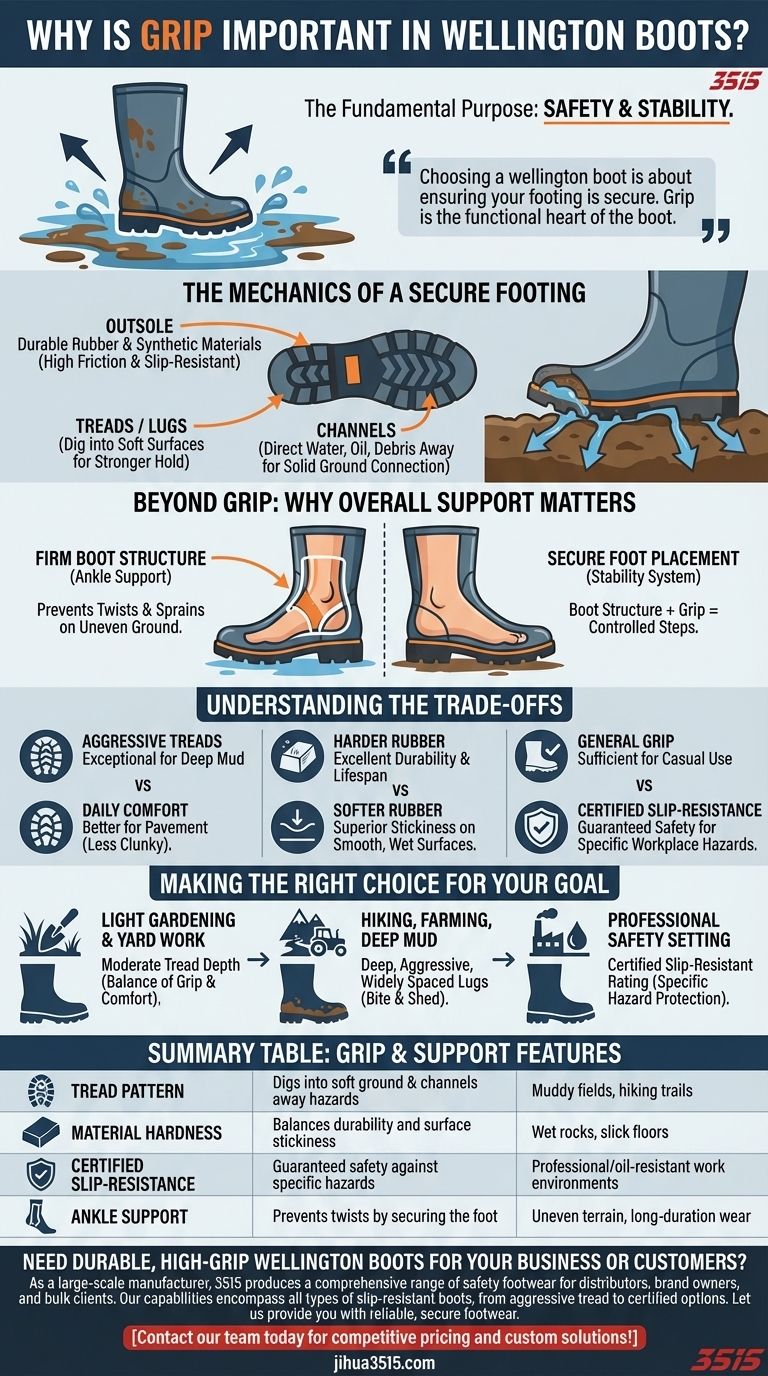
Visual Guide
Related Products
- Durable Waterproof Rain Boots | Custom Manufacturer for Wholesale & Brands
- Durable Goodyear Welt Leather Work Boots for Wholesale & Private Label
- Wholesale Durable Leather Work Boots | 8-Inch Goodyear Welt Manufacturer
- Premium Wholesale Tactical Style Safety Shoes Boots with Quick Lacing
- Durable High-Ankle Tactical Boots Wholesale Manufacturer for Custom & Bulk Orders
People Also Ask
- What are the main materials for waterproof rain boots? Choose the Right Material for Durability & Comfort
- What is the overall recommendation for choosing rain boot materials? A Guide to Rubber vs. PVC
- How does boot height affect waterproofing? Choose the Right Height for Ultimate Protection
- Why are rain boots more flexible and comfortable than snow boots? The Key Differences Explained
- What are the best types of shoes for different gardening conditions? Find Your Perfect Match.



















