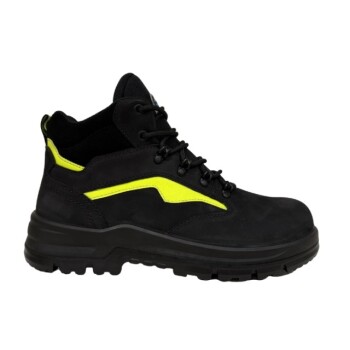
Full-coverage professional work boots act as a definitive barrier against non-infectious elephantiasis because they provide complete isolation from the ankle to the toes. Unlike sandals, which allow irritant dust to enter and grind against the skin, professional boots prevent the accumulation of allergenic soil and protect the feet from mechanical injuries that serve as entry points for disease.
The core strategy for preventing Podoconiosis (non-infectious elephantiasis) is strictly prohibiting external minerals from entering subcutaneous tissues. Full-coverage footwear is superior because it eliminates both the direct contact with allergenic soil and the micro-wounds caused by friction, which are the primary pathways for the disease.
The Mechanics of Isolation
Complete Coverage vs. Partial Exposure
The primary failure of sandals or semi-open footwear in high-risk zones is their inability to seal off the foot.
Full-coverage boots ensure total isolation. They create a closed environment that stops allergenic soil from reaching the skin surface entirely.
Preventing Irritant Dust Accumulation
When working in soil rich with irritant minerals, sandals allow dust to drift in and settle between the footwear and the foot.
This trapped dust creates a layer of abrasive material. As the worker moves, this material rubs against the skin, acting like sandpaper and degrading the skin barrier.
The Critical Role of Wound Prevention
Stopping Mechanical Injuries
Beyond dust, labor-intensive environments pose risks of direct mechanical injury to the feet.
Full-coverage boots utilize durable materials to deflect impacts that would otherwise cause cuts, scrapes, or bruises. Sandals offer virtually no protection against these physical traumas.
Minimizing Micro-Wounds
The prevention of non-infectious elephantiasis relies on maintaining the integrity of the skin.
Even invisible micro-wounds caused by friction or minor scrapes allow external minerals to penetrate into the subcutaneous tissues. By preventing these micro-wounds, boots effectively close the "gates" that allow the disease to develop.
Understanding the Risks of Semi-Open Footwear
The "Breathability" Trap
A common misconception is that sandals are preferable for labor due to airflow or ease of use.
However, in high-risk areas, this openness is a liability. The trade-off for ventilation is immediate exposure to the very agents that cause Podoconiosis.
The Danger of False Security
Wearing semi-open footwear can sometimes provide a false sense of protection.
Workers may believe they are protected because they are not barefoot, but if the footwear allows any dust entry or friction, it fails to prevent the mineral absorption that triggers the disease.
Making the Right Choice for Protection
To effectively reduce the risk of non-infectious elephantiasis, footwear choices must be binary: complete isolation or nothing at all.
- If your primary focus is Disease Prevention: Prioritize boots that offer a seamless seal from the toes up past the ankle to block all soil contact.
- If your primary focus is Skin Integrity: Select footwear that is rigid enough to prevent mechanical trauma and friction-based micro-wounds.
Total isolation of the foot from the environment is the only reliable method to prevent the subcutaneous absorption of harmful minerals.
Summary Table:
| Feature | Full-Coverage Work Boots | Sandals / Semi-Open Footwear |
|---|---|---|
| Soil Isolation | Complete barrier; prevents mineral contact | High exposure; allows dust accumulation |
| Skin Integrity | Prevents friction and micro-wounds | High risk of abrasive skin damage |
| Mechanical Protection | Shields against cuts, scrapes, and impact | Minimal to no protection against injury |
| Disease Prevention | Effective against Podoconiosis (Elephantiasis) | Ineffective; fails to block entry points |
| Environment | Best for high-risk, labor-intensive zones | Unsuitable for irritant-rich soil areas |
Protect Your Workforce with Professional-Grade Safety Footwear
Non-infectious elephantiasis and workplace foot injuries are preventable with the right equipment. As a leading large-scale manufacturer serving global distributors and brand owners, 3515 specializes in high-performance protective gear. Our flagship Safety Shoes series and rugged Work & Tactical Boots are engineered to provide the total isolation and durability required for high-risk environments.
From industrial safety to outdoor training and even formal requirements, 3515 offers comprehensive production capabilities to meet your bulk footwear needs. Partner with us to provide your customers with superior protection, comfort, and reliability.
Contact 3515 Today for Bulk Orders and Custom Manufacturing
References
- Lilian Nantume Wampande, Janna M. Schurer. Podoconiosis instruction at nursing schools in Kenya, Rwanda, and Uganda. DOI: 10.1186/s41182-022-00405-8
This article is also based on technical information from 3515 Knowledge Base .
Related Products
- Durable Leather Work Boots for Wholesale & Custom Manufacturing
- Durable Leather Moc Toe Work Boots for Wholesale & Custom Manufacturing
- Durable Leather Work Boots for Wholesale & Custom OEM Manufacturing
- Wholesale Durable 6-Inch Work Boots | Custom & Private Label Manufacturer
- Durable Leather Work Boots Wholesale Manufacturer & Custom Factory
People Also Ask
- What is the difference between full-grain and top-grain leather? Premium Material Guide for Boot Manufacturers
- What are the common workplace hazards that can be mitigated with the right work boots? Protect Your Workforce
- What are the common foot issues workers face due to uncomfortable work boots? Prevent Pain & Deformities
- What are the advantages of leather versus synthetic work boots? A Guide to Choosing the Right Material
- What are the key components of modern work boots? Engineered for Ultimate Durability and Comfort