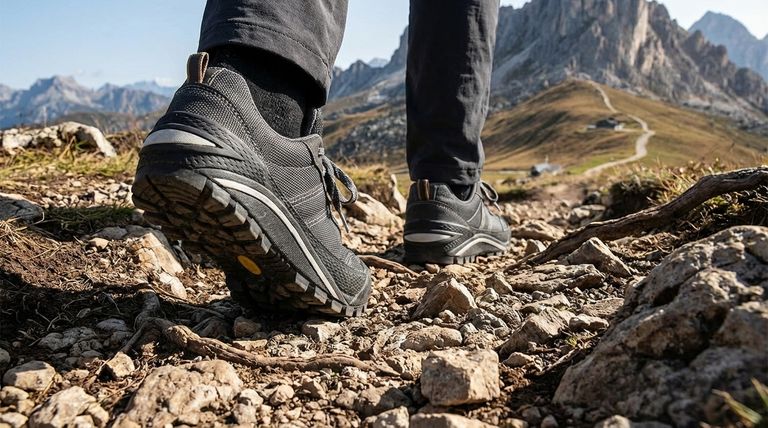
At its core, foot support in hiking footwear is about one thing: stability. On unpredictable and uneven terrain, your footwear's primary job is to stabilize your foot, dramatically reducing the risk of twists, sprains, and other injuries that can ruin a hike.
The right level of foot support isn't a one-size-fits-all feature; it's a calculated balance between the difficulty of your terrain, the weight you are carrying, and your individual biomechanics.
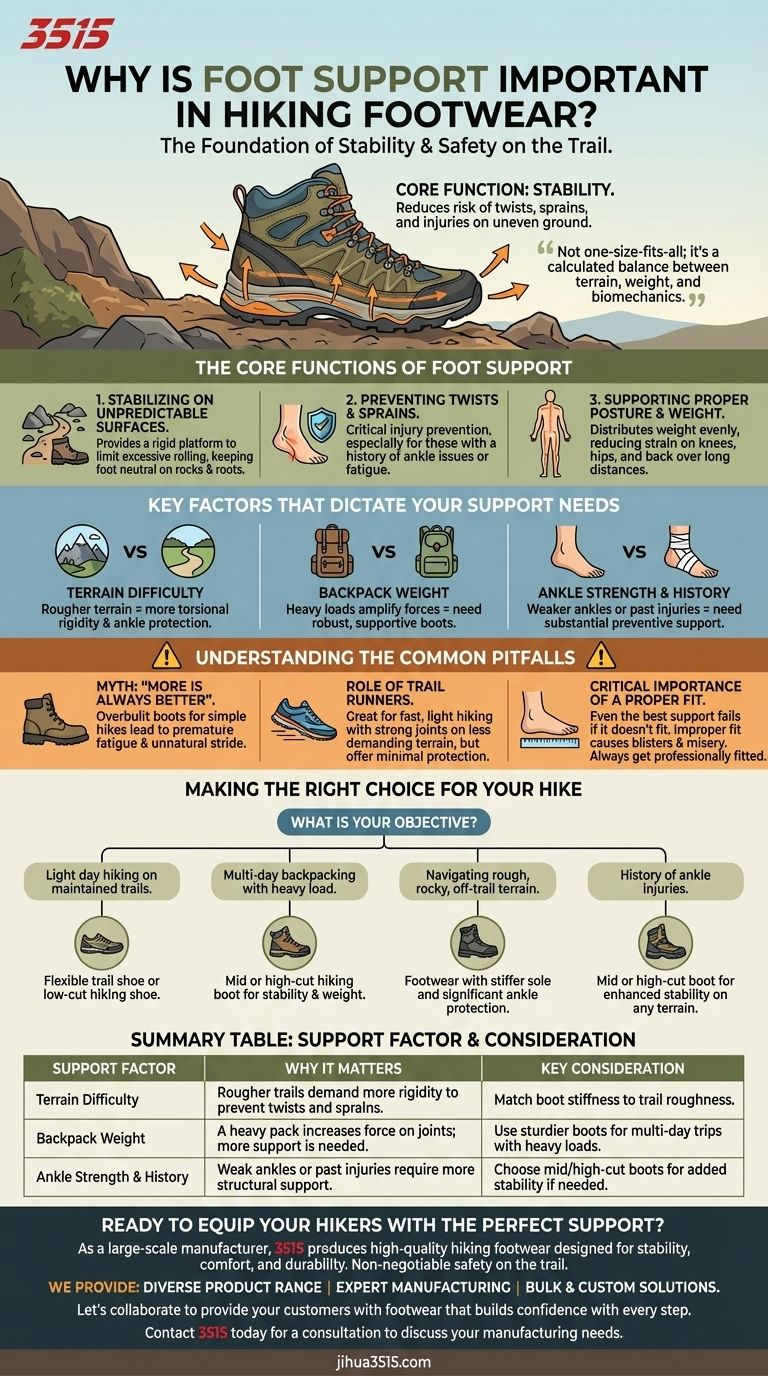
The Core Functions of Foot Support
Proper support is the foundation of a safe and comfortable hike. It's an active system that works to protect your feet and, by extension, your entire body from the stresses of the trail.
Stabilizing the Foot on Unpredictable Surfaces
Hiking trails are rarely flat or smooth. Your foot is constantly adjusting to rocks, roots, and changing angles.
Supportive footwear provides a rigid, stable platform. This structure limits excessive side-to-side rolling and keeps your foot in a more neutral and efficient position with each step.
Preventing Twists, Sprains, and Overuse Injuries
The most immediate benefit of good support is injury prevention. Ankle sprains are common when the foot rolls awkwardly on an unstable surface.
Well-designed boots or shoes provide the necessary structure to guard against these sudden movements. This is especially critical for hikers who may have a history of ankle injuries or are prone to uncoordinated steps when fatigued.
Supporting Proper Posture and Weight Distribution
Foot support extends beyond just your feet; it impacts your entire musculoskeletal system.
Footwear with the correct structure helps distribute your body weight—and the weight of your pack—more evenly across your foot. This alignment supports better posture and reduces strain on your knees, hips, and back over long distances.
Key Factors That Dictate Your Support Needs
Choosing the right footwear requires an honest assessment of how and where you plan to hike. The level of support you need is determined by a few critical variables.
The Impact of Terrain Difficulty
The ground beneath your feet is the most significant factor. A gentle, well-maintained nature trail requires far less support than a rugged, rocky mountain path.
Rougher terrain demands more torsional rigidity and ankle protection to prevent injury from unseen obstacles or unstable footing.
The Weight of Your Backpack
The load you carry directly amplifies the forces acting on your feet and joints.
A heavy, multi-day pack necessitates more robust and supportive footwear, like a hiking boot, to provide the stability needed to manage the extra weight. Carrying little to no weight may allow for a more flexible option like a trail runner.
Your Personal Ankle Strength and Injury History
Your own body is a key part of the equation. Hikers with strong, stable ankles may feel comfortable in less supportive footwear.
However, if you have a history of sprains or weaker ankles, choosing a shoe or boot with more substantial support is a crucial preventive measure.
Understanding the Common Pitfalls
More support isn't always better. The most common mistake is choosing footwear that doesn't match the intended use, which can lead to its own set of problems.
The Myth of "More is Always Better"
A heavy-duty backpacking boot is overbuilt and unnecessarily cumbersome for a simple day hike. This can lead to premature fatigue and a clunky, unnatural stride.
The goal is to match the tool to the job, not to buy the most support available by default.
The Role of Trail Runners
For hikers with strong joints who are moving fast with light packs, less-supportive trail runners can be an excellent choice.
Their flexibility allows for a more natural foot motion and can be more comfortable on less demanding terrain, but they offer minimal protection on rough, rocky trails.
The Critical Importance of a Proper Fit
The most supportive boot in the world is useless if it doesn't fit correctly. An improper fit is the primary cause of blisters, bruised toes, and general misery.
Always get professionally fitted to ensure the correct length and width, accounting for the natural swelling of your feet during a long hike. The shape of a shoe molds to its owner, making your own well-fitting pair an essential piece of gear.
Making the Right Choice for Your Hike
To select the appropriate level of support, you must align your footwear with your specific objective.
- If your primary focus is light day hiking on maintained trails: A flexible trail shoe or low-cut hiking shoe often provides sufficient support without unnecessary weight.
- If your primary focus is multi-day backpacking with a heavy load: A mid or high-cut hiking boot is essential for providing the stability needed to protect your ankles and support the extra weight.
- If your primary focus is navigating rough, rocky, or off-trail terrain: Prioritize footwear with a stiffer sole and significant ankle protection to guard against unpredictable surfaces.
- If you have a history of ankle injuries: Err on the side of caution and choose a mid or high-cut boot that offers enhanced stability, even for less demanding hikes.
Ultimately, selecting the right footwear is about empowering you to hike with confidence and comfort.
Summary Table:
| Support Factor | Why It Matters | Key Consideration |
|---|---|---|
| Terrain Difficulty | Rougher trails demand more rigidity to prevent twists and sprains. | Match boot stiffness to trail roughness. |
| Backpack Weight | A heavy pack increases force on joints; more support is needed. | Use sturdier boots for multi-day trips with heavy loads. |
| Ankle Strength & History | Weak ankles or past injuries require more structural support. | Choose mid/high-cut boots for added stability if needed. |
Ready to Equip Your Hikers with the Perfect Support?
As a large-scale manufacturer, 3515 produces a comprehensive range of high-quality hiking footwear designed for stability, comfort, and durability. We understand that proper foot support is non-negotiable for safety on the trail.
We provide:
- Diverse Product Range: From lightweight hiking shoes for gentle trails to robust backpacking boots for heavy loads and rough terrain.
- Expert Manufacturing: Decades of experience crafting footwear that offers the precise balance of support, flexibility, and protection hikers need.
- Bulk & Custom Solutions: Ideal for distributors, brand owners, and bulk clients seeking reliable, high-performance footwear.
Let's collaborate to provide your customers with footwear that builds confidence with every step.
Contact 3515 today for a consultation to discuss your manufacturing needs.
Visual Guide
Related Products
- Wholesale High-Traction Camo Boots - Custom Manufacturer for Brands
- Durable Rubber Sole Outdoor Shoes Wholesale & Custom Manufacturing
- Durable Spiked Camouflage Boots Wholesale & Factory Production
- Wholesale Lightweight Tactical Boots Custom Manufacturer for Desert & Combat Use
- Wholesale Waterproof Tactical Boots Custom Suede & High-Traction Soles
People Also Ask
- What are the key features of the new line of camo boots? Built for Extreme Cold & Rugged Terrain
- Are camo boots necessary for hunting success? Prioritize Performance Over Pattern
- What is the technical logic behind using closed-eye testing for tactical boots? Unlocking Peak Footwear Stability
- How does the Rank Score Test identify the primary causes of premature failure in tactical and work boots? Key Insights
- What shoes to wear for a security job? Durable, Protective Footwear for Long Shifts