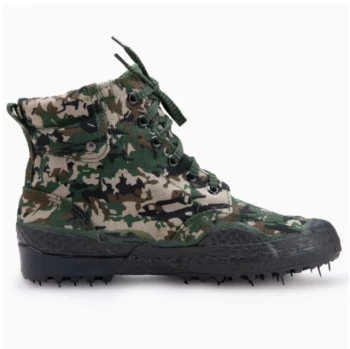
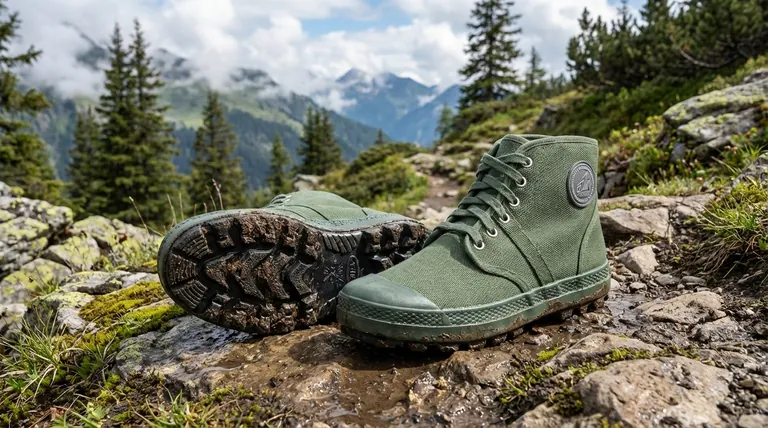
At their core, hiking boots are defined by a specific set of attributes designed for performance on varied and often rugged terrain. The key attributes are durability from materials like leather, superior traction from deep-tread outsoles, critical ankle support from mid or high-cut designs, and protection from the elements, often through waterproofing.
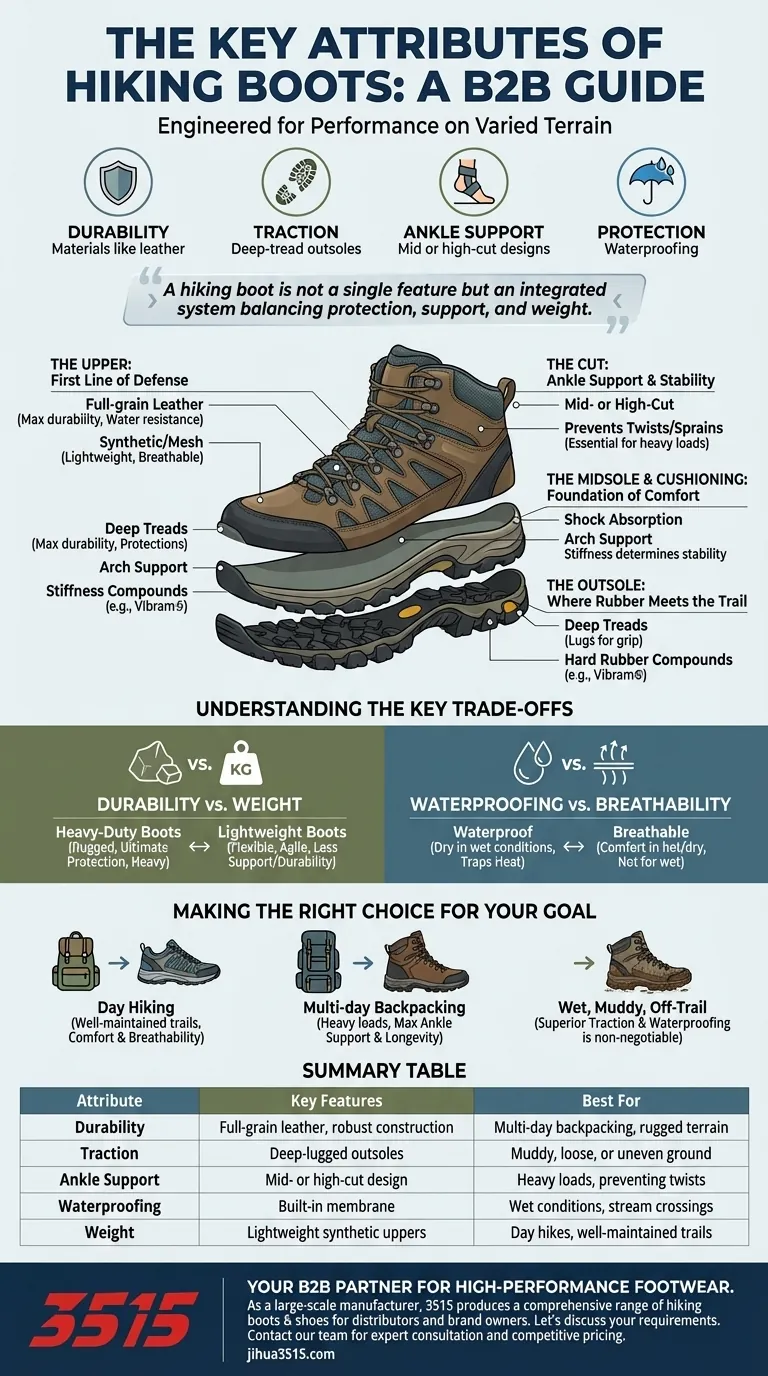
A hiking boot is not a single feature but an integrated system. Its true value lies in how its core components—the upper, midsole, and outsole—work together to balance the critical trade-offs between protection, support, and weight for your specific needs on the trail.
The Anatomy of a Hiking Boot
To truly understand hiking boots, you must look at their construction. Each part serves a distinct purpose, contributing to overall comfort, safety, and performance.
The Upper: Your First Line of Defense
The upper is everything above the sole. It's responsible for protecting your foot from rocks, roots, and water while providing structural support.
Materials are a defining feature here. Full-grain leather offers maximum durability and water resistance, often lasting over 1,000 miles. Synthetic fabrics and mesh, on the other hand, are lighter and more breathable but typically less durable.
The Outsole: Where Rubber Meets the Trail
The outsole is the part of the boot that contacts the ground. Its primary job is traction.
Look for deep treads, also known as lugs, which are essential for gripping loose dirt, mud, and uneven rock. Hard rubber compounds, like those famously made by Vibram, are used to ensure this traction is paired with long-term durability.
The Midsole & Cushioning: The Foundation of Comfort
Sandwiched between the outsole and your foot, the midsole provides cushioning and absorbs shock. It also determines the boot's stiffness.
This component, along with a removable insole, provides crucial arch support and prevents your foot from fatiguing on long hikes. More rigid boots designed for heavy loads often have stiffer midsoles for greater stability.
The Cut: Ankle Support and Stability
Hiking boots are distinguished from hiking shoes by their height. Mid- and high-cut designs extend above the ankle.
This height is not just for show; it provides essential ankle support, which helps prevent twists and sprains on rocky or uneven ground, especially when carrying the weight of a backpack.
Understanding the Key Trade-offs
Choosing the right boot means navigating a few fundamental compromises. No single boot is perfect for every situation.
Durability vs. Weight
A classic trade-off exists between a boot's ruggedness and its weight.
Heavy-duty boots often feature one-piece leather uppers and robust construction. They offer ultimate protection and are ideal for carrying heavy loads over rugged terrain, but they are heavier and require a break-in period.
Lightweight hiking boots, conversely, use thinner synthetic uppers and more flexible soles. Weighing two pounds or less, they are perfect for day hikes but offer less support and wear out more quickly.
Waterproofing vs. Breathability
Most hiking boots offer some form of waterproofing, often through a built-in membrane. This is critical for keeping your feet dry in wet or muddy conditions.
However, this feature can come at the cost of breathability. A waterproof membrane can trap sweat and heat, which may be uncomfortable in hot, dry climates. The choice depends entirely on the environment you expect to encounter.
Making the Right Choice for Your Goal
Selecting the right boot requires matching its attributes to your intended activity.
- If your primary focus is day hiking on well-maintained trails: A lightweight boot with synthetic materials will provide excellent comfort and breathability.
- If your primary focus is multi-day backpacking with a heavy pack: Prioritize a durable, high-cut leather boot for maximum ankle support and longevity.
- If your primary focus is navigating wet, muddy, or off-trail terrain: A waterproof boot with deep, aggressive treads for superior traction is non-negotiable.
Understanding these core attributes empowers you to select not just a boot, but the right tool for your specific adventure.
Summary Table:
| Attribute | Key Features | Best For |
|---|---|---|
| Durability | Full-grain leather, robust construction | Multi-day backpacking, rugged terrain |
| Traction | Deep-lugged outsoles (e.g., Vibram) | Muddy, loose, or uneven ground |
| Ankle Support | Mid- or high-cut design | Heavy loads, preventing twists/sprains |
| Waterproofing | Built-in membrane (e.g., Gore-Tex) | Wet conditions, stream crossings |
| Weight | Lightweight synthetic uppers | Day hikes, well-maintained trails |
Ready to equip your next adventure with the perfect hiking boots?
As a large-scale manufacturer, 3515 produces a comprehensive range of durable and high-performance footwear for distributors, brand owners, and bulk clients. Our production capabilities encompass all types of hiking boots and shoes, ensuring you get the right combination of support, traction, and durability for your customers' needs.
Let's discuss your specific requirements and how we can support your business.
Contact our team today for expert consultation and competitive pricing.
Visual Guide
Related Products
- Wholesale High-Traction Camo Boots - Custom Manufacturer for Brands
- Durable Rubber Sole Outdoor Shoes Wholesale & Custom Manufacturing
- Durable Spiked Camouflage Boots Wholesale & Factory Production
- Wholesale Lightweight Tactical Boots Custom Manufacturer for Desert & Combat Use
- Wholesale Waterproof Tactical Boots Custom Suede & High-Traction Soles
People Also Ask
- What are the key features of the new line of camo boots? Built for Extreme Cold & Rugged Terrain
- Are camo boots necessary for hunting success? Prioritize Performance Over Pattern
- What is the technical logic behind using closed-eye testing for tactical boots? Unlocking Peak Footwear Stability
- How does the Rank Score Test identify the primary causes of premature failure in tactical and work boots? Key Insights
- What shoes to wear for a security job? Durable, Protective Footwear for Long Shifts