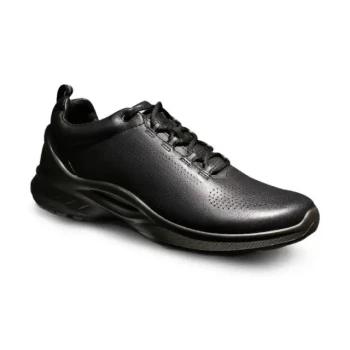
Fit is the single point of failure in footwear performance. Regardless of advanced cushioning technology or premium materials, a shoe that does not align mechanically with your foot's geometry will inevitably cause injury, ranging from superficial friction blisters to deep-tissue bruising and compromised gait. Fit is not merely a comfort preference; it is the structural requirement for safe, sustainable movement.
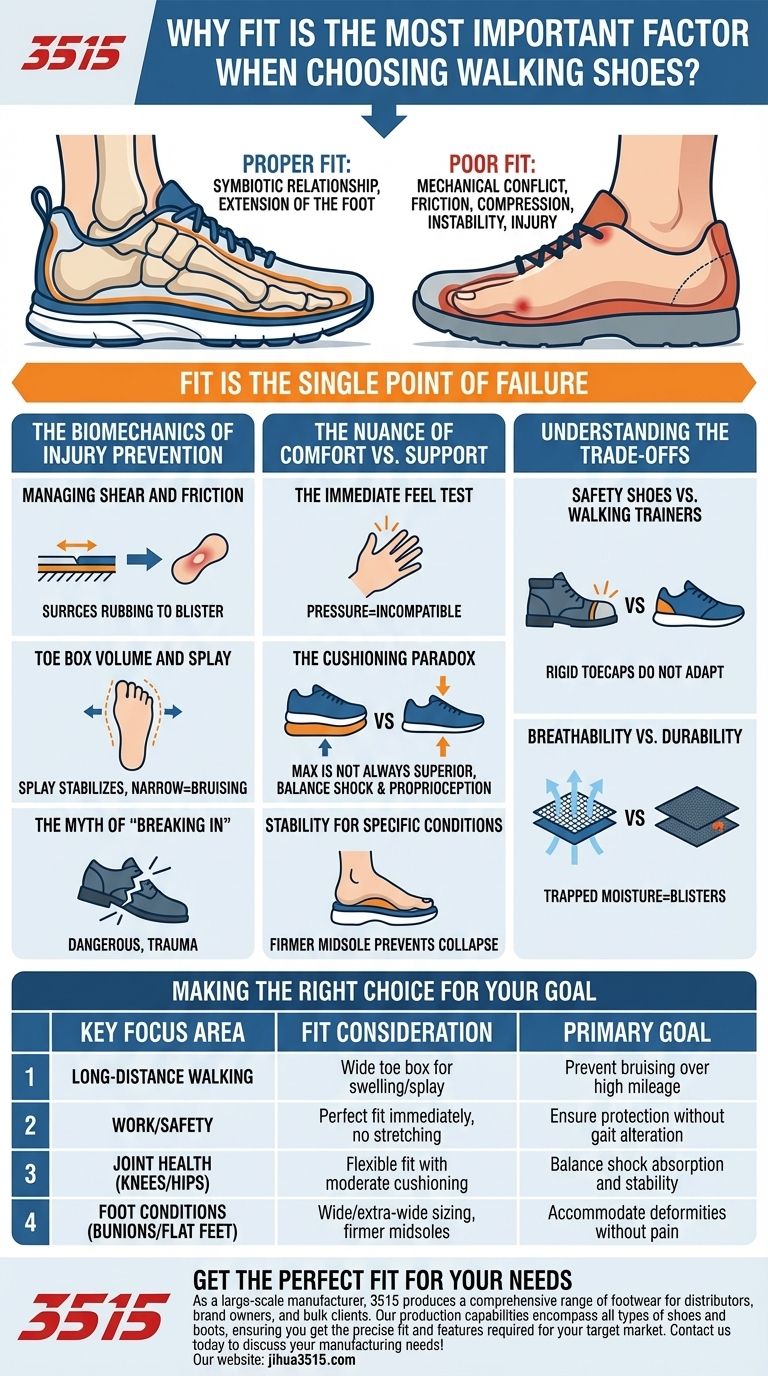
The Core Reality: The most expensive shoe on the market becomes a liability if the fit is incorrect. Proper fit creates a symbiotic relationship where the shoe acts as an extension of the foot, whereas poor fit introduces mechanical conflict—friction, compression, and instability—that leads to acute injury and long-term joint stress.
The Biomechanics of Injury Prevention
Managing Shear and Friction
The primary reason fit dictates performance is the management of friction. If a shoe is too loose, your foot slides inside the chassis, creating shear forces against the skin.
This repetitive rubbing is the mechanical cause of blisters. A secure, snug fit locks the heel in place, ensuring the shoe moves with you rather than sliding against you.
Toe Box Volume and Splay
Your feet are dynamic structures that change shape when load is applied. When you step, your toes naturally spread out, or "splay," to stabilize your body weight.
If the toe box is too narrow or shallow, it restricts this natural mechanic. This compression leads to bruised toenails, bunion agitation, and reduced stability during the push-off phase of walking.
The Myth of "Breaking In"
Many users rely on the shoe stretching over time, but this is a dangerous strategy. A shoe must fit correctly the moment you put it on.
Relying on a "break-in" period means you are subjecting your feet to trauma in hopes that the material yields before your skin does.
The Nuance of Comfort vs. Support
The Immediate Feel Test
Comfort is the most reliable initial indicator of a correct fit. If you feel pressure points or constriction immediately, the shoe is biomechanically incompatible with your foot.
However, do not confuse "softness" with fit. A shoe can feel like a pillow but still offer poor structural alignment.
The Cushioning Paradox
While cushioning feels pleasant, references suggest that maximum cushioning is not always superior.
Some research indicates that thinner, more flexible soles can actually reduce stress on the knees. A proper fit balances the need for shock absorption with the need for proprioception (feeling the ground).
Stability for Specific Conditions
For individuals with flat feet or overpronation, fit includes the vertical dimension of support.
In these cases, a "good fit" requires a firmer midsole or specific stability components to prevent the arch from collapsing. Neglecting this leads to strain on the plantar fascia.
Understanding the Trade-offs
Safety Shoes vs. Walking Trainers
The rules of fit change drastically depending on the materials used. Standard walking shoes may offer some material stretch, but safety shoes do not adapt.
Safety footwear with rigid toecaps (steel or composite) will never "wear in." If these shoes do not fit perfectly at the point of purchase, they will cause chronic stress and gait alteration.
Breathability vs. Durability
A tighter, more durable weave often reduces airflow. While you want a shoe that lasts, an overly enclosed shoe traps moisture.
Sweat softens the skin, making it more susceptible to blistering. Therefore, a proper fit must also account for enough internal volume to allow air circulation.
Making the Right Choice for Your Goal
To select the correct shoe, you must map the fit to your specific use case.
- If your primary focus is Long-Distance Walking: Prioritize a wide toe box that allows for swelling and toe splay to prevent bruising over high mileage.
- If your primary focus is Work/Safety: Ensure the fit is perfect immediately with zero expectation of stretching, specifically checking that protective caps do not rub against toes.
- If your primary focus is Joint Health (Knees/Hips): Look for a flexible, well-fitted shoe with moderate cushioning rather than a maximalist, overly soft sole that may mask instability.
- If your primary focus is Foot Conditions (Bunions/Flat Feet): Seek out "wide" or "extra-wide" sizing and firmer midsoles to accommodate deformities without compressive pain.
Your shoe is a tool, and fit is the calibration that makes that tool usable.
Summary Table:
| Key Focus Area | Fit Consideration | Primary Goal |
|---|---|---|
| Long-Distance Walking | Wide toe box for swelling/splay | Prevent bruising over high mileage |
| Work/Safety | Perfect fit immediately, no stretching | Ensure protection without gait alteration |
| Joint Health (Knees/Hips) | Flexible fit with moderate cushioning | Balance shock absorption and stability |
| Foot Conditions (Bunions/Flat Feet) | Wide/extra-wide sizing, firmer midsoles | Accommodate deformities without pain |
Get the Perfect Fit for Your Needs
As a large-scale manufacturer, 3515 produces a comprehensive range of footwear for distributors, brand owners, and bulk clients. Our production capabilities encompass all types of shoes and boots, ensuring you get the precise fit and features required for your target market—from long-distance walking shoes to durable safety footwear.
Let us help you provide your customers with the biomechanically correct footwear that prevents injury and enhances performance.
Contact us today to discuss your manufacturing needs!
Visual Guide
Related Products
- Durable Rubber Sole Outdoor Shoes Wholesale & Custom Manufacturing
- Wholesale Durable Camouflage Canvas Shoes with High-Traction Cleated Rubber Sole
- Premium Suede Sport Safety Shoes for Wholesale & Bulk Orders
- Wholesale Comfortable Business Casual Shoes Custom Manufacturing
- Premium Lightweight Safety Shoes for Wholesale & Bulk Orders
People Also Ask
- What is the function of the sole in outdoor shoes? Find the Perfect Grip and Support
- What role do outdoor shoes and sneakers play in navigating external terrains? Engineered Stability for Every Surface
- How is AI utilized in the design of outdoor and safety footwear? Harnessing Big Data for Market-Driven Shoe Innovation
- Why is durability important when selecting outdoor shoes? A Guide to Safety & Long-Term Value
- What are the key components of outdoor shoes that affect comfort and sturdiness? A Guide to Durable, High-Performance Footwear