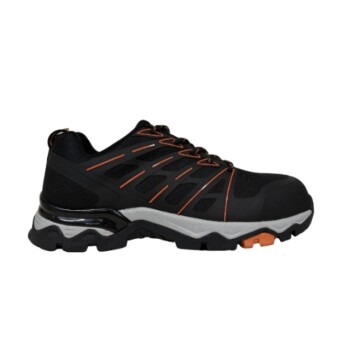
Efficient equipment scheduling is the primary mechanism for minimizing the operational downtime caused by switching between distinct footwear categories. When a production line shifts from manufacturing safety shoes to sneakers or formal wear, the machinery requires significant debugging and mechanical adjustment. Precise scheduling groups these tasks logically to ensure that valuable production time is not wasted on unnecessary reconfigurations.
Core Insight Strategic scheduling transforms a mixed-product line from a logistical liability into a financial asset. By reducing the frequency and duration of equipment adjustments, manufacturers directly boost Asset Turnover Efficiency (TAT), ensuring that expensive machinery generates revenue rather than consuming maintenance hours.
Minimizing Operational Disruption
Reducing Changeover Downtime
Switching production between categories—such as moving from the heavy soles of safety shoes to the delicate profiles of formal wear—is mechanically complex. Each switch requires "debugging," where operators test and calibrate the line. Efficient scheduling minimizes these events, ensuring the line spends more time running and less time being calibrated.
Optimizing Resource Configuration
Different footwear requires different resource allocations. By forecasting the sequence of production, managers can pre-position materials and tools. This ensures that the transition between product types is seamless, preventing bottlenecks where the line sits idle waiting for components.
Maximizing High-Value Asset Utilization
Protecting Critical Machinery
Specialized equipment, particularly injection molding machines and lasting machines, represents a significant capital investment. These assets provide no value when they are paused for adjustment. Scheduling ensures these high-cost machines maintain high utilization rates, directly impacting the return on investment (ROI).
Driving Asset Turnover (TAT)
The primary reference explicitly links scheduling to Asset Turnover Efficiency (TAT). When equipment utilization increases, the factory produces more units per hour of available asset time. This efficiency is essential for maintaining healthy financial performance in a competitive market.
Understanding the Trade-offs
The Complexity of Mixed Lines
While efficient scheduling mitigates downtime, running safety shoes, sneakers, and formal shoes on one line introduces inherent complexity. Even with a perfect schedule, a "jack-of-all-trades" line may never reach the peak speed of a dedicated, single-category line. Operators must be highly skilled to handle the frequent context switching between machine settings.
Balancing Utilization vs. Maintenance
A schedule that maximizes utilization often leaves little room for preventative maintenance. Pushing injection molding machines to run continuously to improve TAT can lead to unexpected breakdowns. A truly efficient schedule must program in downtime for maintenance, not just production.
Making the Right Choice for Your Goal
To leverage equipment scheduling effectively, you must align your strategy with your specific production targets:
- If your primary focus is Financial Health: Prioritize long production runs of a single shoe category to maximize Asset Turnover (TAT) and minimize the frequency of changeovers.
- If your primary focus is Market Agility: Optimize your schedule for rapid changeovers, accepting slightly lower utilization to gain the ability to respond instantly to fluctuating market demands.
Ultimately, efficient scheduling is not just about logistics; it is a financial lever that balances machine uptime with market responsiveness.
Summary Table:
| Optimization Factor | Impact on Production | Financial Benefit |
|---|---|---|
| Changeover Time | Reduces debugging & mechanical calibration | Lowers operational costs |
| Resource Allocation | Pre-positions materials for seamless transitions | Minimizes idle labor time |
| Machine Utilization | Maximizes uptime for injection/lasting machines | Increases ROI on capital assets |
| Strategic Sequence | Groups similar footwear categories together | Higher Asset Turnover (TAT) |
Partner with 3515 for High-Efficiency Bulk Footwear Manufacturing
As a large-scale manufacturer serving global distributors and brand owners, 3515 leverages advanced equipment scheduling and lean production techniques to deliver unmatched value. Our flagship Safety Shoes series is anchored by world-class injection molding capabilities, ensuring durability and precision at scale.
By choosing 3515, you benefit from:
- Versatile Production: Expert manufacturing across tactical boots, outdoor shoes, training sneakers, and formal dress shoes.
- Optimized Lead Times: Advanced scheduling that minimizes downtime and accelerates your speed-to-market.
- Scalable Solutions: Robust infrastructure designed to handle diverse bulk requirements with consistent quality.
Ready to elevate your footwear supply chain? Contact us today to discuss your production needs and discover how our manufacturing excellence can drive your brand's success.
References
- Indah Ivanka, Arnida Wahyuni Lubis. Analisis Rasio Profitabilitas Dan Rasio Aktivitas Sebagai Dasar Penilaian Kinerja Keuangan PT. Sepatu Bata Tbk. DOI: 10.55606/jumia.v2i3.3225
This article is also based on technical information from 3515 Knowledge Base .
Related Products
- Premium Suede Sport Safety Shoes for Wholesale & Bulk Orders
- Premium Lightweight Safety Shoes for Wholesale & Bulk Orders
- Wholesale Anti-Smash & Puncture-Proof Safety Shoes Custom Manufacturing for Brands
- Premium KPU Injection Athletic Style Safety Shoes
- Premium Safety Shoes with Rotating Buckle Safety Sneakers
People Also Ask
- What industries have specific OSHA footwear requirements? Ensure Compliance & Protect Your Workforce
- What are the primary functions of professional safety shoes? Maximize Safety in Water Supply Confined Spaces
- What role do specialized safety shoes play in preventing falls? Engineering Stability in Industrial Environments
- How do the 3R principles influence green footwear design? Master Sustainable Safety Shoe Manufacturing
- Why are customized foot sensors or professional safety shoes incorporated into biomechanical testing? Precision Insights