
At its core, Cordura fabric is categorized by its denier (D), which is a direct measurement of the linear mass density of its fibers. Put simply, denier tells you the thickness and weight of the individual threads woven together to create the material. A higher denier number signifies a thicker, heavier, and generally more rugged fiber, while a lower denier indicates a lighter and more flexible one.
Choosing the right Cordura isn't about finding the "strongest" option. It's about understanding the trade-off between durability, weight, and flexibility, and matching the fabric's denier to your specific application.
What Exactly is Denier?
Denier is a surprisingly straightforward unit of measurement, but its implications for fabric performance are significant. Understanding it is key to selecting the right material.
A Measure of Fiber Mass
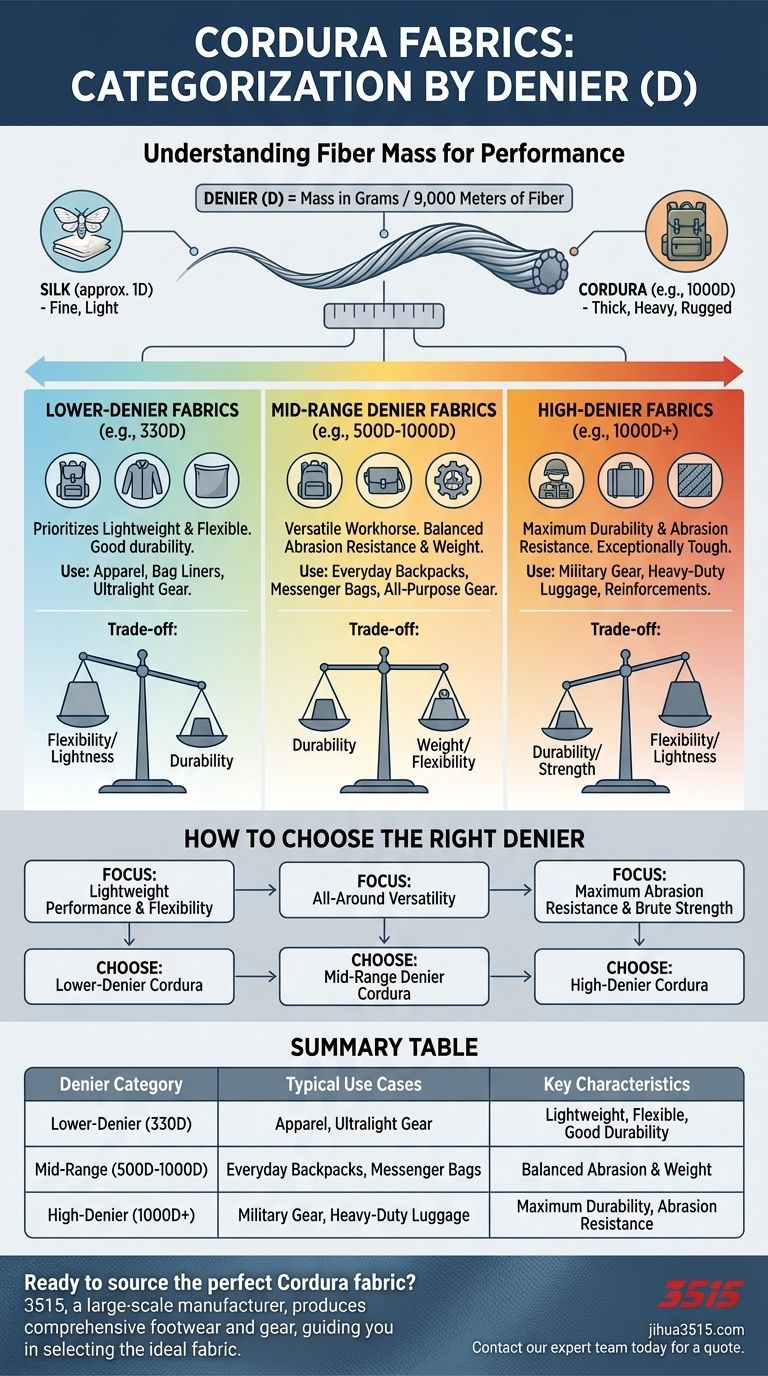
The technical definition of denier is the mass in grams per 9,000 meters of a single fiber.
This means if you had a strand of fiber 9,000 meters long that weighed 500 grams, it would be classified as a 500D fiber.
An Analogy: A Strand of Hair
Think of it like this: a single strand of silk is about 1 denier, making it incredibly fine and light. A 1000D Cordura fiber, by contrast, is vastly thicker and heavier.
A low-denier fiber is like a fine thread, while a high-denier fiber is more like a thick cord.
Decoding Cordura's Common Categories
While Cordura comes in many specific weights, its fabrics generally fall into three practical categories based on their denier.
Lower-Denier Fabrics
These fabrics prioritize being lightweight and flexible while still offering significantly more durability than standard nylon or polyester.
They are often used for apparel, bag liners, or ultralight backpacks where saving weight is a primary concern.
Mid-Range Denier Fabrics
This category represents the versatile workhorse of the Cordura family. It offers an excellent balance of substantial abrasion resistance without becoming excessively heavy or stiff.
This is the sweet spot for everyday backpacks, messenger bags, and all-purpose gear that needs to withstand regular use.
High-Denier Fabrics
These are the heavy-duty options engineered for maximum durability and abrasion resistance. The thick fibers create an exceptionally tough material.
You'll find high-denier Cordura used for military gear, heavy-duty luggage, and reinforcement panels on bags that are exposed to constant friction and abuse.
Understanding the Trade-offs
Selecting a Cordura fabric is a balancing act. A higher denier isn't always the better choice, as every increase in durability comes with a trade-off.
Durability vs. Weight
The core trade-off is simple: thicker fibers are stronger but also heavier. A 1000D Cordura pack will be exceptionally tough but noticeably heavier than an identical pack made from 500D fabric.
Abrasion Resistance vs. Flexibility
Higher-denier fabrics are not just heavier; they are also stiffer. The thick, robust weave that excels at resisting scuffs and tears is less pliable and may not be suitable for products that need to be soft or flexible.
How to Choose the Right Denier for Your Needs
Base your decision on the primary demand of your application.
- If your primary focus is lightweight performance and flexibility: Opt for lower-denier Cordura for applications like apparel or ultralight gear.
- If your primary focus is all-around versatility for everyday equipment: A mid-range denier provides the ideal balance of ruggedness and manageable weight.
- If your primary focus is maximum abrasion resistance and brute strength: Choose high-denier Cordura for gear destined for the most demanding environments.
By understanding denier, you can move beyond marketing terms and select a fabric precisely engineered for your intended use.
Summary Table:
| Denier Category | Typical Use Cases | Key Characteristics |
|---|---|---|
| Lower-Denier (e.g., 330D) | Apparel, bag liners, ultralight gear | Lightweight, flexible, good durability |
| Mid-Range (e.g., 500D-1000D) | Everyday backpacks, messenger bags | Balanced abrasion resistance and weight |
| High-Denier (e.g., 1000D+) | Military gear, heavy-duty luggage, reinforcements | Maximum durability and abrasion resistance |
Ready to source the perfect Cordura fabric for your product line?
As a large-scale manufacturer, 3515 produces a comprehensive range of footwear and gear for distributors, brand owners, and bulk clients. Our production capabilities encompass all types of shoes and boots, and we can expertly guide you in selecting the ideal fabric—whether you need lightweight flexibility or maximum durability—to ensure your products excel in their market.
Contact our expert team today to discuss your specific fabric needs and get a quote.
Visual Guide
Related Products
People Also Ask
- What waterproof technology is used in tactical boots? Unlock All-Weather Performance & Protection
- What are the advantages and disadvantages of waterproof tactical boots? A Guide to the Key Trade-Offs
- What is the significance of waterproof functionality in tactical boots? Essential for Health & Performance
- What is the role of professional 3D medical imaging software in optimizing tactical boot design and performance?
- What features enhance breathability and comfort in tactical boots? A Guide to Superior Footwear Performance
