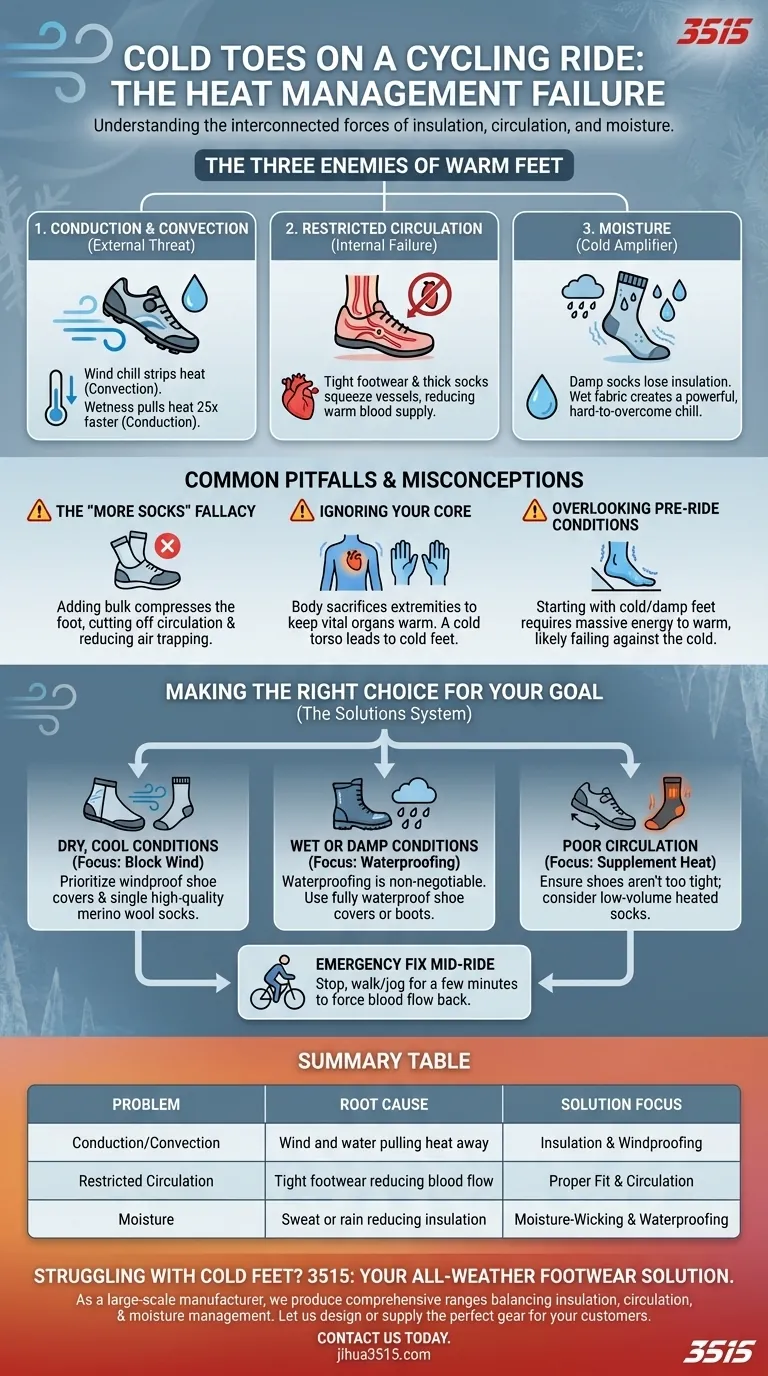
Cold toes on a ride are a clear signal that your system for managing heat is failing. The most common causes are a combination of inadequate insulation against wind chill, moisture from sweat or road spray, and restricted blood flow from footwear that is too tight. These factors work together to rapidly pull heat away from your extremities.
The core issue is not a single failure, but a breakdown in the balance between insulation, circulation, and moisture management. To solve cold feet, you must address all three elements as an interconnected system, not as isolated problems.
The Three Enemies of Warm Feet
To effectively combat cold toes, you must first understand the distinct forces working against you. Each one requires a different strategic response.
Conduction and Convection: The External Threat
Your feet are on the front line, exposed to constant wind chill (convection), which strips away heat. Cycling shoes, often designed for ventilation and warm weather, amplify this effect.
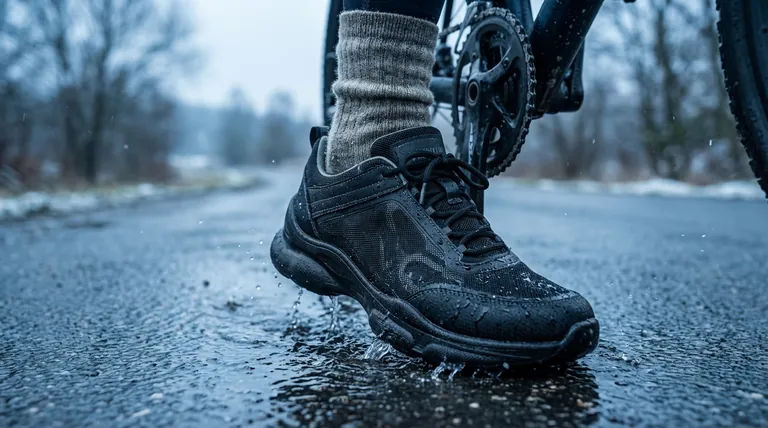
When your feet get wet from road spray or puddles, water acts as a powerful thermal conductor (conduction), pulling warmth out of your body up to 25 times faster than dry air.
Restricted Circulation: The Internal Failure
Your body's primary heating system is blood flow. When circulation to your toes is compromised, you cut off the supply of warmth from your core.
The most common culprit is footwear that is too tight. A snug cycling shoe combined with a thick sock can easily compress the blood vessels in your feet, drastically reducing heat delivery.
Moisture: The Cold Amplifier
Moisture is the great accelerator of cold. It can come from the outside (rain, puddles) or the inside (sweat).
Once your socks become damp, they lose most of their insulating properties. Wet fabric against your skin creates a powerful chilling effect that is nearly impossible to overcome mid-ride.
Common Pitfalls and Misconceptions
Many well-intentioned strategies for staying warm can accidentally make the problem worse. Understanding these common mistakes is critical.
The "More Socks" Fallacy
The instinct to double up on socks is often counterproductive. Adding bulk inside a snug cycling shoe compresses your foot, directly restricting the blood flow needed to keep it warm.
This also compacts the sock's fibers, reducing their ability to trap air, which is the key to insulation. You get less circulation and less effective insulation.
Ignoring Your Core Temperature
Your body prioritizes keeping your vital organs warm. If your core temperature begins to drop, your body will automatically reduce blood flow to your extremities—your hands and feet—to conserve heat.
You can have the best foot-warming gear in the world, but if your torso is cold, your feet will inevitably follow. Proper layering for your core is a foundational part of keeping your toes warm.
Overlooking Pre-Ride Conditions
Starting a ride with already cold or slightly damp feet puts you at a significant disadvantage. Your body has to expend a massive amount of energy to warm them up, a battle it will likely lose against the wind and cold.
Always start your ride with warm, completely dry feet to give yourself the best possible chance of staying comfortable.
Making the Right Choice for Your Goal
Your strategy should be tailored to the specific conditions you face. There is no single solution, only a smart application of principles.
- If your primary focus is dry, cool conditions: Prioritize blocking wind chill with insulated, windproof shoe covers and a single pair of high-quality merino wool socks.
- If your primary focus is wet or damp conditions: Waterproofing is non-negotiable. Use fully waterproof shoe covers or boots, as preventing moisture from reaching your feet is the most critical factor.
- If you struggle with circulation regardless of weather: Ensure your shoes are not too tight, and consider low-volume heated socks to directly supplement your body's natural heat supply.
- If you need an emergency fix mid-ride: Find a safe place to stop, get off the bike, and walk or jog for a few minutes to force blood flow back into your feet.
By addressing insulation, circulation, and moisture as an interconnected system, you can take definitive control over your comfort on any ride.
Summary Table:
| Problem | Root Cause | Solution Focus |
|---|---|---|
| Conduction/Convection | Wind and water pulling heat away | Insulation & Windproofing |
| Restricted Circulation | Tight footwear reducing blood flow | Proper Fit & Circulation |
| Moisture | Sweat or rain reducing insulation | Moisture-Wicking & Waterproofing |
Struggling with cold feet on your rides? As a large-scale manufacturer, 3515 produces a comprehensive range of all-weather cycling footwear and boots for distributors, brand owners, and bulk clients. Our expertise in creating footwear that balances insulation, circulation, and moisture management can be your solution. Let us help you design or supply the perfect gear to keep your customers' toes warm.
Contact us today to discuss your needs!
Visual Guide