
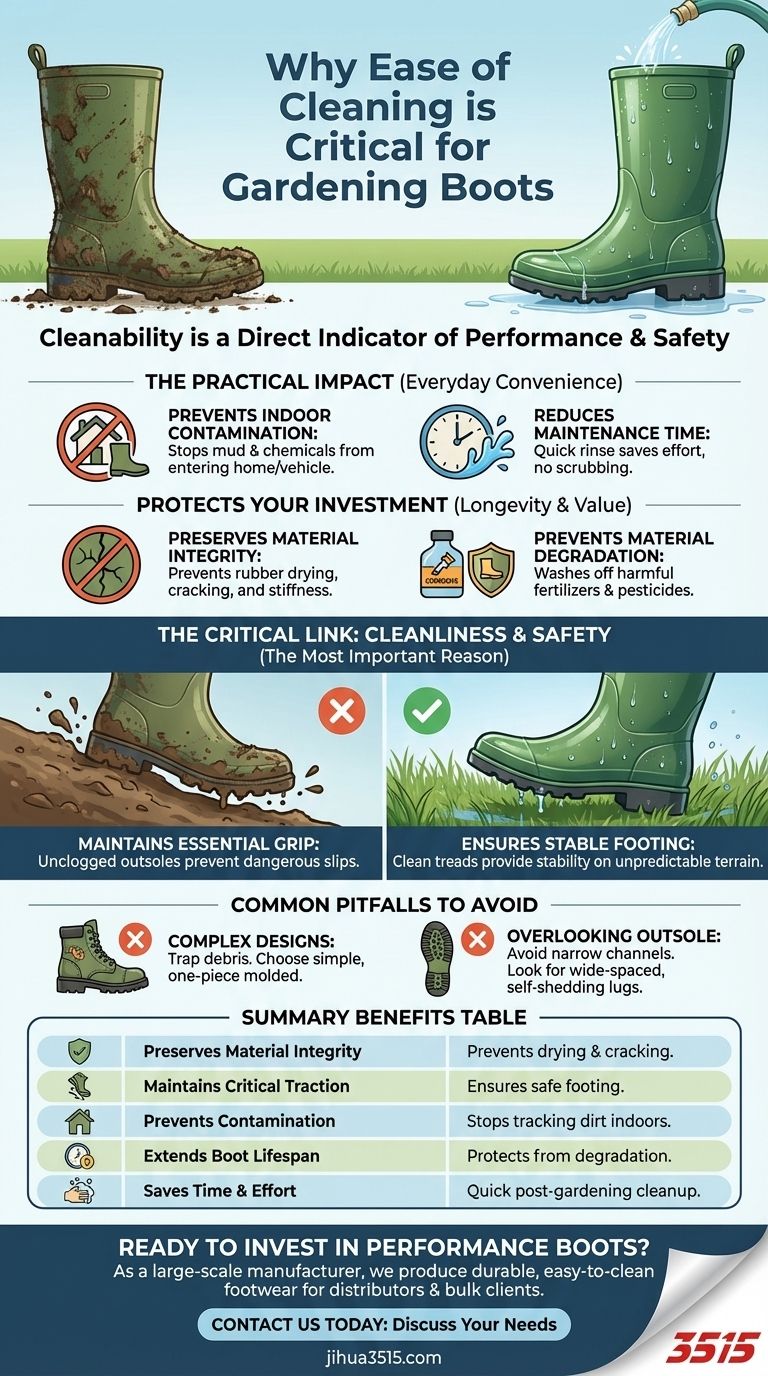
Ultimately, the ease of cleaning a gardening boot is a direct indicator of its long-term performance and safety. While it seems like a simple convenience, a boot that is easy to clean is also one that better preserves its material integrity, maintains critical traction, and protects your investment over years of use.
A boot's cleanability is not just a feature of convenience; it is fundamental to its durability and, most importantly, its ability to keep you safe on unpredictable terrain.

The Practical Impact of Cleanability
The most immediate benefits of an easy-to-clean boot are tied to simple, everyday use. These practical advantages are often the first things users notice.
Preventing Contamination Indoors
The most obvious benefit is preventing dirt, mud, and yard chemicals from being tracked into your home, shed, or vehicle. A smooth, non-porous surface allows you to quickly rinse off debris before stepping inside.
Reducing Maintenance Time
Gardening involves enough work without adding a lengthy boot-scrubbing session to the end of your day. Boots designed for easy cleaning require little more than a quick rinse, saving you valuable time and effort.
How Cleaning Protects Your Investment
Beyond the daily conveniences, proper and easy cleaning is a core aspect of boot maintenance that directly extends its usable lifespan.
Preserving Material Integrity
High-quality gardening boots are typically made from flexible, durable rubber. When mud is left to cake on and dry, it can draw moisture out of the rubber, eventually leading to stiffness, cracking, and a loss of waterproofing.
Preventing Material Degradation
Soil isn't just dirt; it can contain fertilizers, pesticides, and other potentially corrosive substances. Regularly cleaning these off prevents them from slowly degrading the boot's material over time.
The Critical Link Between Cleanliness and Safety
This is the most overlooked, yet most important, reason for prioritizing cleanability. A clean boot is a safe boot.
Maintaining Essential Grip and Traction
A boot's grip depends on the deep lugs and channels in its outsole. When these treads become clogged with packed mud, the sole effectively becomes smooth and flat, completely negating its traction.
Ensuring a Stable Footing
On wet grass, slick mud, or uneven inclines, the difference between stable footing and a dangerous slip is the boot's ability to grip the ground. A clean outsole ensures the treads can do their job, providing the stability you need to garden safely.
Common Pitfalls to Avoid
Even when a boot is marketed as "easy to clean," certain design choices can undermine this feature. Understanding these helps you make a more informed decision.
The Compromise of Complex Designs
Boots with numerous seams, decorative buckles, or fabric panels create areas where mud and debris can become trapped. A simple, one-piece molded rubber or neoprene design will always be the easiest to clean effectively.
Overlooking the Outsole Pattern
Some tread patterns, especially those with very fine or narrow channels, are more prone to trapping small stones and dense mud. Look for wider-spaced, deeper lugs that are designed to shed debris as you walk.
Making the Right Choice for Your Goal
When selecting a gardening boot, consider how cleanability aligns with your primary need.
- If your primary focus is safety and stability: Prioritize a boot with deep, well-spaced lugs on the outsole and a smooth, seamless upper that won't allow mud to compromise its grip.
- If your primary focus is longevity and value: Choose a boot made from high-quality, flexible rubber that resists cracking and is specifically designed for easy rinsing to prevent material degradation.
- If your primary focus is convenience: Select a simple, one-piece molded boot without laces, fabric, or unnecessary seams to ensure the cleaning process is as fast as possible.
Ultimately, choosing a boot that is easy to clean ensures your gear supports your work instead of adding to it.
Summary Table:
| Benefit of Easy-to-Clean Boots | Key Impact |
|---|---|
| Preserves Material Integrity | Prevents rubber from drying out, stiffening, and cracking. |
| Maintains Critical Traction | Ensures outsoles remain unclogged for safe footing on slippery terrain. |
| Prevents Contamination | Stops dirt and chemicals from being tracked indoors. |
| Extends Boot Lifespan | Protects against degradation from soil, fertilizers, and pesticides. |
| Saves Time & Effort | Makes post-gardening cleanup quick and simple. |
Ready to invest in gardening boots built for performance and longevity?
As a large-scale manufacturer, 3515 produces a comprehensive range of durable, easy-to-clean footwear for distributors, brand owners, and bulk clients. Our production capabilities encompass all types of safety-focused gardening boots designed with seamless, easy-clean materials and superior tread patterns to ensure long-term value and user safety.
Contact us today to discuss your needs and discover how our reliable footwear solutions can benefit your customers.
Visual Guide
Related Products
- Durable Goodyear Welt Leather Work Boots for Wholesale & Private Label
- Factory Direct Wholesale Rain Boots Durable Waterproof & Fully Customizable
- Wholesale High-Traction Camo Boots - Custom Manufacturer for Brands
- Wholesale Tactical Boots High-Traction & Reflective for Bulk & Brand Orders
- Durable Moc-Toe Wedge Work Boots | Wholesale Manufacturing for Brands
People Also Ask
- What is the difference between full-grain and top-grain leather? Premium Material Guide for Boot Manufacturers
- What are the advantages of leather as an upper material for work boots? Unmatched Durability & Custom Comfort
- Why is it important to waterproof leather work boots? Protect Your Investment and Performance
- How should new leather work boots be broken in? A Guide to Comfort and Durability
- What are the advantages of leather uppers in work boots? Unmatched Durability & Protection

















