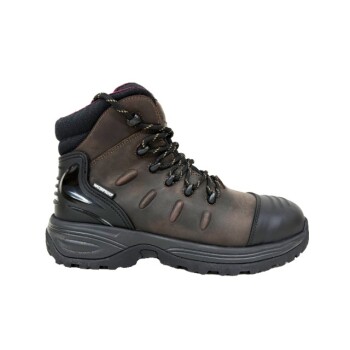
The single most important reason to condition your leather work boots is to restore the essential oils that are lost through use and cleaning. This process keeps the leather flexible, prevents it from drying out and cracking, and significantly extends the functional life of your footwear.
Treating leather like skin is the best analogy; just as skin needs moisturizer to prevent it from becoming dry and damaged, your boots need conditioner to remain strong and supple.
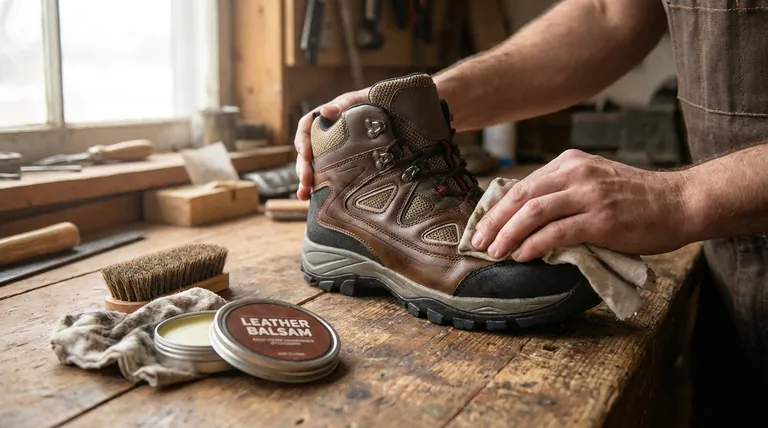
Why Leather Needs Conditioning
Leather is a natural material that contains oils and fats. These components are crucial for its flexibility and durability. Over time, exposure to dirt, water, and cleaning processes strips these natural oils away.
The Primary Enemy: Dryness and Cracking
When leather loses its moisture, the fibers become brittle. This leads to the formation of small cracks, especially in high-flex areas like the vamp (where the boot bends as you walk).
Once cracks form, the structural integrity of the leather is permanently compromised. Conditioning is a preventative measure to stop this damage before it starts.
Restoring Flexibility and Strength
Leather conditioner penetrates the pores of the material, lubricating the individual fibers. This lubrication allows the fibers to slide against each other without friction or breaking.
This restored flexibility not only makes the boots more comfortable to wear but also maintains their inherent strength against tearing and abrasion.
Common Pitfalls in Boot Conditioning
Proper conditioning is vital, but improper techniques can cause more harm than good. Understanding the common mistakes is key to protecting your investment.
The Mistake of Over-Conditioning
Applying too much oil or conditioner is a frequent error. This can oversaturate the leather, clogging its pores and preventing it from breathing properly.
Excessive oiling can also make the leather too soft, reducing the support the boot provides. Furthermore, a greasy surface will attract and hold onto more dirt and dust.
Using the Wrong Products
Avoid using harsh chemicals or household products not designed for leather. These can strip the leather's natural oils or damage its finish.
Conditioners should always be applied to a clean, dry surface to be effective.
The Importance of a Clean Canvas
Never apply conditioner to dirty boots. Doing so grinds dirt and grime deeper into the leather's fibers, accelerating wear and preventing the conditioner from absorbing properly.
Always clean your boots thoroughly with a brush and appropriate cleaner, then allow them to air-dry completely before applying any conditioner. Never use direct heat to speed up drying, as this will bake the leather and cause it to crack.
A Practical Guide to Conditioning
The process is simple and requires only a few minutes of your time after your boots have been properly cleaned and dried.
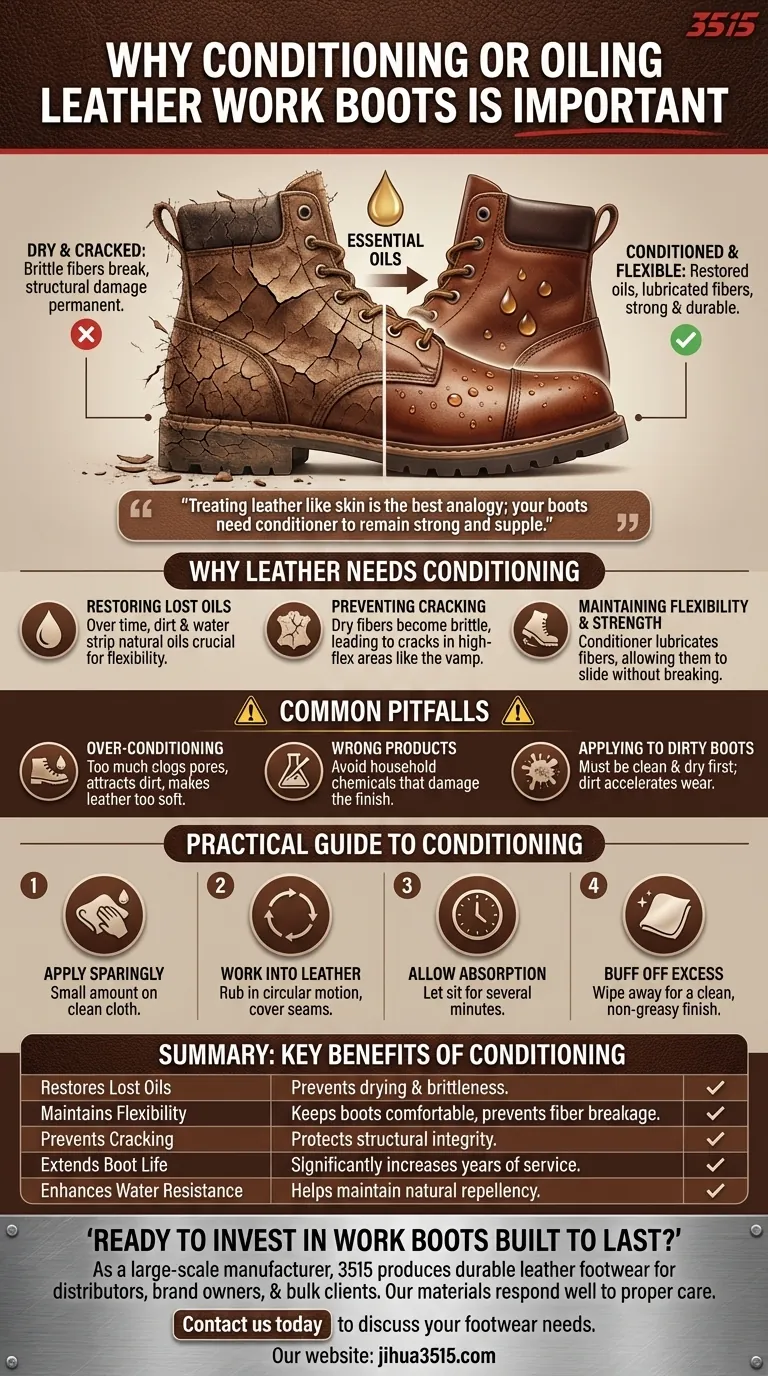
Step 1: Apply the Conditioner Sparingly
Put a small amount of a quality leather conditioner onto a soft, clean cloth. A little goes a long way.
Step 2: Work It Into the Leather
Gently rub the cloth in a circular motion across the entire surface of the boot. Ensure you cover all seams and creases where cracking is most likely to occur.
Step 3: Allow for Absorption
Let the boots sit for several minutes to allow the leather to absorb the conditioner. The time may vary depending on the product and the condition of the leather.
Step 4: Buff Off the Excess
Using a second clean, dry cloth, wipe away any remaining conditioner from the surface. This prevents a sticky residue and leaves a clean, non-greasy finish.
Making Your Boots Last
Your approach to conditioning should align with your primary goal for your footwear.
- If your primary focus is maximum durability: Condition your boots every few months, and always after they have been soaked with water and dried out.
- If your primary focus is water resistance: Regular conditioning helps maintain the leather's natural ability to repel water, keeping your feet drier in damp conditions.
- If your primary focus is comfort: Keeping the leather supple with conditioner prevents it from becoming stiff, ensuring the boots remain comfortable and break in properly.
Ultimately, proper conditioning is the most effective way to protect your work boots and ensure they serve you well for years to come.
Summary Table:
| Benefit of Conditioning | Key Outcome |
|---|---|
| Restores Lost Oils | Prevents leather from drying out and becoming brittle. |
| Maintains Flexibility | Keeps boots comfortable and prevents fiber breakage. |
| Prevents Cracking | Protects the leather's structural integrity, especially in high-flex areas. |
| Extends Boot Life | Significantly increases the years of service from your footwear. |
| Enhances Water Resistance | Helps leather maintain its natural ability to repel moisture. |
Ready to invest in work boots built to last?
As a large-scale manufacturer, 3515 produces a comprehensive range of durable leather footwear for distributors, brand owners, and bulk clients. Our production capabilities encompass all types of safety boots and work shoes designed with quality materials that respond well to proper care.
Contact us today to discuss your footwear needs and discover how our reliable products can become a long-lasting asset for your workforce.
Visual Guide
Related Products
- Durable Leather Work Boots for Wholesale & Custom Manufacturing
- Wholesale Leather Work Boots with Customizable Wedge Sole for Brands
- Durable Leather Work Boots for Wholesale & Custom OEM Manufacturing
- Durable Leather Work Boots Wholesale Manufacturer & Custom Factory
- Durable Goodyear Welt Leather Work Boots for Wholesale & Private Label
People Also Ask
- What is the difference between full-grain and top-grain leather? Premium Material Guide for Boot Manufacturers
- What are the common workplace hazards that can be mitigated with the right work boots? Protect Your Workforce
- What are the common foot issues workers face due to uncomfortable work boots? Prevent Pain & Deformities
- What are the advantages of leather versus synthetic work boots? A Guide to Choosing the Right Material
- What are the key components of modern work boots? Engineered for Ultimate Durability and Comfort