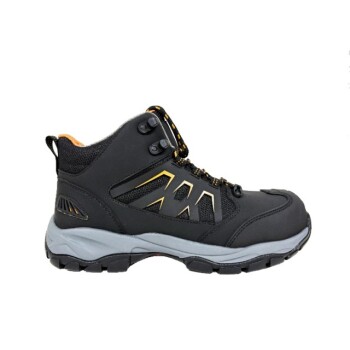
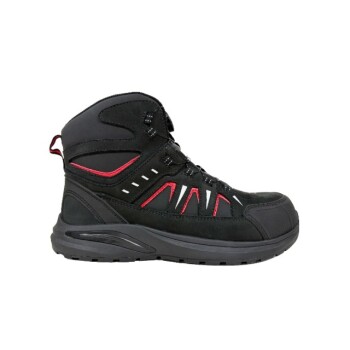
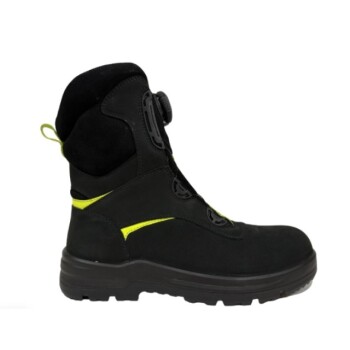
Beyond simple preference, comfort in safety toe boots is a non-negotiable safety feature. It is critical because these boots are worn for extended periods, and discomfort directly leads to fatigue, distraction, and a reluctance to wear them at all. Features like proper cushioning, support, and breathability don't just feel good; they reduce physical stress and ensure the protective equipment is used consistently.
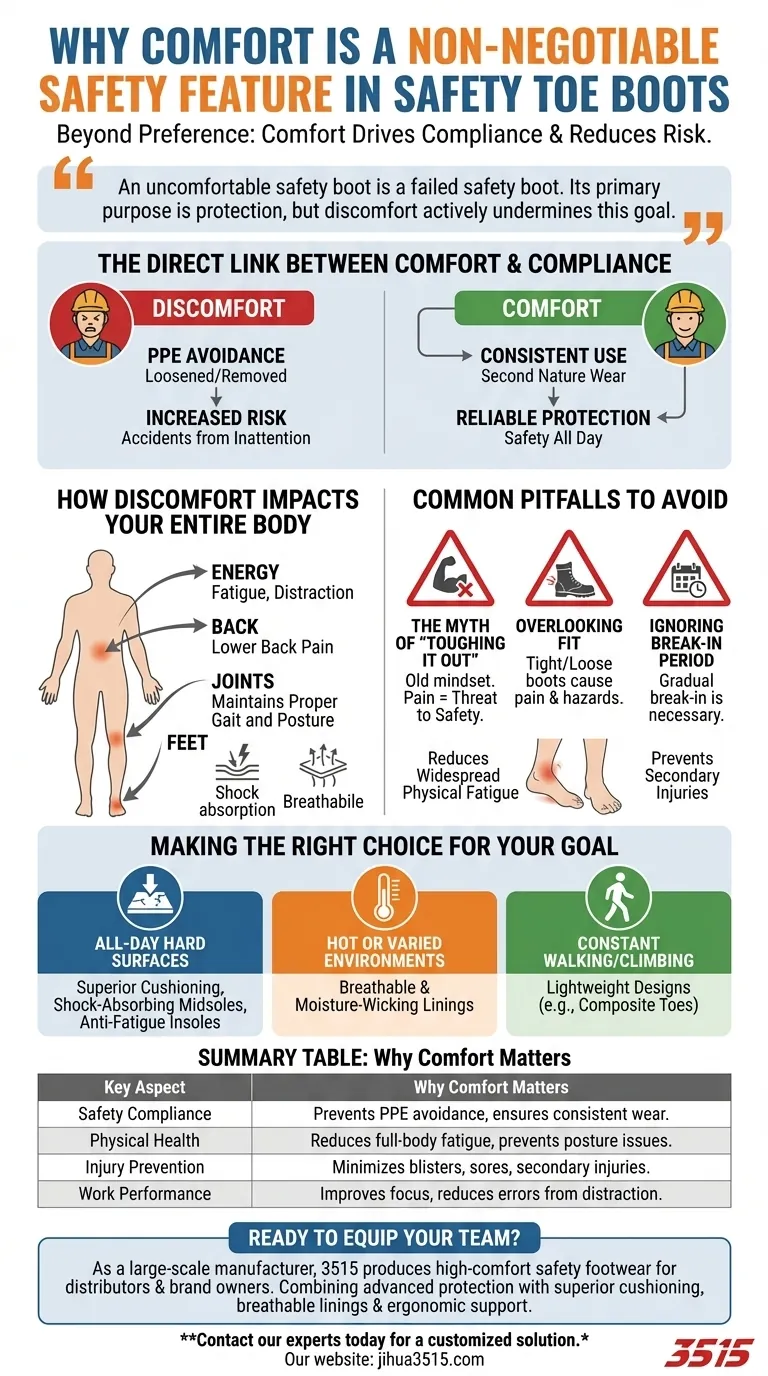
An uncomfortable safety boot is a failed safety boot. Its primary purpose is protection, but discomfort actively undermines this goal by discouraging use, creating distraction, and introducing new health risks—turning a protective asset into a daily liability.
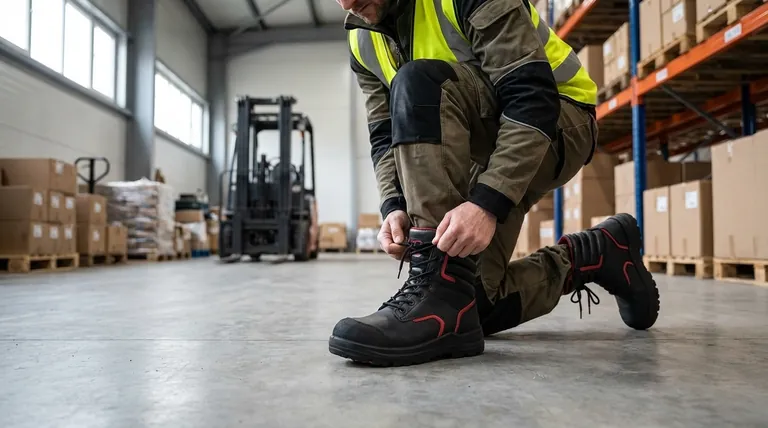
The Direct Link Between Comfort and Compliance
The most advanced safety features are useless if the boots aren't on your feet. Comfort is the single most important factor driving consistent wear.
The Psychology of PPE Avoidance
Human nature is to avoid pain and discomfort. If safety boots cause blisters, aches, or excessive fatigue, workers will inevitably loosen them, remove them when they think no one is watching, or avoid wearing them altogether.
This behavior completely negates the boot's protective purpose. A moment of inattention or a "quick task" without proper footwear is often when accidents happen.
Consistent Use Equals Consistent Protection
Comfort transforms personal protective equipment (PPE) from a mandatory burden into a reliable tool. When boots fit well and feel good, wearing them becomes second nature, ensuring you are protected throughout the entire workday, not just parts of it.
How Discomfort Impacts Your Entire Body
The negative effects of poor footwear extend far beyond your feet, impacting your energy levels, posture, and overall well-being.
Reducing Widespread Physical Fatigue
Each step on a hard surface sends impact shock up through your body. Quality cushioning and supportive footbeds absorb this impact, protecting your ankles, knees, hips, and lower back.
This shock absorption is crucial for reducing the cumulative fatigue that leaves you exhausted at the end of a long shift.
Maintaining Proper Gait and Posture
Uncomfortable or improperly fitting boots force you to alter your natural way of walking (your gait). This unnatural movement can lead to muscle strain, joint pain, and long-term posture problems.
Preventing Secondary Injuries
Beyond protecting from impact and compression, comfortable boots prevent a host of other issues. Breathable linings reduce moisture, which helps prevent blisters and fungal infections. A proper fit minimizes rubbing and chafing that can lead to painful sores.
Common Pitfalls to Avoid
Choosing safety footwear often involves trade-offs, but sacrificing comfort for cost or a specific feature is a common and dangerous mistake.
The Myth of "Toughing It Out"
The belief that discomfort is simply part of the job is an outdated and hazardous mindset. Modern safety science recognizes that fatigue and pain are direct threats to workplace safety, as they reduce focus and increase the likelihood of human error.
Overlooking the Importance of Fit
No amount of advanced features can compensate for a poor fit. A boot that is too tight restricts circulation and causes painful pressure points, while a boot that is too loose can cause blisters and create a tripping hazard.
Ignoring the Break-in Period
Even high-quality boots often require a gradual break-in period. Expecting immediate, perfect comfort on a 10-hour shift can lead to unnecessary pain. Wear new boots for short periods initially to allow them to conform to your feet.
Making the Right Choice for Your Goal
Select your safety boots based on the specific demands of your job, ensuring that comfort is a primary decision-making factor.
- If your primary focus is all-day wear on hard surfaces like concrete: Prioritize boots with superior cushioning, shock-absorbing midsoles, and anti-fatigue insoles.
- If your primary focus is working in hot or varied environments: Seek out models with high-quality breathable and moisture-wicking linings to keep your feet dry and cool.
- If your primary focus is minimizing fatigue from constant walking or climbing: Choose lightweight designs, such as those with composite safety toes, which reduce the energy required for each step.
Ultimately, choosing comfortable safety footwear is a direct investment in your daily performance, long-term health, and unwavering protection.
Summary Table:
| Key Aspect | Why Comfort Matters |
|---|---|
| Safety Compliance | Prevents PPE avoidance and ensures boots are worn consistently. |
| Physical Health | Reduces full-body fatigue and prevents long-term posture issues. |
| Injury Prevention | Minimizes blisters, sores, and secondary injuries from poor fit. |
| Work Performance | Improves focus and reduces errors by combating distraction from pain. |
Ready to equip your team with safety boots they'll actually wear?
As a large-scale manufacturer, 3515 produces a comprehensive range of high-comfort safety footwear for distributors, brand owners, and bulk clients. We combine advanced protective features with superior cushioning, breathable linings, and ergonomic support to ensure all-day wearability.
Invest in safety boots that protect your workers and their well-being. Contact our experts today to discuss your specific needs and receive a customized solution.
Visual Guide
Related Products
- Puncture-Resistant Velcro Safety Boots for Wholesale & Custom Manufacturing
- Durable Steel Toe Safety Boots Wholesale & Custom Manufacturing
- Customizable Anti-Smash Safety Boots for Wholesale & Private Label Manufacturing
- Wholesale Durable Breathable Safety Boots Custom OEM Manufacturer
- Wholesale Leather Safety Boots with Customizable Protective Toe
People Also Ask
- Why are industrial safety boots with steel toes necessary for machine operators? Essential Foot Protection for Safety
- What are the characteristics of steel toe safety boots? Maximum Protection, Key Trade-offs
- Is it true that steel toes can cause toes to get cut off? Debunking the Dangerous Myth
- What are the primary safety functions of safety boots with steel-toe designs? Essential Protection for Industry
- What do the symbols M, F, I, and C represent on safety toe boots? Decode ASTM F2413 for Maximum Protection