Choosing the right work footwear is crucial because it serves a dual purpose: it is a critical piece of Personal Protective Equipment (PPE) that protects you from immediate workplace hazards, and it is a foundational tool for ensuring long-term health, comfort, and productivity. The correct footwear directly mitigates risks ranging from falling objects and chemical spills to slips and electrical shocks, preventing both acute injuries and chronic pain from fatigue.
Your work footwear is not merely an accessory; it is a specialized tool engineered to be the first line of defense between you and the specific risks of your job, directly influencing your safety and ability to perform effectively day after day.

Beyond Comfort: Footwear as Essential Safety Equipment
Many people associate work boots with preventing pain after a long day, but their primary role is to function as essential safety equipment. They are designed to counter specific, identifiable risks present in a given work environment.
Mitigating Direct Impact and Puncture Risks
The most obvious function of safety footwear is protecting feet from crushing injuries. Safety toe caps, made from steel or composite materials, are designed to withstand heavy impacts from falling objects.
Similarly, many work environments contain sharp objects like nails, screws, or metal shards on the ground. Puncture-resistant soles prevent these hazards from causing serious injury.
Preventing Slips, Trips, and Falls
According to OSHA, slips, trips, and falls account for a significant portion of all workplace accidents, representing about 15% of all accidental deaths.
The most effective countermeasure is footwear with slip-resistant outsoles. These are engineered with specific materials and tread patterns to provide stability and grip on wet, oily, or otherwise slick surfaces.
Guarding Against Environmental Hazards
Work footwear is often the only barrier between you and less visible environmental threats.
Boots can be designed to protect against electrical hazards (EH), chemical spills, and extreme temperatures. This specialization is critical for electricians, factory workers, and others who face these unique risks.
The Link Between Footwear, Health, and Productivity
The impact of improper footwear extends beyond immediate injury. The choice you make every morning has a direct effect on your physical well-being and your overall performance at work.
The Foundation of Physical Well-being
Your feet support your entire body. Footwear that lacks proper support or cushioning can lead to fatigue, chronic foot pain, and even musculoskeletal issues in your knees, hips, and back.
Proper footwear acts as a shock absorber, reducing the cumulative stress on your body from standing or walking on hard surfaces for hours at a time.
Reducing Lost Work Hours
Workplace injuries are a primary cause of absenteeism. By preventing accidents, appropriate safety footwear keeps employees on the job.
Furthermore, reducing the daily pain and fatigue associated with improper footwear leads to a more focused and present workforce, cutting down on "presenteeism"—when an employee is physically at work but mentally disengaged due to discomfort.
Boosting Morale and Focus
When employees feel safe and comfortable, their morale and focus improve. Providing the right protective equipment shows a commitment to worker well-being, which in turn fosters a more positive and productive work culture.
Understanding the Trade-offs
Choosing the right footwear requires a clear understanding of your specific environment, as no single boot is perfect for every job.
Protection vs. Weight and Flexibility
A heavily armored boot with maximum protection from impacts might be heavier and less flexible, leading to greater fatigue over a long shift.
Conversely, a lighter, more comfortable boot may not offer sufficient protection in a high-risk environment like a heavy construction site. The key is to balance the level of protection with the physical demands of the job.
Specialization Over "One-Size-Fits-All"
The ideal boot for an electrician is entirely different from the ideal boot for a chef. An electrician needs EH-rated protection, while a chef needs superior slip resistance and a fluid-resistant upper.
Attempting to use a generic "work boot" can leave you exposed to the specific hazards it was not designed to handle. Always select footwear that matches your primary risks.
Making the Right Choice for Your Role
To select the correct footwear, begin by identifying the most significant hazards you face daily. From there, you can prioritize the features that matter most.
- If your primary focus is protection from heavy objects: Prioritize footwear with a certified safety toe (steel, alloy, or composite) and consider a metatarsal guard for full coverage.
- If your primary focus is preventing slips on wet or oily surfaces: Seek out boots specifically rated for slip resistance, and examine the outsole for a tread pattern designed to channel away liquids.
- If your primary focus is working with electrical hazards: Ensure your footwear has an Electrical Hazard (EH) rating, which confirms it provides a secondary source of protection.
- If your primary focus is all-day standing and walking: Emphasize features like anti-fatigue insoles, proper arch support, and lightweight construction to minimize physical strain.
Investing in the right work footwear is a direct investment in your personal safety, long-term health, and daily performance.
Summary Table:
| Key Consideration | Why It Matters |
|---|---|
| Safety Toe Cap | Protects feet from crushing injuries caused by heavy falling objects. |
| Slip-Resistant Sole | Prevents slips, trips, and falls on wet or oily surfaces. |
| Puncture-Resistant Midsole | Shields feet from sharp objects like nails or metal shards. |
| Proper Support & Cushioning | Reduces fatigue and prevents chronic pain in feet, knees, and back. |
| Job-Specific Ratings (e.g., EH) | Provides specialized protection against hazards like electrical shocks or chemicals. |
Ready to equip your workforce with the right footwear?
As a large-scale manufacturer, 3515 produces a comprehensive range of specialized footwear for distributors, brand owners, and bulk clients. Our production capabilities encompass all types of safety shoes and boots designed to meet the specific hazards and demands of any job.
We help you:
- Enhance Safety: Provide your team with reliable PPE that mitigates workplace risks.
- Boost Productivity: Reduce fatigue and absenteeism with comfortable, supportive footwear.
- Simplify Sourcing: Access a wide variety of styles and safety certifications from a single, trusted supplier.
Let's discuss your needs and find the perfect safety solution for your business.
Contact our team today for a consultation
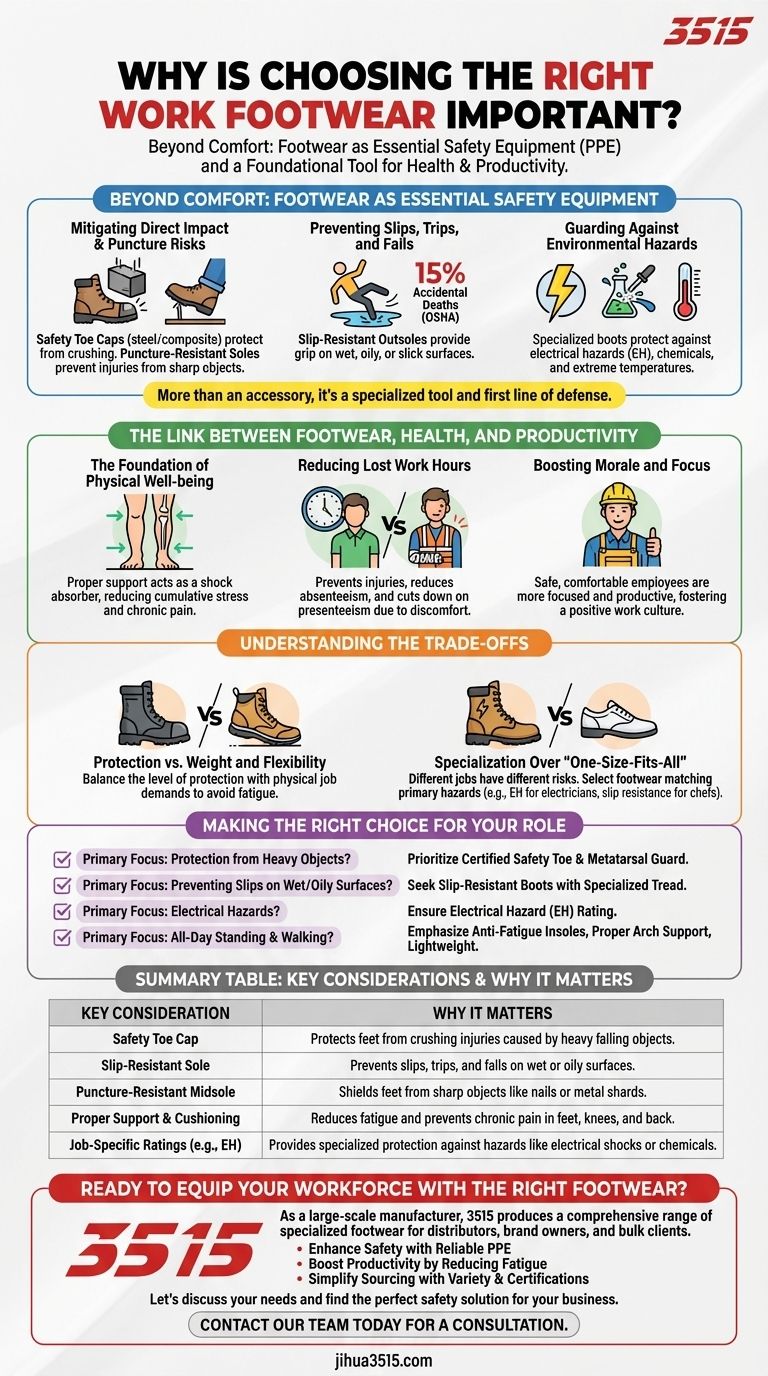
Visual Guide
Related Products
- Durable Leather Work Boots for Wholesale & Custom Manufacturing
- Wholesale Leather Work Boots with Customizable Wedge Sole for Brands
- Durable Leather Work Boots for Wholesale & Custom OEM Manufacturing
- Durable Leather Work Boots Wholesale Manufacturer & Custom Factory
- Durable Goodyear Welt Leather Work Boots for Wholesale & Private Label
People Also Ask
- What is the difference between full-grain and top-grain leather? Premium Material Guide for Boot Manufacturers
- What are the common workplace hazards that can be mitigated with the right work boots? Protect Your Workforce
- What are the common foot issues workers face due to uncomfortable work boots? Prevent Pain & Deformities
- What are the advantages of leather versus synthetic work boots? A Guide to Choosing the Right Material
- What are the key components of modern work boots? Engineered for Ultimate Durability and Comfort