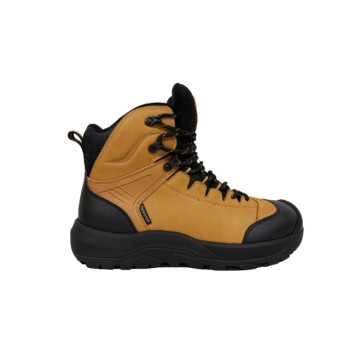
At its core, breathability is critical in winter boots because it allows sweat vapor to escape. This process is essential for keeping your feet dry, and dry feet are the foundation of warm feet. When moisture gets trapped, it quickly chills your feet, defeating the purpose of your boot's insulation and dramatically increasing discomfort and the risk of cold-related injury.
The greatest threat to warm feet in the winter isn't just the cold air outside; it's the moisture your own body produces inside your boots. Breathability is the essential technology that removes this internal moisture, allowing your insulation to do its job effectively.
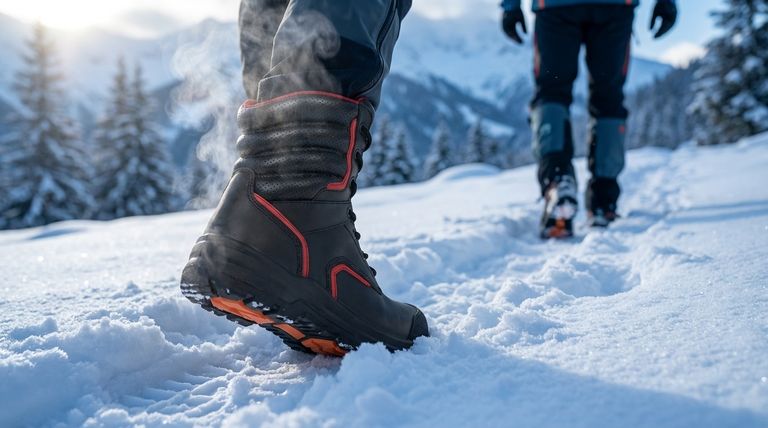
The Vicious Cycle of Sweat and Cold
To understand why breathability is non-negotiable, you first have to understand the relationship between moisture and temperature. Your boot is a closed system, and managing its internal climate is paramount.
How Feet Create Moisture
Your feet have a very high concentration of sweat glands. Even in cold weather, they produce moisture, especially when you are active (like hiking) or if your boots are too warm for the environment (like wearing them indoors).
This sweat is released as water vapor. If it has nowhere to go, it condenses into liquid inside your socks and boot lining.
The Science of Evaporative Cooling
Moisture's primary cooling mechanism is evaporation. As liquid water turns into vapor, it pulls a significant amount of heat away from the surface it's on—in this case, your skin.
This is a fantastic feature in the summer, but it's a dangerous liability in the winter.
Why Wet Socks Equal Cold Feet
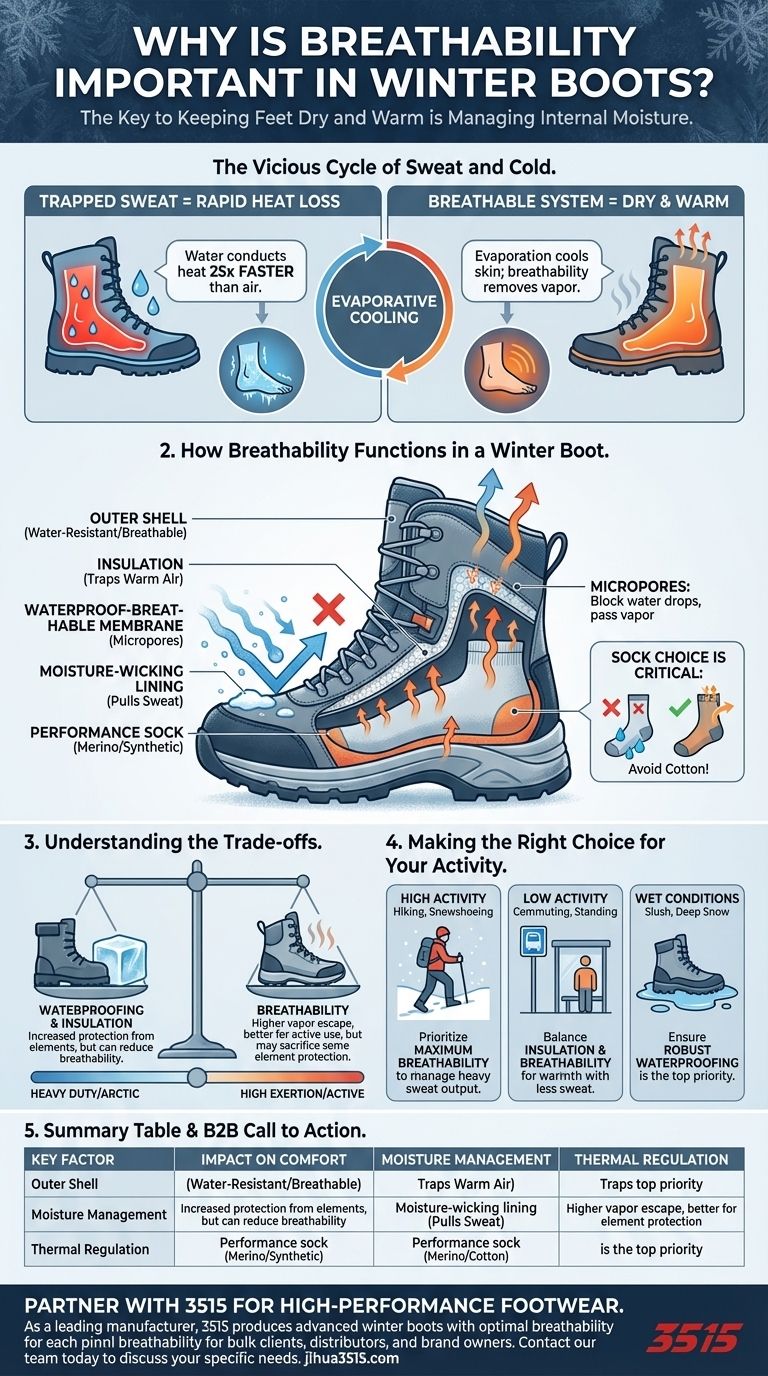
Trapped sweat is the fastest way to get cold feet. Water conducts heat away from your body about 25 times faster than air.
When your socks and the boot's insulation become damp, they lose their ability to trap warm air. Instead, they become a direct conduit, actively pulling warmth from your feet and transferring it to the cold environment outside the boot.
How Breathability Functions in a Winter Boot
Modern winter boots are designed as a system to manage this internal moisture threat. True breathability is about more than just letting air in; it's a one-way transfer of moisture out.
A One-Way Street for Moisture
Most high-quality waterproof-breathable boots use a special membrane or lining. This material is engineered with microscopic pores.
These pores are thousands of times smaller than a drop of water, which prevents slush and snow from getting in. However, they are large enough for an individual molecule of water vapor (your sweat) to pass through and escape to the outside.
The Role of Linings and Uppers
Breathability is a total system. A moisture-wicking lining pulls sweat away from your skin and helps move it toward the breathable membrane.
The boot's upper materials, such as treated leather or advanced synthetic fabrics, must also be breathable to allow the water vapor to complete its journey out of the boot.
The Critical Importance of Socks
The most breathable boot in the world will fail if you wear the wrong socks. Cotton socks are the enemy; they absorb moisture like a sponge and hold it against your skin, nullifying the boot's technology.
Always wear socks made from materials that wick moisture, such as merino wool or synthetics. These work in concert with your boot's lining to transport sweat away from your feet.
Understanding the Trade-offs
No boot is perfect for every situation. Choosing the right one involves balancing competing priorities.
Breathability vs. Waterproofing
The most heavily waterproofed boots, designed for wading through deep slush, often sacrifice a degree of breathability. Creating an impenetrable barrier against external water can sometimes make it harder for internal water vapor to escape.
Breathability vs. Insulation
Extremely high levels of insulation, found in boots rated for arctic conditions, can also impact breathability. The sheer thickness of the material can slow the transfer of moisture, making these boots less suitable for high-exertion activities where you generate a lot of sweat.
Making the Right Choice for Your Activity
Your ideal boot depends entirely on how you plan to use it. Match the boot's features to your expected activity level and environment.
- If your primary focus is high-activity use (winter hiking, snowshoeing): Prioritize maximum breathability to manage the heavy sweat output from exertion.
- If your primary focus is low-activity use (commuting, standing at an event): A balance of high insulation and moderate breathability is ideal, as you will generate less sweat.
- If your primary focus is wet, slushy conditions: Ensure a robust waterproof membrane is your top priority, even if it means a slight compromise on peak breathability.
Ultimately, choosing the right winter boot is about managing the moisture you create, not just blocking the cold from the outside.
Summary Table:
| Key Factor | Impact on Foot Comfort |
|---|---|
| Moisture Management | Prevents sweat buildup, keeping feet dry. |
| Thermal Regulation | Helps insulation work effectively by removing moisture. |
| Activity Matching | High breathability is key for active use; balance is needed for low activity. |
| Material Choice | Breathable membranes and wicking linings are essential. |
As a leading manufacturer, 3515 produces a comprehensive range of footwear for distributors, brand owners, and bulk clients. Our production capabilities encompass all types of shoes and boots, including advanced winter boots designed with optimal breathability to keep your customers comfortable and safe.
Partner with us to get high-performance, breathable winter boots that meet your exact specifications. Contact our team today to discuss your needs and place your order!
Visual Guide
Related Products
- Lightweight Breathable Sneakers with Wet-Traction Grip for Wholesale & Private Label
- Lightweight Breathable Training Shoes for Wholesale & Custom OEM Manufacturing
- Wholesale Durable & Breathable Training Shoes for Custom Brands
- Wholesale Breathable Training Shoes Custom Athletic Footwear Manufacturer
- Wholesale Breathable Athletic Sneakers - Custom Lightweight Cushioned Footwear Manufacturer
People Also Ask
- Why are breathable sneakers necessary for tropical commuting? Stay Cool and Dry in High Humidity
- What role do lightweight training shoes play in urban traffic? Boost Agility and Reaction for Safer City Navigation
- How do lightweight shoes provide support? The Science of Efficient Cushioning & Stability
- What are the style advantages of lightweight shoes? Sleek, Versatile & Modern Comfort
- How do lightweight shoes contribute to healthier feet? Reduce Fatigue & Prevent Foot Problems