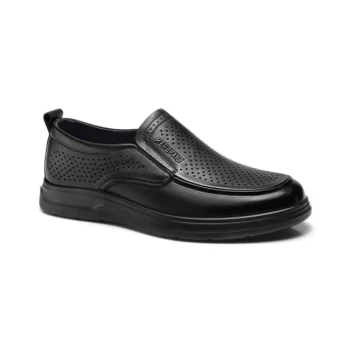
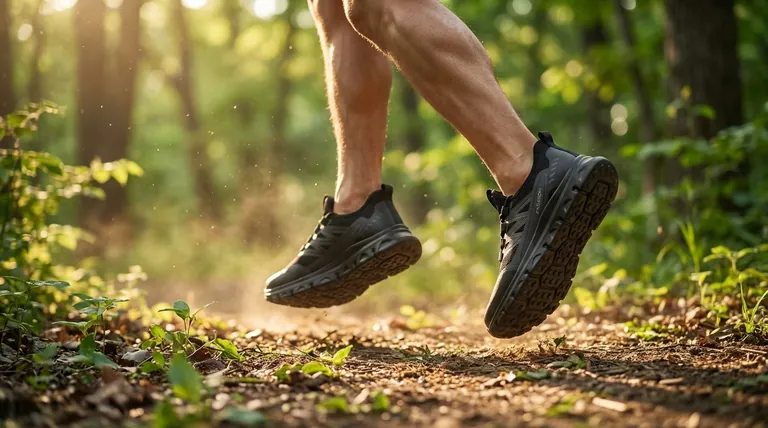
Ultimately, lightweight shoes contribute to healthier feet by significantly reducing the cumulative physical strain on your body. With every step, you are lifting less weight, which conserves energy, minimizes fatigue in your feet and legs, and decreases the impact forces transmitted to your joints over the course of a day.
The true benefit of a lightweight shoe is not merely the absence of weight, but what this modern design approach enables: a combination of reduced fatigue, improved breathability, and better ergonomic support that prevents both immediate discomfort and long-term foot problems.
The Mechanics of Lighter Footwear
Understanding how reducing a few ounces on your feet translates to better health requires looking at the cumulative effect over thousands of steps. A lighter shoe fundamentally changes the physical demands placed on your body.
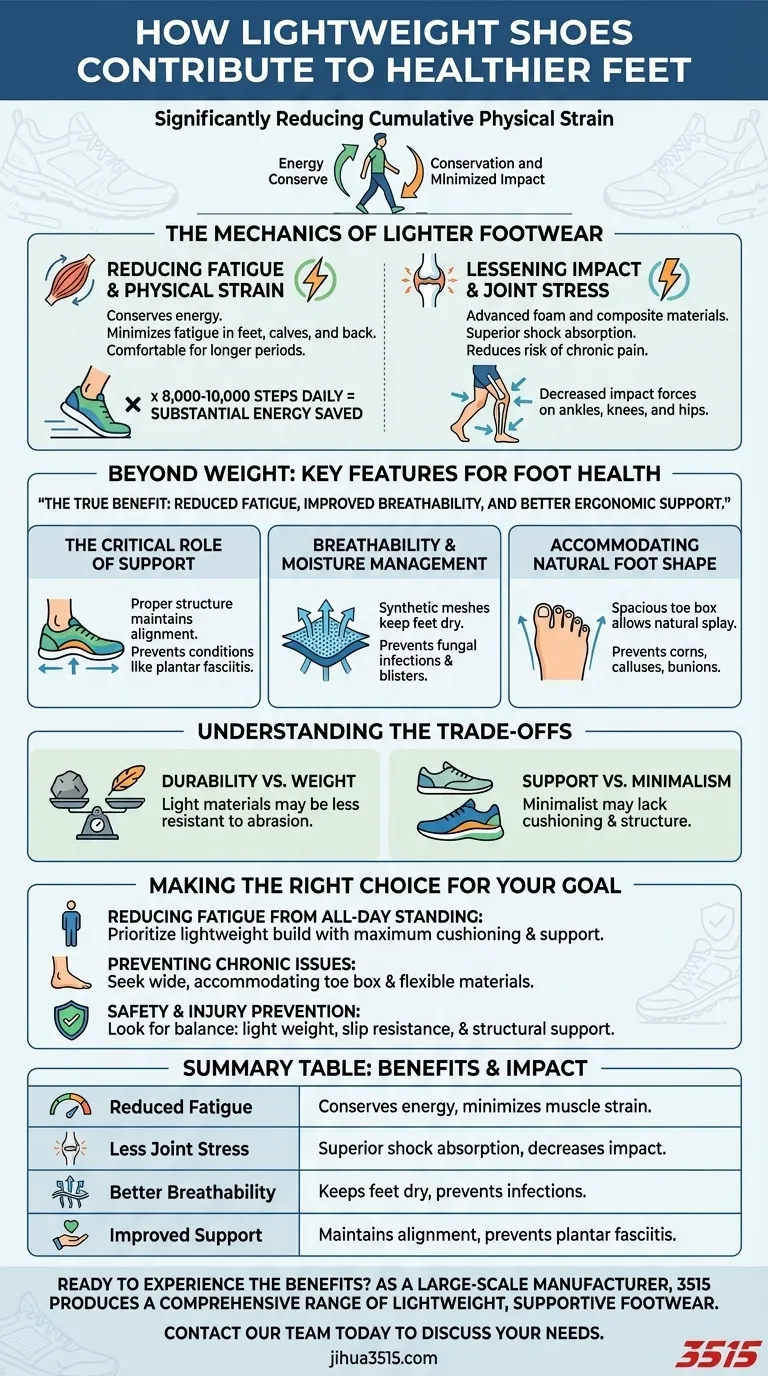
Reducing Fatigue and Physical Strain
Every step is a small muscular effort. When you multiply that effort by the 8,000 to 10,000 steps many people take daily, the energy saved by wearing lighter shoes becomes substantial.
This reduction in effort directly translates to less fatigue in the muscles of your feet, calves, and even your lower back, helping you stay comfortable and focused for longer periods.
Lessening Impact and Joint Stress
Modern lightweight shoes often utilize advanced foam and composite materials that are not only light but also engineered for superior shock absorption.
This helps to lessen the repetitive impact on your ankles, knees, and hips, particularly when walking or standing on hard surfaces. This can help reduce the risk of chronic joint pain and stress-related injuries.
Beyond Weight: Key Features for Foot Health
While weight is a critical factor, it is often a proxy for a suite of modern design features that work together to promote foot health. A shoe's weight alone does not guarantee its quality.
The Critical Role of Support
True foot health is impossible without proper structure. Quality lightweight shoes achieve their low weight without sacrificing essential support for your arch and heel.
A supportive foundation is crucial for maintaining proper foot alignment, which prevents conditions like plantar fasciitis and reduces strain on the ligaments and tendons of the foot.
Breathability and Moisture Management
Heavier, traditional materials like thick leather can trap heat and moisture. In contrast, the synthetic meshes and advanced fabrics used in many lightweight shoes are highly breathable.
This airflow helps keep the feet dry, which is the single most important factor in preventing fungal infections (like athlete's foot) and reducing the friction that causes blisters.
Accommodating Natural Foot Shape
A healthy shoe must work with your foot, not against it. Many lightweight designs incorporate features like a spacious toe box, which allows your toes to splay naturally.
This is critical for preventing painful conditions like corns, calluses, and bunions. It also accommodates the natural foot swelling that occurs after long periods of standing, ensuring comfort throughout the day.
Understanding the Trade-offs
Objectivity requires acknowledging that "lightweight" is not always synonymous with "better" in every situation. The ideal choice depends entirely on the context and your specific needs.
Durability vs. Weight
The advanced materials that make shoes light can sometimes be less resistant to abrasion and heavy wear than traditional, heavier materials. For intense industrial environments, a heavier, more rugged boot may be a necessary trade-off for longevity and protection.
Support vs. Minimalism
Some ultra-light, minimalist shoes are designed to mimic barefoot walking. While this can be beneficial for some, these shoes may lack the necessary cushioning and structural support for individuals with foot conditions like overpronation or for those who work long hours on unforgiving concrete floors.
Making the Right Choice for Your Goal
Selecting the right footwear is about matching the shoe's features to your primary objective.
- If your primary focus is reducing fatigue from all-day standing: Prioritize a shoe that masterfully combines a lightweight build with maximum cushioning and a supportive foundation.
- If your primary focus is preventing chronic issues like corns or bunions: Seek a lightweight shoe with a wide, accommodating toe box and flexible materials that don't constrict your foot.
- If your primary focus is safety and injury prevention in an active role: Look for a shoe that balances its light weight with certified slip resistance and adequate structural support for your arches.
Choosing the right shoe is about finding the optimal balance of reduced weight and essential support that directly addresses the demands of your feet.
Summary Table:
| Benefit | Key Impact |
|---|---|
| Reduced Fatigue | Conserves energy, minimizes muscle strain in feet, calves, and back. |
| Less Joint Stress | Superior shock absorption decreases impact on ankles, knees, and hips. |
| Better Breathability | Advanced fabrics keep feet dry, preventing blisters and fungal infections. |
| Improved Support | Maintains proper foot alignment to prevent conditions like plantar fasciitis. |
Ready to experience the benefits of professionally designed lightweight footwear?
As a large-scale manufacturer, 3515 produces a comprehensive range of footwear for distributors, brand owners, and bulk clients. Our production capabilities encompass all types of lightweight, supportive shoes and boots designed to enhance comfort and promote foot health for your customers.
Contact our team today to discuss your specific needs and discover how we can help you provide healthier footwear solutions.
Visual Guide
Related Products
- Lightweight Breathable Training Shoes for Wholesale & Custom OEM Manufacturing
- Lightweight Breathable Sneakers with Wet-Traction Grip for Wholesale & Private Label
- Premium Lightweight Safety Shoes for Wholesale & Bulk Orders
- Wholesale Lightweight Cushioned Athletic Sneakers for Custom Bulk Production
- Wholesale Breathable Athletic Sneakers - Custom Lightweight Cushioned Footwear Manufacturer
People Also Ask
- Why are lightweight training shoes often preferred over professional hiking boots in urban walking? Maximize City Comfort
- What is the primary role of specialized training or orthopedic shoes? Enhance Safety in Elderly Balance Training
- Why are professional-grade training shoes essential for physical therapy? Ensure Patient Safety and Gait Stability
- Why are the slip-resistance and stability performance of training shoes critical in gait analysis? Ensure Data Accuracy
- Why is the use of flat-soled or professional training shoes essential for WBV? Maximize Vibration Energy Transfer