At its core, a lightweight shoe provides support not through sheer bulk, but through intelligent design and advanced materials. Instead of adding heavy layers, these shoes use strategically engineered midsoles, minimalist uppers, and precisely shaped components to guide the foot and cushion impact where it matters most.
The central principle behind lightweight support is efficiency. Modern running and walking shoes achieve stability and cushioning by using high-performance foams and targeted structural elements, eliminating unnecessary weight to improve energy return and reduce fatigue.

The Anatomy of Lightweight Support
A common misconception is that more material automatically equals more support. The reality is that the quality and placement of materials are far more critical than the quantity.
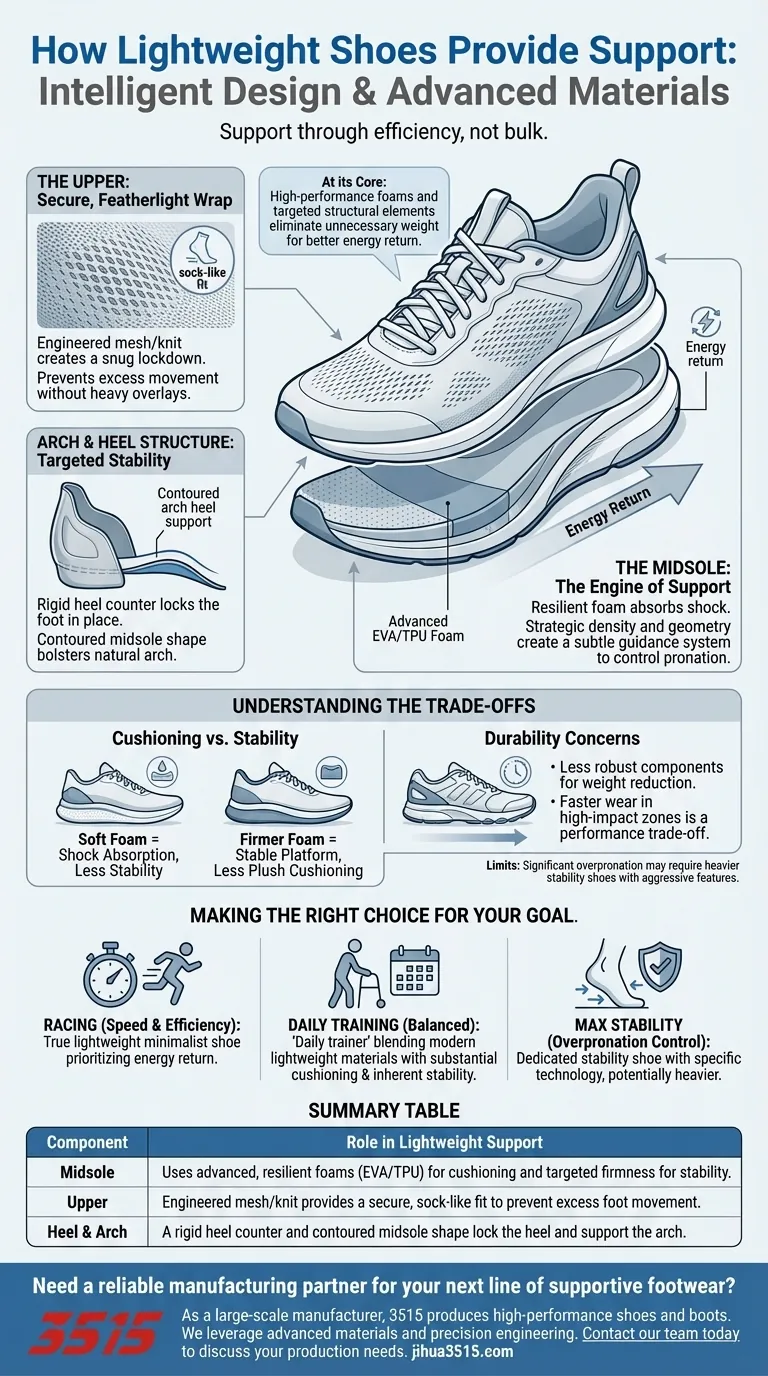
The Midsole: The Engine of Support
The midsole is the heart of the shoe's support system, sitting between your foot and the outsole.
Modern midsoles are crafted from advanced foam compounds like EVA or TPU that are engineered to be both incredibly light and resilient. They provide the primary cushioning that absorbs shock during impact.
Support also comes from the midsole's geometry and density. Shoe designers can use slightly firmer foam in specific areas, such as under the arch, to create a subtle guidance system that helps control pronation (the natural inward roll of the foot) without adding significant weight.
The Upper: A Secure, Featherlight Wrap
The upper is the fabric portion of the shoe that encloses your foot. Its main supportive role is to provide a secure lockdown.
Engineered mesh and knit uppers create a snug, sock-like fit that holds your foot firmly on the shoe's platform. This prevents excess movement inside the shoe, which is a key component of stability. By eliminating heavy leather or plastic overlays, these materials provide structure without the weight penalty.
Arch and Heel Structure
While the midsole provides broad support, specific components target the arch and heel.
A rigid internal heel counter cups the back of your foot, locking it in place to prevent slipping and enhance stability upon landing. The shape of the midsole itself is also contoured to follow and bolster the natural arch of the foot, providing passive support.
Understanding the Trade-offs
While technology has narrowed the gap, a fundamental trade-off often exists between minimizing weight and maximizing support. Understanding this helps you choose the right tool for the job.
Cushioning vs. Stability
The reference to "softer materials" primarily addresses cushioning. A soft, thick midsole is excellent for shock absorption, but an excessively soft foam can feel unstable.
Conversely, a firmer midsole provides a more stable platform but offers less plush cushioning. Lightweight shoes constantly balance these two factors to hit a specific performance target.
Durability Concerns
To reduce weight, some components in a lightweight shoe may be less robust than in a heavier counterpart.
The foams may have a shorter optimal lifespan, and the outsole might use less rubber, potentially leading to faster wear in high-impact zones. This is a common trade-off for gaining a performance advantage.
The Limits of Lightweight Design
For individuals with significant overpronation or specific biomechanical needs, a traditional, often heavier, stability shoe might still be the superior choice.
These shoes use more aggressive support features, like dense medial posts or guide rails, that are difficult to implement in an ultra-lightweight design. "Maximum support" is relative to the runner's needs.
Making the Right Choice for Your Goal
The ideal shoe is one that matches your specific needs for activity, foot type, and personal preference.
- If your primary focus is speed and efficiency for racing: A true lightweight or minimalist shoe that prioritizes energy return and low weight is your best option.
- If your primary focus is daily walking or training: Look for a balanced "daily trainer" that blends modern lightweight materials with substantial cushioning and inherent stability.
- If your primary focus is maximum stability to control overpronation: You will likely benefit most from a dedicated stability shoe, which may be slightly heavier but includes the specific technology you need.
Ultimately, choosing the right shoe means aligning its engineered purpose with your personal goals and biomechanics.
Summary Table:
| Component | Role in Lightweight Support |
|---|---|
| Midsole | Uses advanced, resilient foams (EVA/TPU) for cushioning and targeted firmness for stability. |
| Upper | Engineered mesh/knit provides a secure, sock-like fit to prevent excess foot movement. |
| Heel & Arch | A rigid heel counter and contoured midsole shape lock the heel and support the arch. |
Need a reliable manufacturing partner for your next line of supportive footwear?
As a large-scale manufacturer, 3515 produces a comprehensive range of high-performance shoes and boots for distributors, brand owners, and bulk clients. We leverage advanced materials and precision engineering to create footwear that balances lightweight design with the durability and support your customers demand.
Contact our team today to discuss your production needs and bring your designs to life.
Visual Guide
Related Products
- Lightweight Breathable Training Shoes for Wholesale & Custom OEM Manufacturing
- Lightweight Breathable Sneakers with Wet-Traction Grip for Wholesale & Private Label
- Premium Lightweight Safety Shoes for Wholesale & Bulk Orders
- Wholesale Lightweight Cushioned Athletic Sneakers for Custom Bulk Production
- Wholesale Breathable Athletic Sneakers - Custom Lightweight Cushioned Footwear Manufacturer
People Also Ask
- Why are lightweight training shoes often preferred over professional hiking boots in urban walking? Maximize City Comfort
- What is the primary role of specialized training or orthopedic shoes? Enhance Safety in Elderly Balance Training
- Why are professional-grade training shoes essential for physical therapy? Ensure Patient Safety and Gait Stability
- Why are the slip-resistance and stability performance of training shoes critical in gait analysis? Ensure Data Accuracy
- Why is the use of flat-soled or professional training shoes essential for WBV? Maximize Vibration Energy Transfer