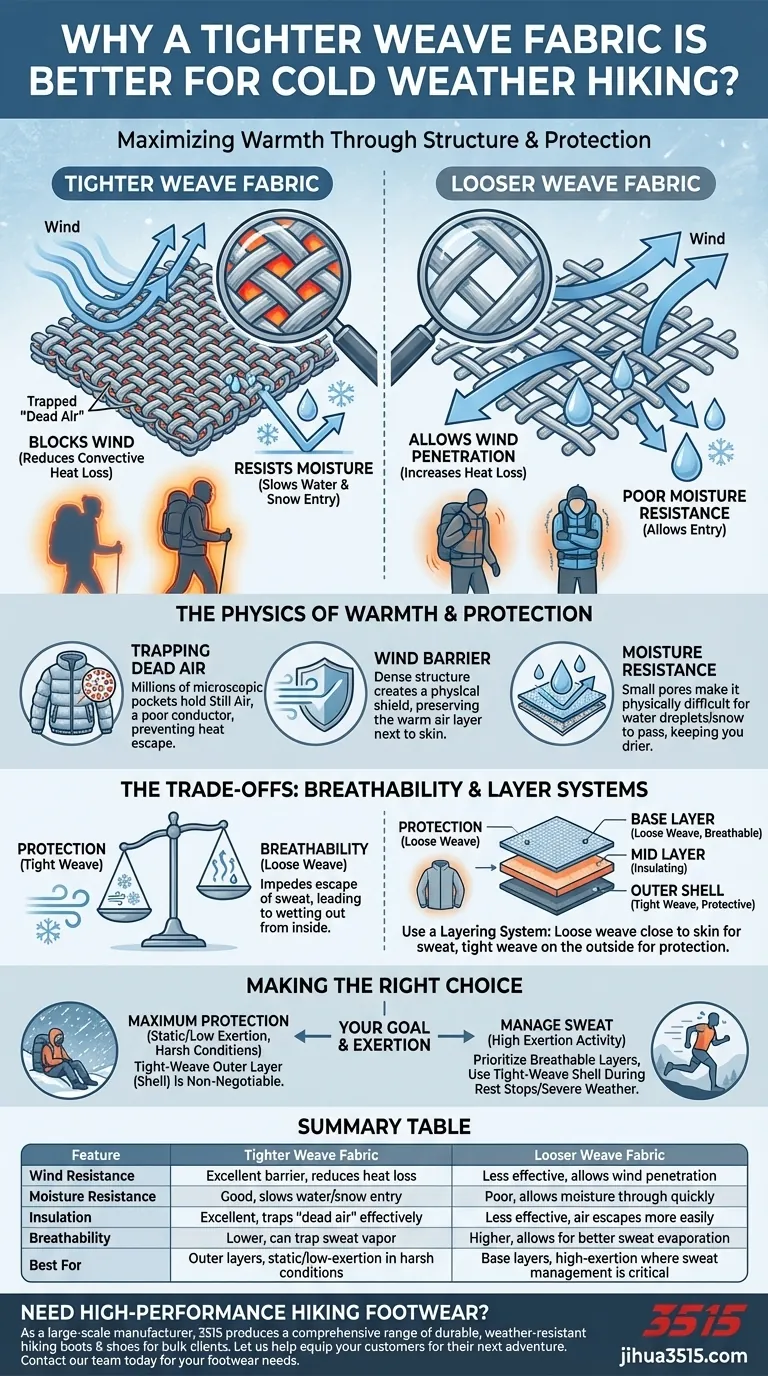
In cold weather hiking, a tighter weave fabric is superior because its dense structure serves as a more effective barrier. This construction excels at trapping insulating air close to your body while simultaneously blocking external elements like wind and moisture, which are primary drivers of heat loss.
The fundamental advantage of a tight weave is not the material itself, but its physical structure. By minimizing the gaps between threads, the fabric creates a micro-shield that significantly reduces heat loss from wind and slows the entry of water.
The Physics of Warmth and Weather Protection
To understand why a tight weave is so effective, we need to look at the two main environmental threats in cold weather: air movement (wind) and moisture. A dense fabric structure directly counters both.
Trapping "Dead Air" for Insulation
All insulation, from fiberglass in your attic to the down in a puffy jacket, works by trapping air. This layer of still, or "dead," air is a poor conductor of heat.
A tighter weave creates countless microscopic pockets that hold air, preventing it from circulating and carrying your body heat away. This trapped air layer is the primary source of insulation provided by the fabric itself.
Creating a Barrier Against Wind
The most significant challenge in cold weather is often wind, which strips away your warm air layer through a process called convective heat loss.
A densely woven fabric presents a formidable physical barrier to that wind. Air molecules struggle to pass through the tiny spaces between the threads, preserving the pocket of warm air next to your skin and dramatically improving your warmth.
Resisting Moisture Penetration
While not a substitute for a waterproof membrane, a tight weave offers significant weather resistance. The small pores in the fabric make it physically difficult for water droplets or snowflakes to pass through.
This slows down moisture entry, keeping you drier for longer in light snow or mist and preventing snow from packing into and through the material.
Understanding the Trade-offs: The Breathability Dilemma
No fabric choice is without compromise. The very properties that make a tight weave excellent for protection also create its primary limitation.
The Cost of Protection is Lower Breathability
The same structure that blocks wind and water also impedes the escape of water vapor—your sweat. This ability for sweat to escape is known as breathability.
A tighter weave is inherently less breathable than a looser weave because there are fewer and smaller pathways for moisture to exit.
The Risk of "Wetting Out" From the Inside
During strenuous activity, your body produces a lot of sweat. If this moisture can't escape through your clothing, it will condense on the inside of the fabric.
This trapped moisture eliminates the insulating properties of your clothing and can lead to rapid chilling as soon as you stop moving. Being wet from your own sweat is a significant danger in cold conditions.
Finding the Balance with a Layering System
This is why experienced hikers rely on a layering system. You don't depend on a single fabric but on a combination of layers, each with a specific purpose.
A more breathable, looser-weave layer might be used closer to the skin to manage sweat, while the tight-weave fabric serves as a protective outer shell to be worn when conditions demand it.
Making the Right Choice for Your Activity
Your ideal fabric choice depends entirely on your specific goal and expected exertion level.
- If your primary focus is maximum protection in very cold, windy, or snowy conditions: A tight-weave outer layer (a shell) is non-negotiable for blocking the elements.
- If your primary focus is high-exertion activity where managing sweat is critical: Prioritize highly breathable layers and use a tight-weave shell only during rest stops or when the weather turns severe.
Understanding how a fabric's structure impacts its performance is the key to building an effective clothing system that keeps you safe and comfortable.
Summary Table:
| Feature | Tighter Weave Fabric | Looser Weave Fabric |
|---|---|---|
| Wind Resistance | Excellent barrier, reduces heat loss | Less effective, allows wind penetration |
| Moisture Resistance | Good, slows water/snow entry | Poor, allows moisture through quickly |
| Insulation | Excellent, traps 'dead air' effectively | Less effective, air escapes more easily |
| Breathability | Lower, can trap sweat vapor | Higher, allows for better sweat evaporation |
| Best For | Outer layers, static or low-exertion activities in harsh conditions | Base layers, high-exertion activities where managing sweat is critical |
Need High-Performance Hiking Footwear to Match Your Technical Gear?
Just as the right fabric is crucial for your clothing, the right footwear is essential for a safe and comfortable hike. As a large-scale manufacturer, 3515 produces a comprehensive range of durable, weather-resistant hiking boots and shoes for distributors, brand owners, and bulk clients. Our production capabilities encompass all types of technical outdoor footwear designed to withstand the elements.
Let us help you equip your customers for their next adventure. Contact our team today to discuss your footwear needs.
Visual Guide
Related Products
- Wholesale High-Traction Camo Boots - Custom Manufacturer for Brands
- Premium Insulated Safety Boots and Shoes for Wholesale & Bulk Orders
- Durable Rubber Sole Outdoor Shoes Wholesale & Custom Manufacturing
- Wholesale Waterproof Tactical Boots Custom Suede & High-Traction Soles
People Also Ask
- What are the key features of the new line of camo boots? Built for Extreme Cold & Rugged Terrain
- Are camo boots necessary for hunting success? Prioritize Performance Over Pattern
- How does the Rank Score Test identify the primary causes of premature failure in tactical and work boots? Key Insights
- What is the technical logic behind using closed-eye testing for tactical boots? Unlocking Peak Footwear Stability
- What shoes to wear for a security job? Durable, Protective Footwear for Long Shifts