
Choosing the right footwear is fundamental to your outdoor experience because your shoes are the primary piece of equipment connecting you to the environment. The correct choice directly dictates your performance, safety, and comfort, preventing injuries and enhancing your physical endurance on any trail or path.
Your outdoor footwear is not an accessory; it is a critical piece of technical gear. The core principle is to match the shoe’s specific design—its support, traction, and protection—to the precise demands of the terrain and activity you plan to undertake.
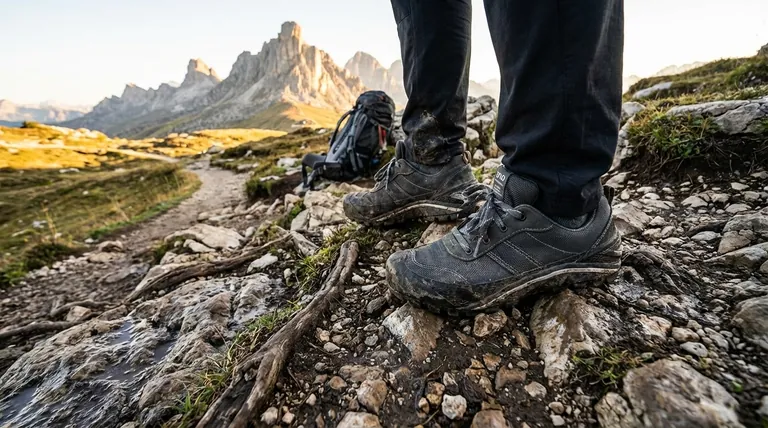
The Core Functions of Outdoor Footwear
Understanding why a specific shoe works requires breaking down its essential functions. Each component is engineered to solve a specific problem you will encounter in the wild.
Ensuring Stability and Support
Your feet and ankles are subjected to constant, uneven stress on natural terrain. The right footwear acts as an external skeleton to mitigate this.
A shoe's stiffness and cuff height are designed to prevent ankle rolls and reduce foot fatigue on long journeys, especially when carrying a pack.
Providing Traction and Grip
Slips and falls are a leading cause of outdoor injuries. A shoe's outsole is engineered for a specific purpose.
Deep, aggressive lugs on the sole provide grip in mud and loose dirt, while specialized rubber compounds offer traction on wet rock. This is a non-negotiable safety feature.
Protecting From Hazards
The trail is an unpredictable environment. Your footwear serves as your first line of defense against a range of hazards.
Reinforced toe caps protect against impacts with rocks and roots, while durable upper materials and waterproof membranes shield you from water, snow, and sharp objects.
Matching the Shoe to the Mission
The term "hiking shoe" is a broad category. The right choice is always relative to your specific objective, environment, and activity.
The Impact of Terrain
The ground beneath your feet is the most important variable.
- Low-cut shoes are suitable for simple, well-maintained paths.
- Mid-cut shoes offer more ankle support for moderate, rolling terrain.
- High-cut boots provide maximum stability and are essential for rocky, off-trail, or mountainous itineraries.
The Influence of Weather and Climate
Environmental conditions dictate material choice. For warm, dry climates, a lightweight, breathable shoe is ideal to manage sweat and prevent blisters. For cold, wet, or winter conditions, an insulated and waterproof boot is required for safety and comfort.
The Demands of the Activity
The intensity and duration of your activity determine the level of support needed. A light day hike requires far less from a shoe than a multi-day backpacking trip where you are carrying the weight of a heavy pack, which puts immense stress on your feet and joints.
Understanding the Trade-offs
There is no single "best" shoe; every design choice involves a compromise. Understanding these trade-offs is key to making an informed decision.
Weight vs. Protection
Heavier, more robust boots offer maximum protection and support. However, weight on your feet drains significantly more energy than weight on your back.
Lighter shoes increase agility and reduce fatigue but sacrifice durability and the support needed for challenging terrain.
Breathability vs. Waterproofing
A fully waterproof shoe is excellent for crossing streams or hiking in the rain, but its membrane can trap sweat in hot conditions, leading to discomfort.
A highly breathable, non-waterproof shoe will excel in a dry desert but will be useless in a swampy or perpetually wet environment.
Flexibility vs. Support
Flexible shoes feel comfortable and require little break-in time. They are perfect for easy walks but lack the rigid support needed to protect your feet on uneven, rocky ground.
A stiffer boot provides a stable platform that reduces foot fatigue on difficult terrain but can feel clumsy and restrictive on a simple, flat path.
Making the Right Choice for Your Activity
Your decision should be driven by your intended use case. Strip away marketing and focus on the functional match between the footwear and your goal.
- If your primary focus is short day hikes on well-maintained trails: A low-cut, flexible hiking shoe or a dedicated trail runner will provide the necessary comfort and grip.
- If your primary focus is multi-day backpacking with a moderate-to-heavy pack: A mid or high-cut boot with a stiffer sole is critical for providing ankle support and stability under load.
- If your primary focus is navigating challenging, off-trail mountain terrain: A robust, high-cut hiking or mountaineering boot offers the maximum protection, waterproofing, and support required for safety.
Ultimately, investing the time to select the right footwear is the first and most important step in ensuring your outdoor adventures are both successful and safe.
Summary Table:
| Footwear Feature | Key Benefit | Ideal For |
|---|---|---|
| Stability & Support | Prevents ankle rolls, reduces fatigue | Uneven terrain, carrying heavy loads |
| Traction & Grip | Prevents slips and falls on varied surfaces | Mud, loose dirt, wet rock |
| Protection | Shields from impacts, water, and sharp objects | Rocky paths, streams, winter conditions |
| Terrain-Specific Design | Matches shoe type (low/mid/high-cut) to the trail | Simple paths to challenging mountains |
Ready to equip your next adventure with the perfect footwear?
As a large-scale manufacturer, 3515 produces a comprehensive range of high-performance outdoor shoes and boots for distributors, brand owners, and bulk clients. Our production capabilities encompass all types of footwear, from lightweight trail runners to robust mountaineering boots, engineered for durability, comfort, and safety.
Let us help you find or create the ideal footwear solution for your target market. Contact our expert team today to discuss your needs!
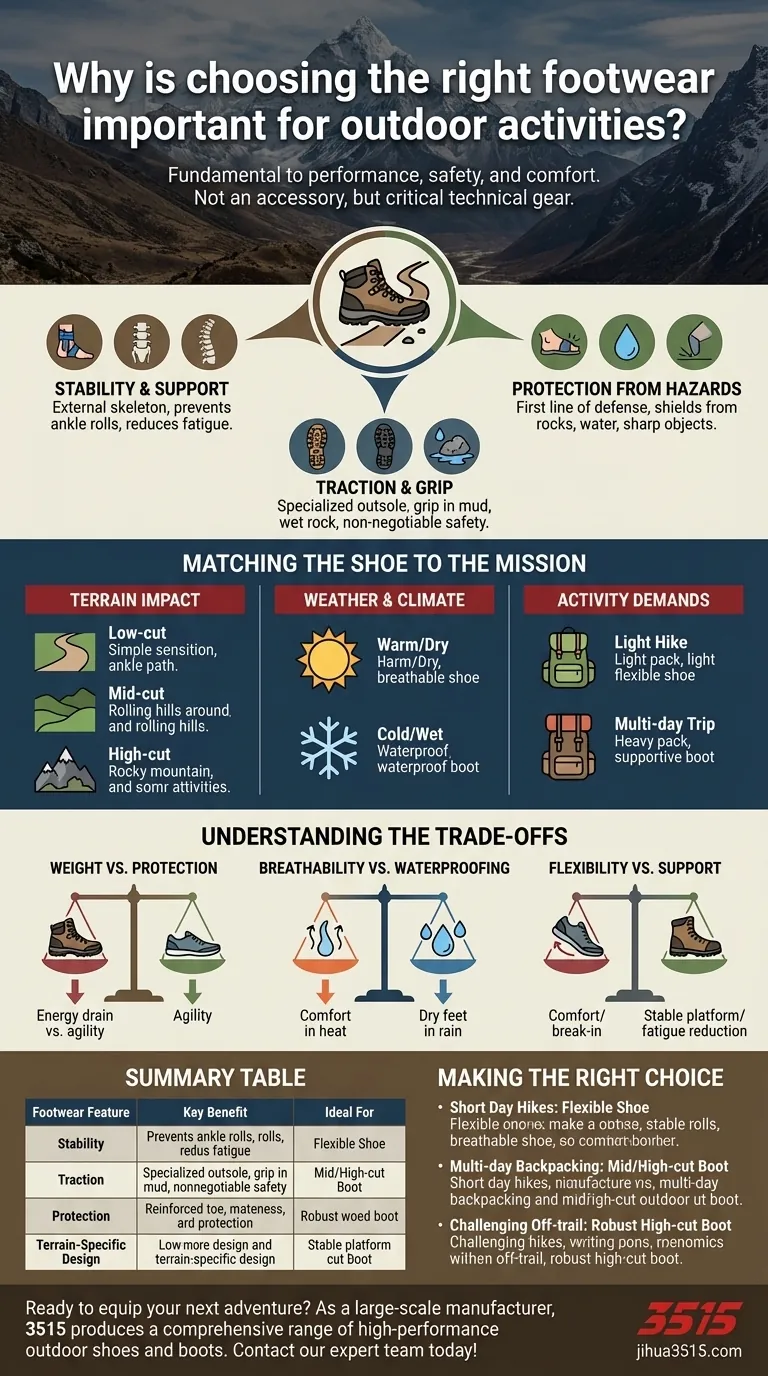
Visual Guide
Related Products
- Durable Rubber Sole Outdoor Shoes Wholesale & Custom Manufacturing
- Wholesale Waterproof Tactical Boots Custom Suede & High-Traction Soles
- Wholesale Durable Camouflage Canvas Shoes with High-Traction Cleated Rubber Sole
- Durable Waterproof Rain Boots | Custom Manufacturer for Wholesale & Brands
- Heavy-Duty Waterproof Nubuck Safety Boots Safety Shoes for Bulk Supply
People Also Ask
- What is the function of the sole in outdoor shoes? Find the Perfect Grip and Support
- What role do outdoor shoes and sneakers play in navigating external terrains? Engineered Stability for Every Surface
- How is AI utilized in the design of outdoor and safety footwear? Harnessing Big Data for Market-Driven Shoe Innovation
- Why is durability important when selecting outdoor shoes? A Guide to Safety & Long-Term Value
- What are the key components of outdoor shoes that affect comfort and sturdiness? A Guide to Durable, High-Performance Footwear



















