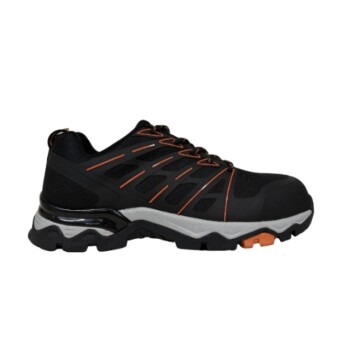
The validity of your disinfection data relies on a precise cutoff point. When evaluating safety shoes and work boots, specific neutralizing buffers like Dey-Engley Broth are required to instantly stop the action of residual chemicals. Without this step, disinfectants absorbed by the footwear continue to kill viruses during the laboratory extraction phase, leading to inaccurate results.
Footwear materials act as reservoirs for high concentrations of residual disinfectants. Neutralizing buffers are essential to immediately arrest chemical activity during testing, ensuring that viral reduction data reflects the actual efficacy of the protocol rather than artificial kill-off during the lab analysis.
The Unique Challenge of Footwear Materials
High Chemical Retention
Unlike smooth surfaces such as stainless steel or glass, the materials used in safety shoes and work boots are often porous or textured.
These materials tend to retain high concentrations of residual disinfectants, such as bleach or quaternary ammonium compounds.
The Extraction Problem
To measure viral survival, the virus must be extracted from the shoe material into a solution.
If the residual disinfectant is present and active during this extraction process, it will mix with the virus in the liquid solution.
The Specific Role of Dey-Engley Broth
Instant Chemical Arrest
Dey-Engley Broth acts as a "chemical brake."
When added during the virus extraction process, it instantly neutralizes the activity of the residual disinfectant chemicals found on the footwear.
Distinguishing True Survival
The goal of the test is to measure how many viruses survived the disinfection protocol on the shoe.
By neutralizing the chemicals immediately, the buffer prevents "continued killing" during the culture phase. This ensures the viral titer you measure is the true survival rate at the end of the disinfection process.
Common Pitfalls to Avoid
The Illusion of Efficacy
If a neutralizing buffer is not used, the disinfectant continues to work in the test tube long after the shoe cleaning is finished.
This leads to data showing a higher kill rate than what actually occurred on the footwear.
Misleading Safety Protocols
Reliability is compromised when testing artifacts are mistaken for disinfection success.
You may inadvertently validate a protocol that appears effective in the lab but fails to neutralize pathogens adequately in real-world application, because the "kill" happened during the extraction, not the cleaning.
Ensuring Protocol Integrity
To guarantee your safety data is both accurate and defensible, you must integrate neutralization into your testing design.
- If your primary focus is Data Accuracy: Ensure your extraction fluid contains a neutralizing agent capable of handling the high chemical load retained by footwear materials.
- If your primary focus is Worker Safety: Reject any validation reports that do not explicitly confirm the use of neutralizing buffers, as these results likely overstate protection levels.
True safety validation measures the disinfectant's performance on the boot, not its performance in the test tube.
Summary Table:
| Challenge | Role of Neutralizing Buffer | Benefit to Testing Accuracy |
|---|---|---|
| High Chemical Retention | Arrests residual disinfectants trapped in porous footwear materials instantly. | Prevents artificial viral kill-off during the extraction phase. |
| Extraction Mixing | Neutralizes chemicals once the virus is moved from the shoe to the solution. | Ensures measured viral titers reflect true survival on the boot. |
| Data Validation | Eliminates testing artifacts and false efficacy results. | Provides defensible and reliable safety protocols for workplace use. |
Partner with 3515 for Validated Safety Footwear Excellence
At 3515, we understand that true protection starts with rigorous standards. As a premier large-scale manufacturer serving global distributors and brand owners, we ensure our footwear is built to withstand demanding disinfection and safety protocols. Whether you require our flagship Safety Shoes, tactical boots, or specialized work footwear, our comprehensive production capabilities guarantee quality that stands up to scientific scrutiny.
Ready to elevate your product line with performance-tested footwear? Contact 3515 today to discuss your bulk manufacturing needs
References
- John D. Archer, Abderrahmane Touati. Evaluation of disinfection methods for personal protective equipment (PPE) items for reuse during a pandemic. DOI: 10.1371/journal.pone.0287664
This article is also based on technical information from 3515 Knowledge Base .
Related Products
- Premium Suede Sport Safety Shoes for Wholesale & Bulk Orders
- Premium Lightweight Safety Shoes for Wholesale & Bulk Orders
- Wholesale Anti-Smash & Puncture-Proof Safety Shoes Custom Manufacturing for Brands
- Premium KPU Injection Athletic Style Safety Shoes
- Premium Safety Shoes with Rotating Buckle Safety Sneakers
People Also Ask
- What industries have specific OSHA footwear requirements? Ensure Compliance & Protect Your Workforce
- What are the primary functions of professional safety shoes? Maximize Safety in Water Supply Confined Spaces
- What role do specialized safety shoes play in preventing falls? Engineering Stability in Industrial Environments
- What happens during the cutting stage of safety shoes manufacturing? Precision, Process & Quality
- How does professional industrial cleaning equipment maintain the performance stability of safety shoes? Pro Maintenance