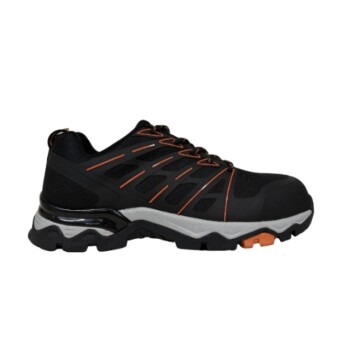
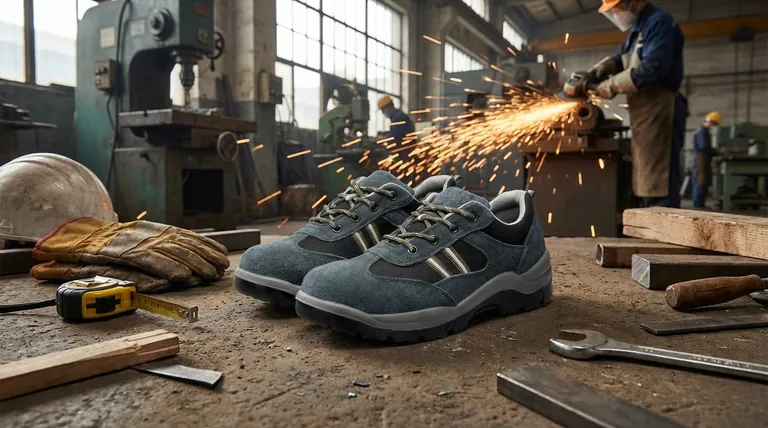
At their core, traditional safety shoes are defined by a system of protective features designed to mitigate common workplace hazards. The most recognized characteristic is a reinforced toe cap, made of steel or composite materials, which shields the foot from impact and compression. This is almost always paired with a slip-resistant outsole to ensure stable traction on various surfaces.
The defining characteristic of a safety shoe isn't just one feature, but its construction as an integrated system. Each component—from the toe cap to the outsole—is engineered to work together to protect the wearer from specific, predictable workplace risks.
The Anatomy of a Safety Shoe: A Component-by-Component Guide
Understanding a safety shoe requires looking at how its individual parts contribute to the overall protective system. Each component serves a distinct purpose, and the materials used are chosen specifically to meet safety standards.
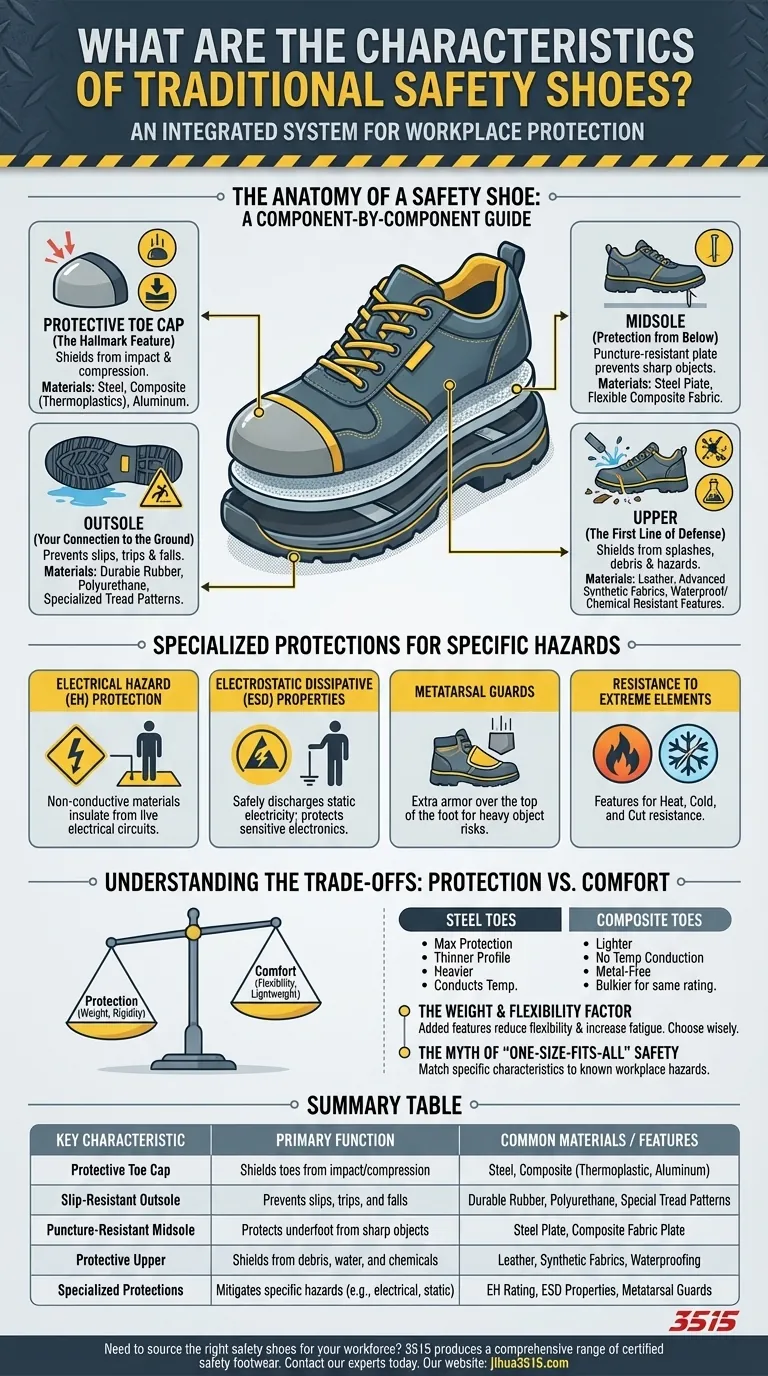
The Protective Toe Cap (The Hallmark Feature)
The safety toe is the most iconic feature, designed to protect the toes from falling objects and crushing forces.
These are traditionally made from steel but are now commonly found in lighter composite materials like thermoplastics, or even aluminum.
The Outsole (Your Connection to the Ground)
The outsole is the layer that makes direct contact with the ground. Its primary safety function is to prevent slips, trips, and falls.
Most safety shoe outsoles are made from durable rubber or polyurethane and are engineered with specific tread patterns to maximize slip resistance.
The Midsole (Protection from Below)
Located between the insole and the outsole, the midsole provides underfoot protection.
Many safety shoes feature a puncture-resistant plate, made of steel or flexible composite fabric, to prevent sharp objects like nails from penetrating the sole.
The Upper (The First Line of Defense)
The upper is the entire part of the shoe that covers the foot. Its role is to shield the foot from splashes, debris, and other environmental hazards.
Materials can range from leather to advanced synthetic fabrics, and may incorporate features like waterproofing or chemical resistance.
Specialized Protections for Specific Hazards
Beyond the foundational components, safety shoes can be equipped with specialized features to protect against less common but highly dangerous risks.
Electrical Hazard (EH) Protection
EH-rated shoes are designed with non-conductive materials in the sole and heel.
This feature provides a secondary source of protection against accidental contact with live electrical circuits, effectively insulating the wearer from the ground.
Electrostatic Dissipative (ESD) Properties
Often confused with EH, ESD shoes serve the opposite purpose. They are designed to safely discharge the body's static electricity into the ground.
This protects sensitive electronic equipment from damage caused by a static shock, making them essential in electronics manufacturing or server rooms.
Metatarsal Guards
A metatarsal guard provides an extra layer of armor over the top of the foot (the metatarsal bones), which is an area left exposed by a standard safety toe.
This is critical in environments with a high risk of heavy objects dropping or rolling onto the foot.
Resistance to Extreme Elements
For specialized industries, shoes can be built to withstand unique environmental threats.
This includes features like heat-resistant outsoles for workers near hot surfaces or cut-resistant materials for those handling sharp tools and glass.
Understanding the Trade-offs: Protection vs. Comfort
Selecting a safety shoe always involves balancing the level of protection with factors like weight, flexibility, and comfort for all-day wear.
Steel vs. Composite Toes
Steel toes offer maximum protection and can be made with a thinner profile. However, they are heavier and will conduct heat and cold.
Composite toes are significantly lighter, do not conduct temperature, and won't set off metal detectors. However, they are often bulkier than steel to achieve the same impact rating.
The Weight and Flexibility Factor
Every additional safety feature, such as a steel midsole or a metatarsal guard, adds weight and often reduces the shoe's overall flexibility.
This can lead to increased fatigue over a long shift, making it crucial to only select features that are necessary for your specific work environment.
The Myth of "One-Size-Fits-All" Safety
There is no single safety shoe that is perfect for every job. A shoe designed with EH protection for an electrician is fundamentally unsuited for a cleanroom requiring ESD properties.
Matching the shoe's specific characteristics to the known hazards of your workplace is the most important step in ensuring true safety.
Making the Right Choice for Your Environment
To select the right shoe, you must first perform a clear assessment of the risks you face on the job.
- If your primary focus is construction or heavy industry: You need maximum impact and puncture resistance, likely with a steel toe and midsole plate.
- If your primary focus is electrical work: You need shoes with a certified Electrical Hazard (EH) rating and fully non-metallic construction.
- If your primary focus is working with sensitive electronics: You need Electrostatic Dissipative (ESD) shoes to prevent static buildup and discharge.
- If your primary focus is wet or chemical environments: You need waterproof uppers and outsoles rated for resistance to the specific substances you handle.
Choosing the right safety shoe begins with a clear understanding of the specific risks you face each day.
Summary Table:
| Key Characteristic | Primary Function | Common Materials / Features |
|---|---|---|
| Protective Toe Cap | Shields toes from impact/compression | Steel, Composite (Thermoplastic, Aluminum) |
| Slip-Resistant Outsole | Prevents slips, trips, and falls | Durable Rubber, Polyurethane, Special Tread Patterns |
| Puncture-Resistant Midsole | Protects underfoot from sharp objects | Steel Plate, Composite Fabric Plate |
| Protective Upper | Shields from debris, water, and chemicals | Leather, Synthetic Fabrics, Waterproofing |
| Specialized Protections | Mitigates specific hazards (e.g., electrical, static) | EH Rating, ESD Properties, Metatarsal Guards |
Need to source the right safety shoes for your workforce?
As a large-scale manufacturer, 3515 produces a comprehensive range of certified safety footwear for distributors, brand owners, and bulk clients. Our production capabilities encompass all types of safety shoes and boots, tailored to your specific industry hazards—from steel toes for heavy industry to EH-rated and ESD-safe models.
We ensure your team gets the perfect balance of protection, comfort, and durability. Contact our experts today for a consultation and let us help you equip your workforce with reliable safety solutions.
Visual Guide
Related Products
- Premium Suede Sport Safety Shoes for Wholesale & Bulk Orders
- Premium Lightweight Safety Shoes for Wholesale & Bulk Orders
- Wholesale Anti-Smash & Puncture-Proof Safety Shoes Custom Manufacturing for Brands
- Premium KPU Injection Athletic Style Safety Shoes
- Premium Safety Shoes with Rotating Buckle Safety Sneakers
People Also Ask
- What are the primary functions of professional safety shoes? Maximize Safety in Water Supply Confined Spaces
- What industries have specific OSHA footwear requirements? Ensure Compliance & Protect Your Workforce
- What role do specialized safety shoes play in preventing falls? Engineering Stability in Industrial Environments
- How do gait analysis algorithms ensure accuracy in footwear? Master Step Length Precision for Boots & Sneakers
- Why wear protective masks, gloves, and safety shoes in 5S Shine? Elevate Safety and Discipline